Diving in Mauritius, from wrecks to drop-offs
More than a hundred dive sites lie within reach of the coast, from the shallow coral gardens of the north to the great underwater relief of the west. A tour of the names that matter, and of the rules that frame every descent.
August 18, 2026
 AI-generated image
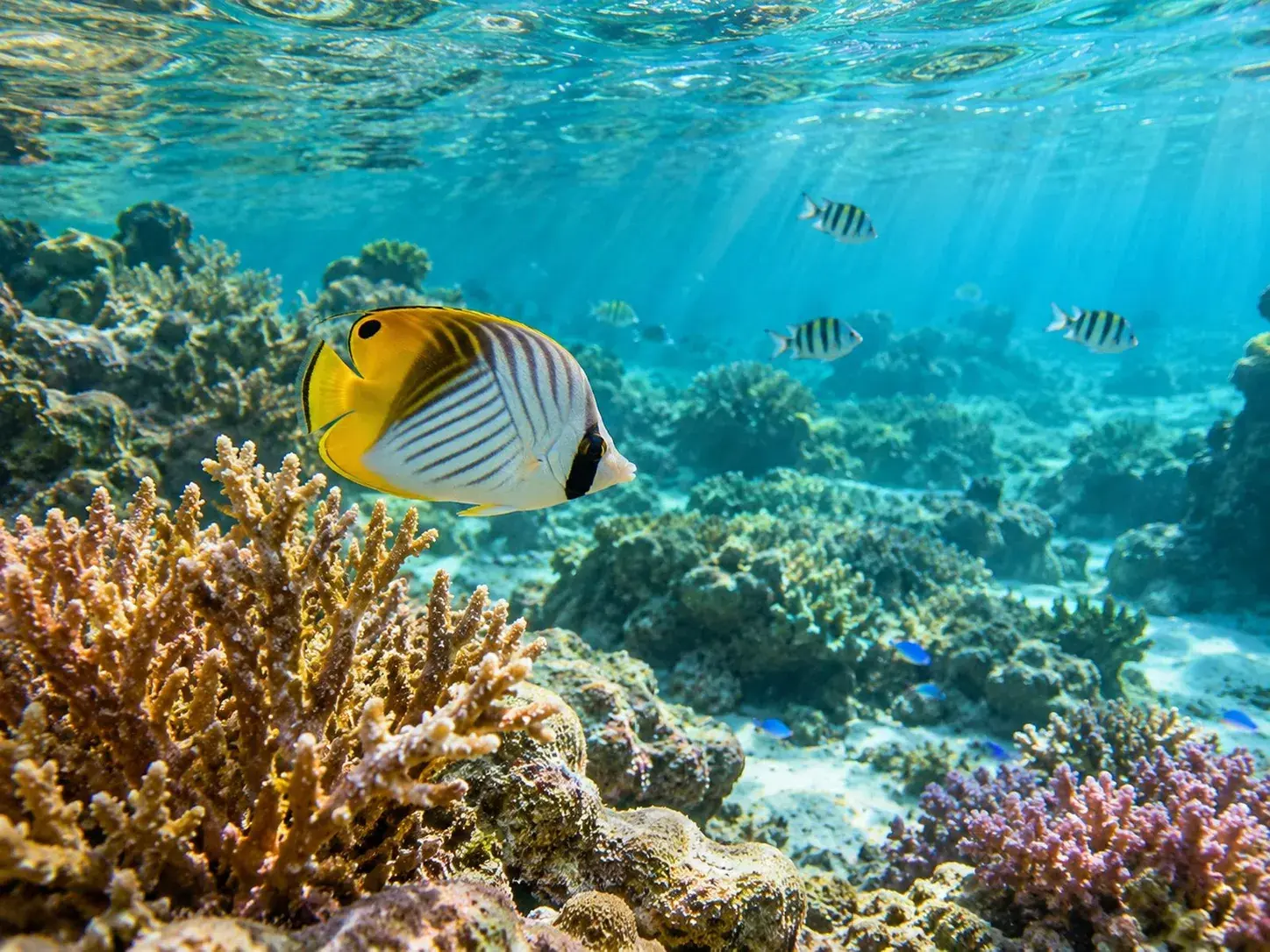
Mauritius has more than a hundred dive sites within reach of its shores. There are shallow reefs on which to take your first breaths underwater, sunken wrecks that have become artificial reefs, and drop-offs that plunge far beyond anything a beginner can reach. The dive schools welcome every level, from a first discovery dive to guided exploration. Choosing a site, then, depends less on its reputation than on your own level.
The north, a place to learn
The north coast brings together several of the gentlest sites on the island. Merville Patches is a coral garden dived at between twelve and fifteen metres, popular with beginners and with those practising underwater navigation. It is a nursery, full of juveniles, where turtles, rays, stonefish, lionfish, moray eels, ghost pipefish and leaf fish can all be seen.
Ti Corail, also in the north, is a shallow site open to all, which many consider one of the most beautiful reefs on the island. Lionfish, stonefish and moray eels live there, and you need only look out into the blue to spot eagle rays. The Aquarium at Grand Baie, just fifteen metres deep, offers rock formations and a visibility of some renown: anthias, small morays, torpedo rays, flying scorpionfish and triggerfish all make an appearance. It is a training site as much as a leisurely dive.
The wrecks, reefs of iron
Off Pereybère, about two kilometres from the beach, lies the Silver Star, a former 38-metre trawler sunk in 1991. She rests at depths of up to 40 metres and has become covered in life: batfish, barracudas, angelfish, scorpionfish and the frogfish, so well camouflaged that it takes a long search to find one. It is a fine site for a first nitrox dive or for wreck and deep-diving courses.
At Coin de Mire, the island that rises opposite the northern tip, the wreck of the Djabeda is a former Japanese fishing boat ten metres high, sunk in 1998. Now an artificial reef, it shelters shoals of fish, moray eels and octopus, hard and soft corals, and swim-throughs. Current and surface swell there are usually slight. Coin de Mire has other sites besides: Confetti Bay, Carpenter Reef and The Wall.
At Trou aux Biches, on the north-west coast, those who do not dive can reach another wreck, the Star Hope, aboard a tourist submarine.
The west and its relief
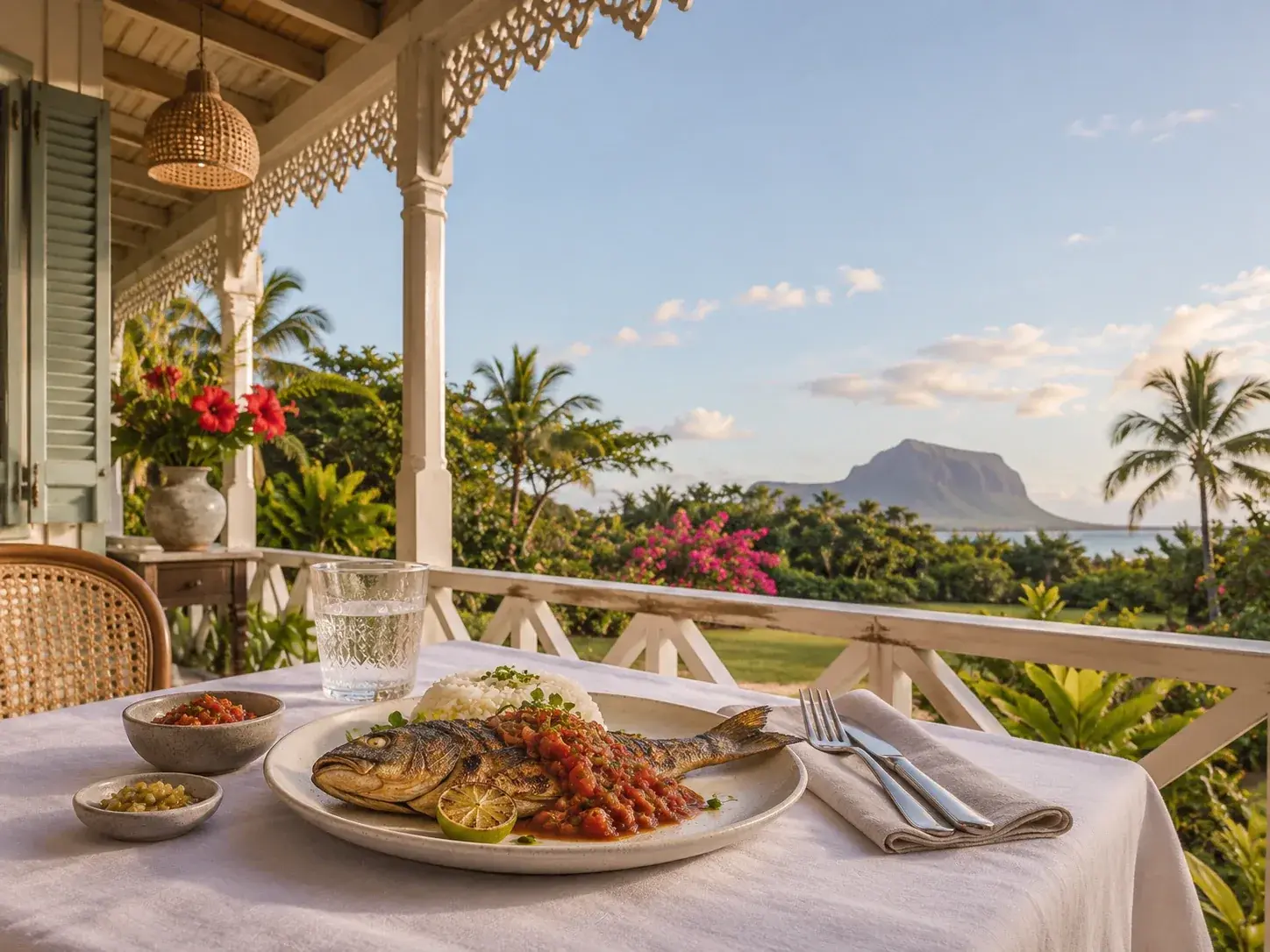
The Cathedral, off Flic en Flac, is one of the most famous sites on the island. A sheer drop-off merges with enormous boulders, and together they form a landscape of caves and arches.
Snake Reef, also near Flic en Flac, owes its name to its shape: a flat reef set in the middle of a snake-shaped sandbank, down to 25 metres. Stonefish, scorpionfish, turtles and octopus draw underwater photographers. In Black River Bay, Silvana descends from five to eighteen metres, which opens it to beginners and experienced divers alike. Green and hawksbill turtles are seen there on almost every dive, sometimes five to ten at a time, and they have grown used to divers.
Further away, to the north, the offshore islands have sites for experienced divers. At the foot of Pigeon Rock, near Flat Island, grey reef sharks and whitetip reef sharks circle in the Shark Pit. Around Serpent Island, a wall drops to fifty metres, and reef sharks are regulars at a site known as the Shark Arena.
 AI-generated image
The rules of the descent
In Mauritius, scuba diving is a tourist enterprise activity that requires a licence. Dive centres are bound by strict safety checks, under the aegis of the Mauritius Scuba Diving Association: instructors are licensed, and equipment is inspected regularly. The list of approved centres is public.
A decompression chamber is in service at Victoria Hospital, in Candos, near Quatre Bornes. It can be reached, for a fee, through the Divers Alert Network (DAN), and a diver who needs treatment there would do well to arrive accompanied by his or her instructor or dive leader.
One rule of the sea concerns divers too: no one may knowingly dive within 500 metres of a dolphin or a whale. On the west coast, where dolphins live all year round, the dive group waits its turn.
For those who do not yet dive, the undersea walk, helmet on head, is offered at Belle Mare among other places and requires no ability to swim. And many of the island’s hotels have a dive centre, where you begin with a first try before heading, a few days later, to a proper offshore site.
To book
Things to do from this article
- Book on GetYourGuide →
Diving and snorkelling · Blue Bay
Blue Bay: eco-tour and snorkelling for coral protection - Book on GetYourGuide →
Diving and snorkelling · Grand Baie
Coin de Mire: two-hour private snorkelling trip - Book on GetYourGuide →
Diving and snorkelling · Belle Mare
Discover scuba diving at Belle Mare - Book on GetYourGuide →
Diving and snorkelling · Grand Baie
Snorkelling with turtles, by speedboat - Book on GetYourGuide →
Diving and snorkelling · Tamarin
Exploration dive at Tamarin - Book on GetYourGuide →
Diving and snorkelling · Grand Baie
Scuba diving at Grand Baie
Read next
 AI-generated image
A day on a catamaran
- AI-generated image
The lagoon and its coloured buoys
- AI-generated image
Blue Bay, the coral garden of the south-east
Where to stay
Stay in Mauritius
Places to stay that are still available, with current prices, compared across the main booking platforms.