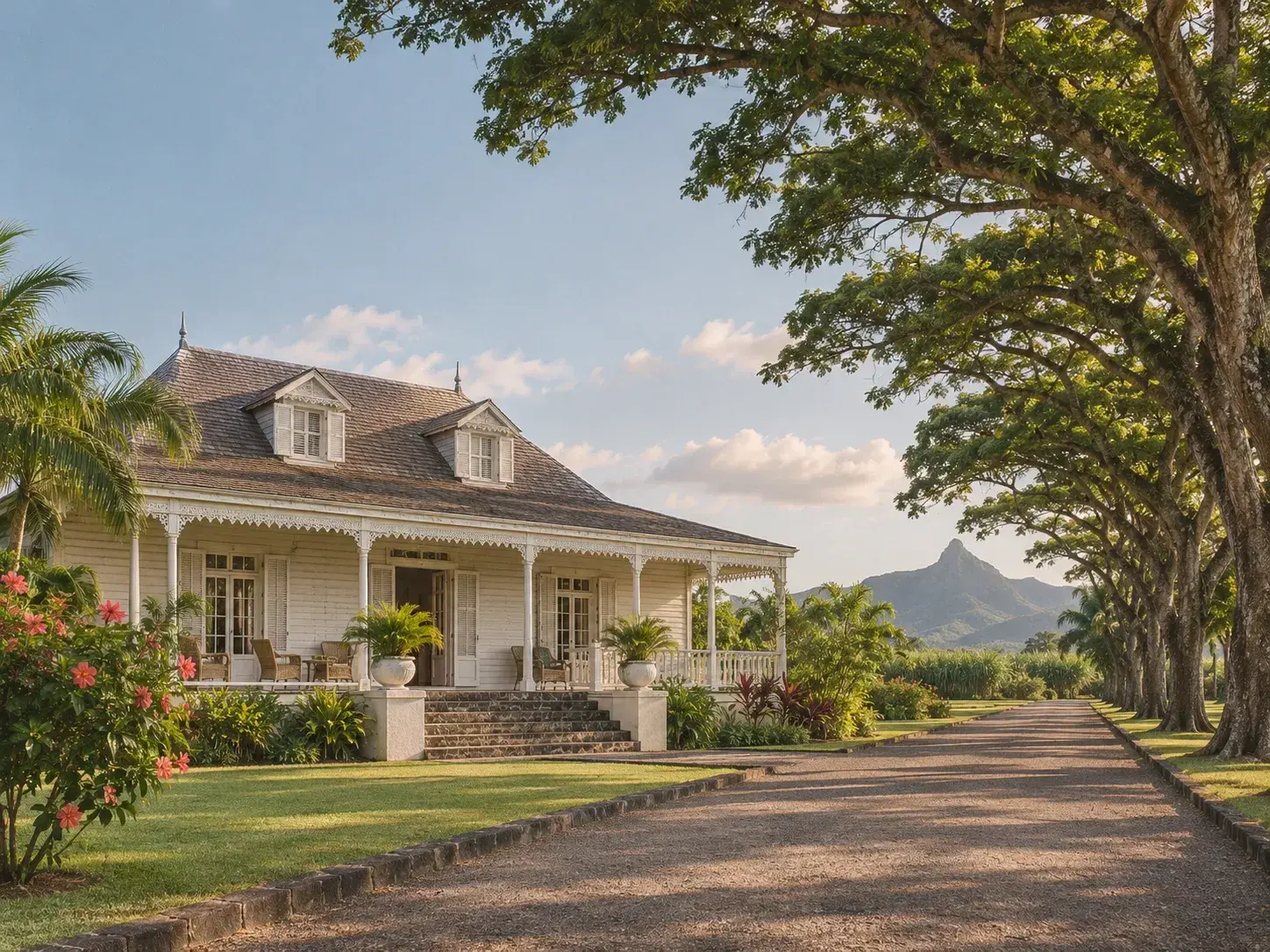
 AI-generated image
Art and history museum
Blue Penny Museum
Port-Louis
The art and history museum on Le Caudan Waterfront, home to the Post Office stamps known to collectors the world over.
from MUR 325 per person
Rainy day
The southern summer is the rainy season, and it is also the high season for travel, so the question is a real one. Here are the places in the guide you can visit under cover, and the essentials on the island’s climate.
A selection of places to visit indoors, out of the rain.
AI-generated imageArt and history museum
Port-Louis
The art and history museum on Le Caudan Waterfront, home to the Post Office stamps known to collectors the world over.
from MUR 325 per person
AI-generated imageDistillery
Chamarel · Black River
A distillery of pure cane rum in a valley 300 metres up, designed to be visited: copper stills, ageing cellars and a tasting.
from MUR 800 per person
AI-generated imageMuseum
Pamplemousses
Admission ticket to the sugar museum housed in the former Beau Plan sugar factory, in Pamplemousses, rum tasting included.
from €23 per person
AI-generated imageTea plantation
Bois Chéri · Savanne
The island’s oldest tea plantation, the middle stop on the Tea Route: a guided walk among the tea bushes, lunch and a tasting.
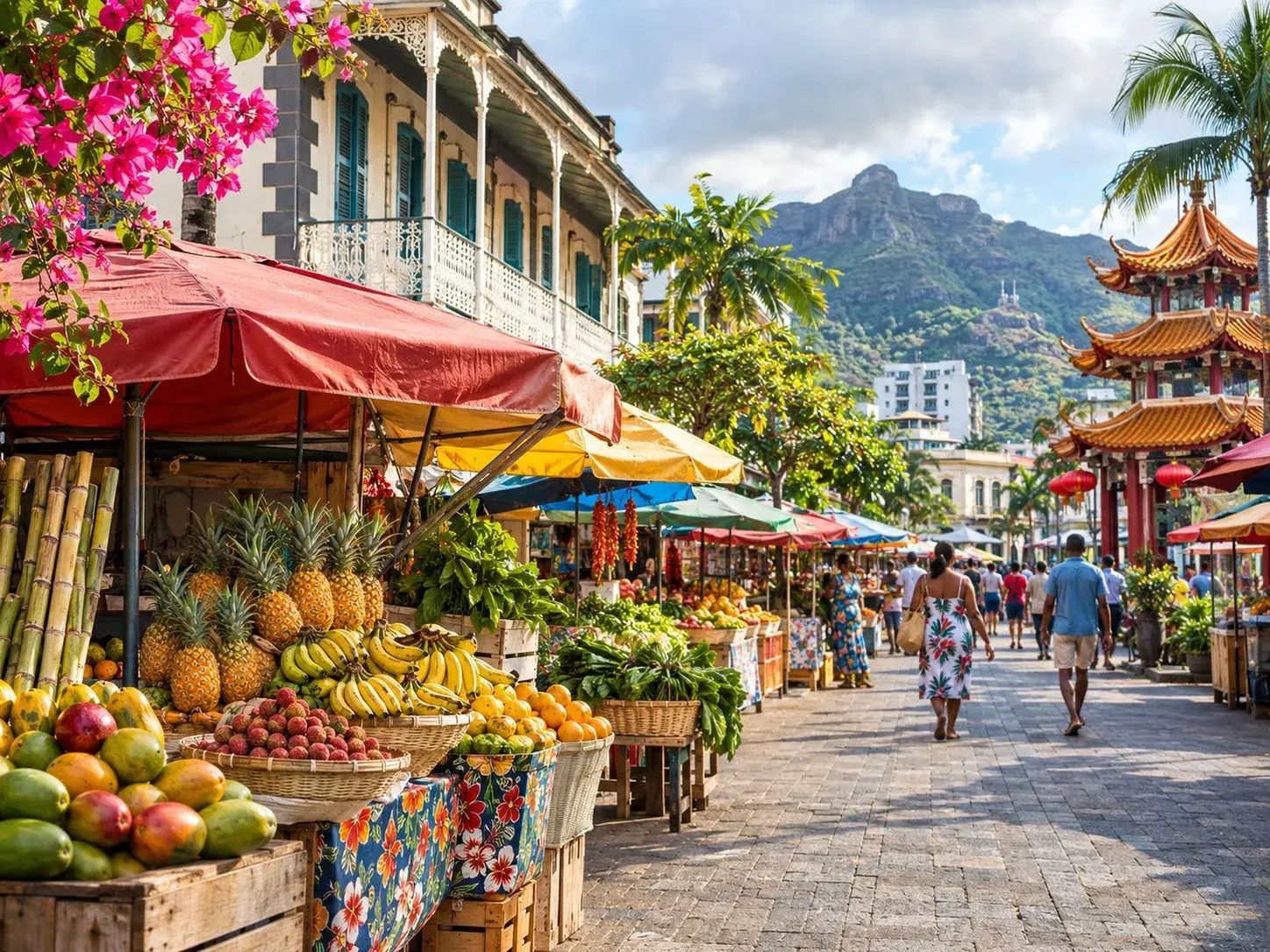 AI-generated image
National museum
Port-Louis
The island’s oldest museum, facing the Jardin de la Compagnie: five centuries of Mauritian natural history, and a dodo skeleton whose bones all come from a single bird.
AI-generated imageSeashell museum
Bel Ombre · Savanne
In Bel Ombre, a collection of 8,000 seashells from 1,500 species, the life’s work of a Mauritian collector.
AI-generated imageGlassblowing workshop
Phoenix · Plaines Wilhems
In Phoenix, a workshop where wholly recycled glass is blown before visitors’ eyes, and from which one may leave with a cast of one’s own hand.
AI-generated imageMuseum
Port-Louis
In the old General Post Office on the waterfront, a Victorian building completed in 1870, the story of Mauritian mail since the Dutch.
from MUR 225 per person
AI-generated imageMuseum and archaeological site
Vieux Grand Port · Grand Port
On the south-east coast, the place of the first human settlement in Mauritius: the French ruins raised on the Dutch fort of 1638, and the museum that explains them.
AI-generated imageWriter’s house
Souillac · Savanne
In Souillac, facing the sea, the coral bungalow where the Mauritian poet Robert Edward Hart spent his last years, kept as he lived in it.
AI-generated imageDay tour by car
Savanne
A tour of the south coast of Mauritius, from a tea factory visit to the cliffs of Gris Gris.
AI-generated imageDay tour by car
Black River
An outing in the south-west, from a wine estate to a rum distillery, lunch included.
AI-generated imageCity tour
Port-Louis
The heritage of the capital on foot, with street food stops.
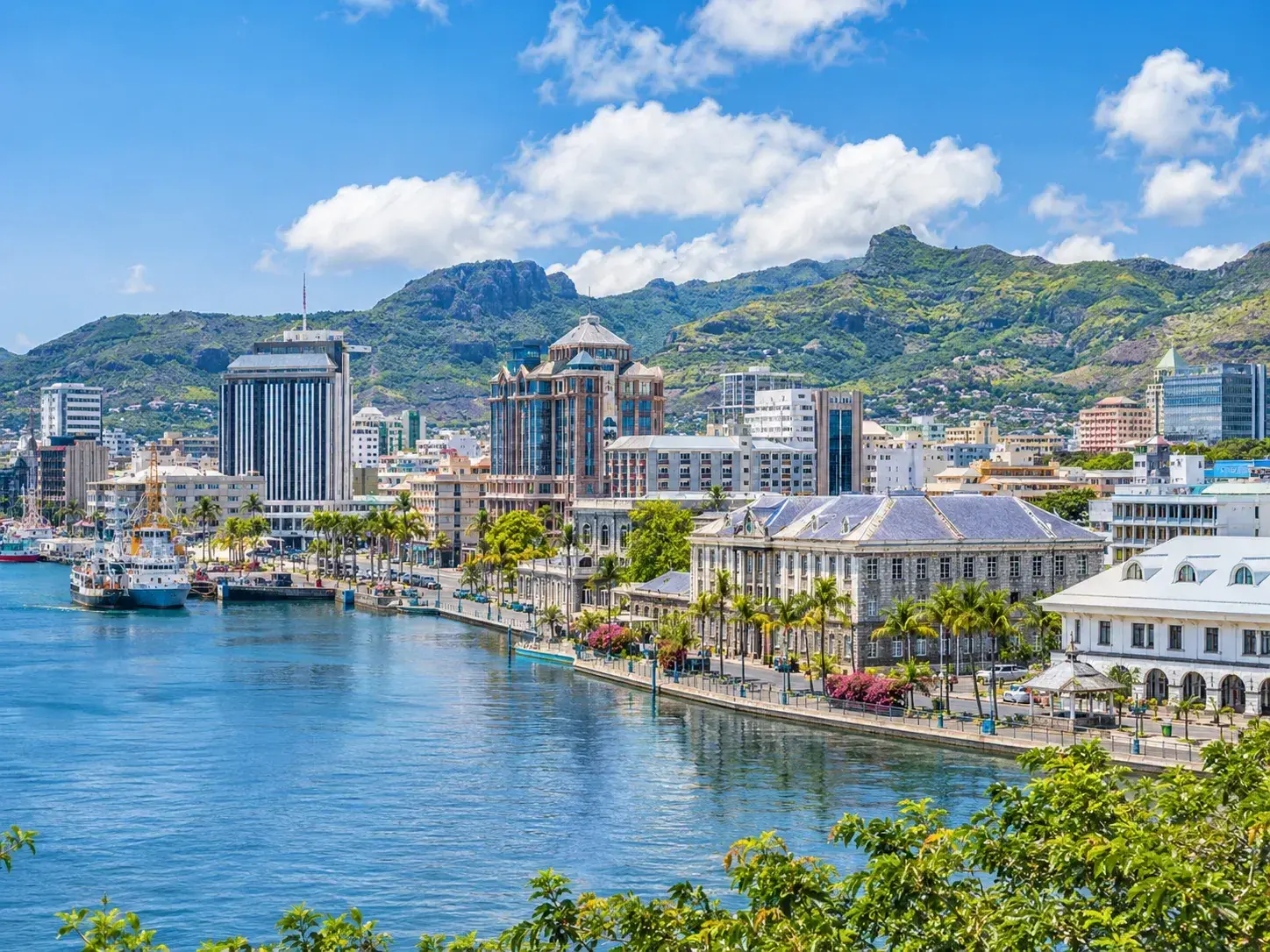 AI-generated image
City tour
Port-Louis
A private tour of the capital, with a guide and a street food tasting included.
AI-generated imageCity tour
Port-Louis
A tour of the capital with stops to taste its street food.
AI-generated imageDay tour by car
Savanne
The Tea Route, in the south of the island, followed by a rum tasting.
AI-generated imageCity tour
Port-Louis
Port Louis by taste, with a local guide and tastings along the way.
AI-generated imageDay tour by car
Tamarin · Black River
Sunset at Tamarin, on the west coast, accompanied by a tasting.
AI-generated imageDay tour by car
Tamarin · Black River
An outing to Tamarin, on the west coast, paired with a tasting.
AI-generated imageDay tour by car
Rivière des Anguilles · Savanne
An outing between a tea factory, a soft-toy factory and La Vanille park, lunch included.
AI-generated imageDay tour by car
Savanne
A tour of the south of Mauritius, paired with a rum tasting.
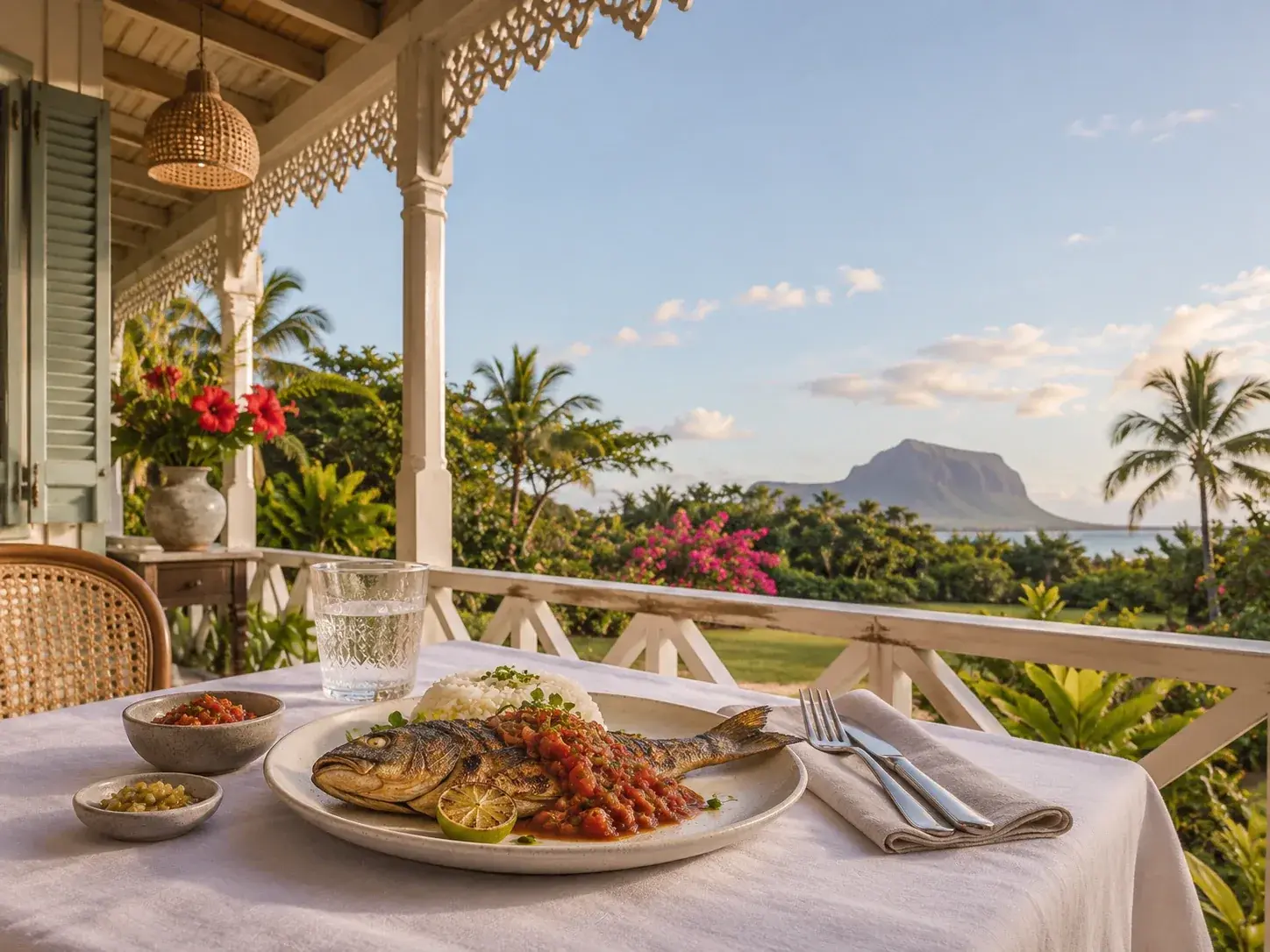 AI-generated image
Distillery restaurant
Chamarel · Black River
The table of the Rhumerie de Chamarel, on Route Royale: refined cooking drawn from the terroir of the south-west.
Mauritius has two seasons: a warm, humid summer from November to April, and a relatively cool, dry winter from June to September, with May and October as transition months. The wettest months are February and March, the driest is October. Mean annual rainfall over the island is 2,010 mm (1971-2000 average), of which 1,344 mm falls during the summer, that is 67 % of the total.
The cyclone season runs from 1 November to 15 May of the following year, although systems can form outside those dates. The forecast for the current season is published every year by the Mauritius Meteorological Services.
Warnings are issued in four classes: Class I about 36 to 48 hours before gusts of 120 km/h are expected, Class II so that, as far as practicable, 12 hours of daylight remain before those gusts, Class III 6 hours of daylight, and Class IV when such gusts are observed in some places and expected to continue.
When a warning is in force, follow the instructions of the Mauritius Meteorological Services, before, during and after a cyclone.
Bulletins and instructions from the Mauritius Meteorological Services

The guide to Mauritius: where to stay, what to do