Blue Bay, the coral garden of the south-east
A national park in 1997, a marine park in 2000, a Wetland of International Importance in 2008: Blue Bay protects 353 hectares of sea south of Mahébourg. You enter it from the beach, mask on, a few steps from the sand.
October 22, 2026
 AI-generated image
In the south-east of Mauritius, south of Mahébourg, one bay gathers within a few hundred metres all that is most accessible about the Mauritian lagoon. A public beach shaded by filao trees, calm, shallow water and, beneath the surface, a coral garden you can reach on foot. Blue Bay is at once a Sunday beach and one of the country’s two marine parks.
A bay protected three times over
Blue Bay’s protection was built up in stages. In October 1997, the bay was proclaimed a national park under the Wildlife and National Parks Act. In June 2000, it became a marine protected area and marine park under the Fisheries and Marine Resources Act. On 31 January 2008, it was listed as a Wetland of International Importance under the Ramsar Convention.
The park covers 353 hectares, or 3.5 square kilometres of sea, from Pointe Corps de Garde in the north to Pointe Vacoas in the south. It was designated because it shelters a marine ecosystem of rare beauty, rich and varied communities of flora and fauna, and above all coral reefs. With the Balaclava park, in the district of Pamplemousses, it is one of the island’s two marine parks, and one of Mauritius’s eight marine protected areas, which together protect 7,190 hectares of sea.
Beneath the surface
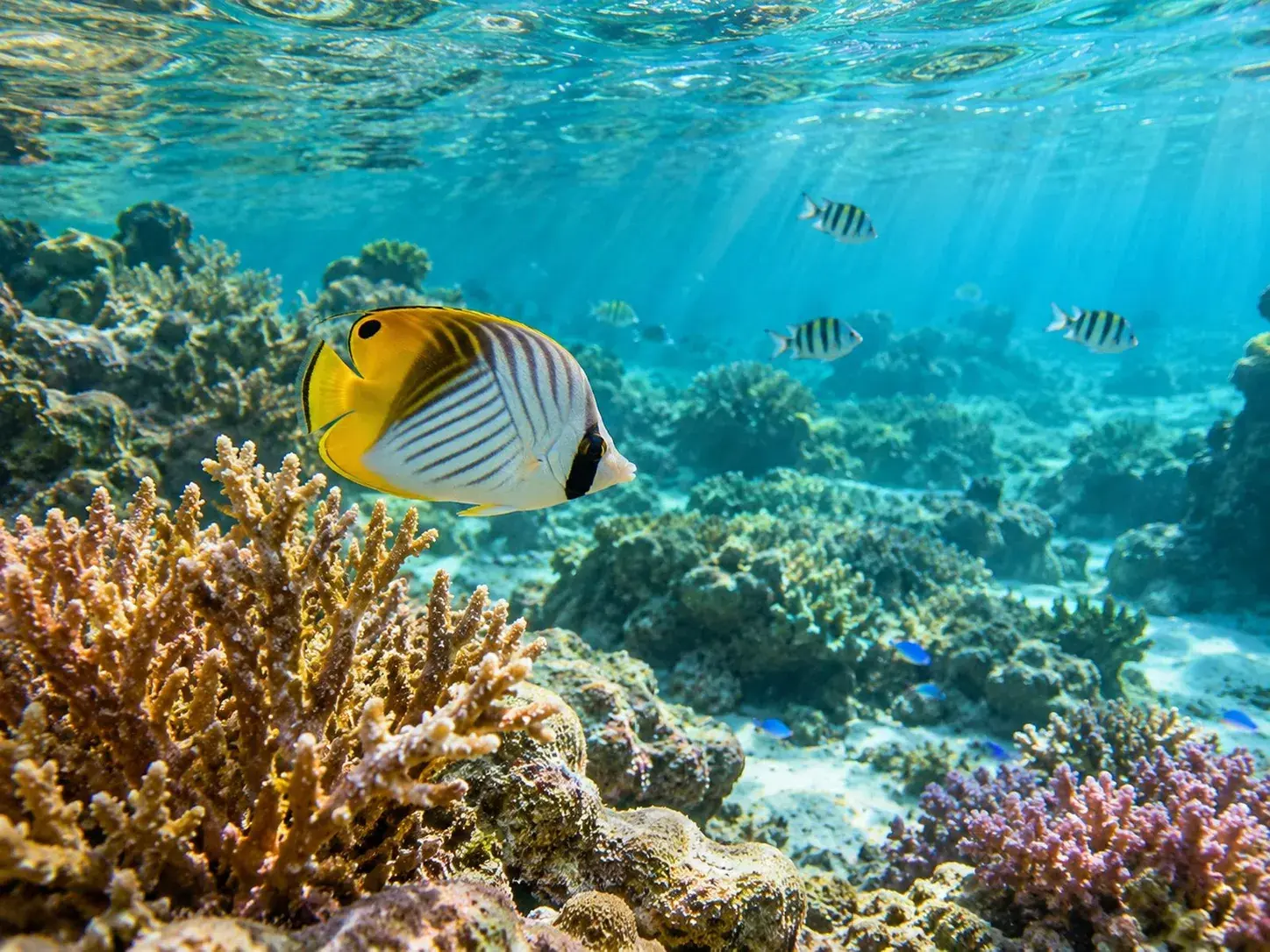
What sets Blue Bay apart is proximity. There is no need to go far: you walk into the water from the beach and, a few metres from the sand, you already see wrasses, clownfish, angelfish, corals and seagrass. A little further on, a garden of brain corals shelters butterflyfish and damselfish. The water is calm, shallow and very clear, which makes the park a natural choice for snorkelling. Turtles and dolphins sometimes appear.
Those who would rather stay dry board a glass-bottom boat. Blue Bay is one of the best places on the island for this kind of trip, precisely because the park is right there, beneath the hull. Other trips, on private boats, cruise the park or set out from it for the islets of the south-east.
The Sunday beach
Blue Bay beach has been public since 1940, which places it among the oldest public beaches on the island. It covers 4.8 hectares and borders the sea for about 400 metres. During the week, people read in the shade of the filao trees; at weekends, Mauritian families gather for picnics with music, and street vendors serve local food.
The beach is so busy that, on public holidays, an ambulance on standby, attached to J. Nehru Hospital, is stationed there for it alone. People swim, set off on excursions, go scuba diving, windsurf and parasail. To find space, it is best to come early.
Those who watch over the bay
A marine park has to be managed. Blue Bay’s is managed through zoning, a permit system and patrols, together with awareness campaigns and long-term scientific monitoring of the reefs, fauna and flora. The Blue Bay Marine Park Centre, opened in June 2016, houses the officers responsible for enforcement, surveillance and the issuing of permits, as well as research equipment. An exhibition room, funded through Japanese cooperation, was opened there on 26 July 2023 to introduce schoolchildren and the public to the marine environment.
The park is also a work in progress. Coral nurseries have been installed in it to rehabilitate degraded areas, and it is in its waters that a reef restoration programme based on heat-tolerant corals is concentrated in Mauritius.
The sea itself is measured here. A tide gauge has been operating at Blue Bay since November 2008: it tracks changes in sea level and forms part of the global tsunami monitoring network. Since September 2009, a wave buoy moored off the coast has recorded high waves and is used to warn fishermen and the public when the sea turns dangerous.
Around the bay
Blue Bay opens onto the south-eastern lagoon and its islets. The most famous, Île aux Aigrettes, has been a nature reserve since 1965. Its 26 hectares hold the island’s last remnant of ebony-rich forest, and restoration has made it a refuge: today it shelters a fifth of the world population of pink pigeons, as well as the Mauritius fody and free-roaming giant tortoises. It can be discovered on a guided visit, or circled on a commentated sunset cruise.
Île des Deux Cocos is one of the islets in the south-eastern chain, and boat trips take visitors there for the day, lunch included. Blue Bay thus lends itself to two very different days: one on the sand and in the water of the park, the other by boat, from islet to islet, along a coast that has been protected for nearly thirty years.
To book
Things to do from this article
- Book on GetYourGuide →
- Book on GetYourGuide →
Boat trip · Blue Bay
Blue Bay: glass-bottom boat and snorkelling - Book on GetYourGuide →
Diving and snorkelling · Blue Bay
Blue Bay: eco-tour and snorkelling for coral protection - Book on GetYourGuide →
- Book on GetYourGuide →
Boat trip · Blue Bay
Half-day private motorboat trip from Blue Bay - Book on GetYourGuide →
Boat trip · Blue Bay
Île des Deux Cocos: excursion with all-inclusive lunch
Read next
 AI-generated image
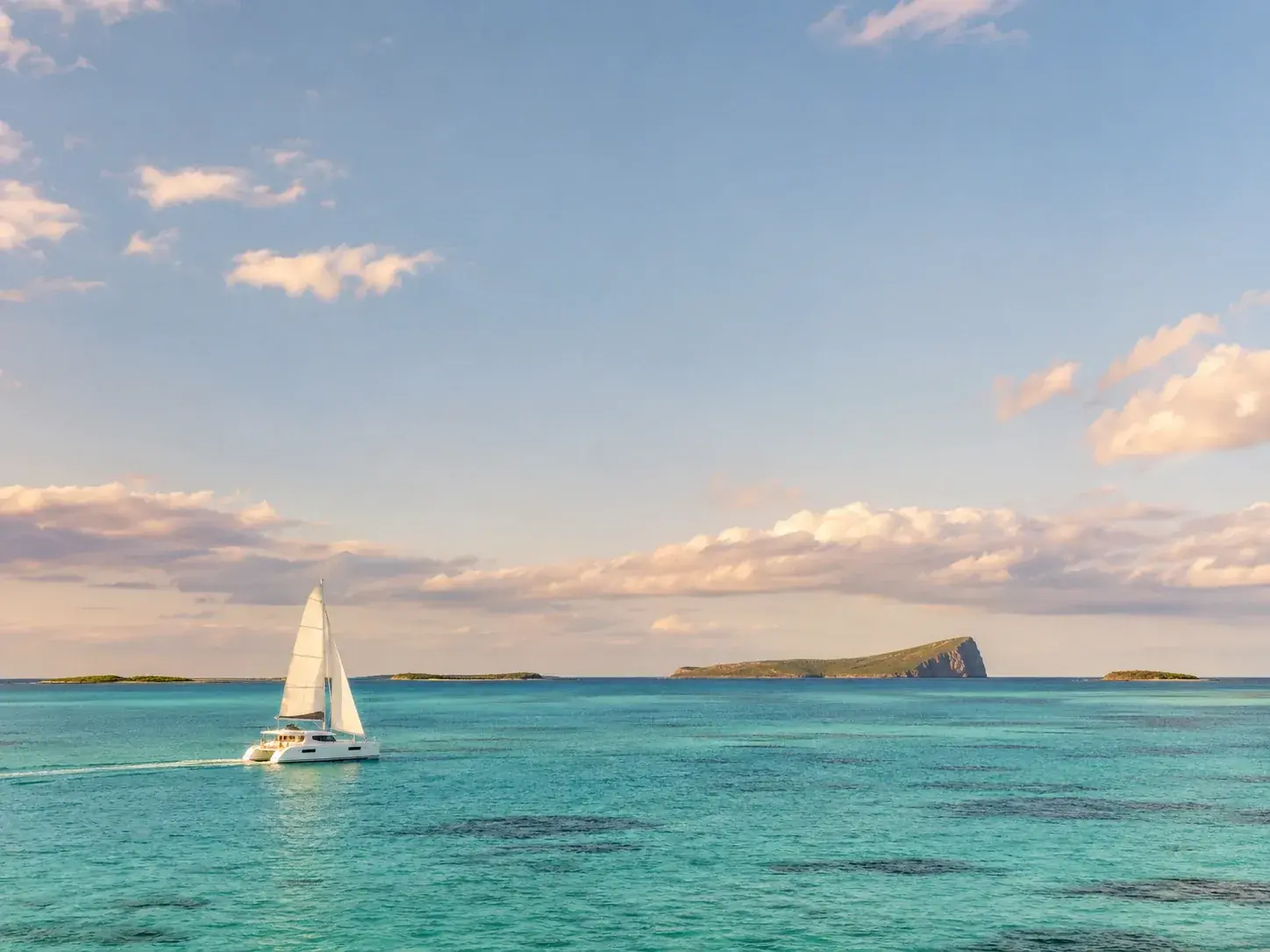
A day on a catamaran
- AI-generated image
The lagoon and its coloured buoys
 AI-generated image
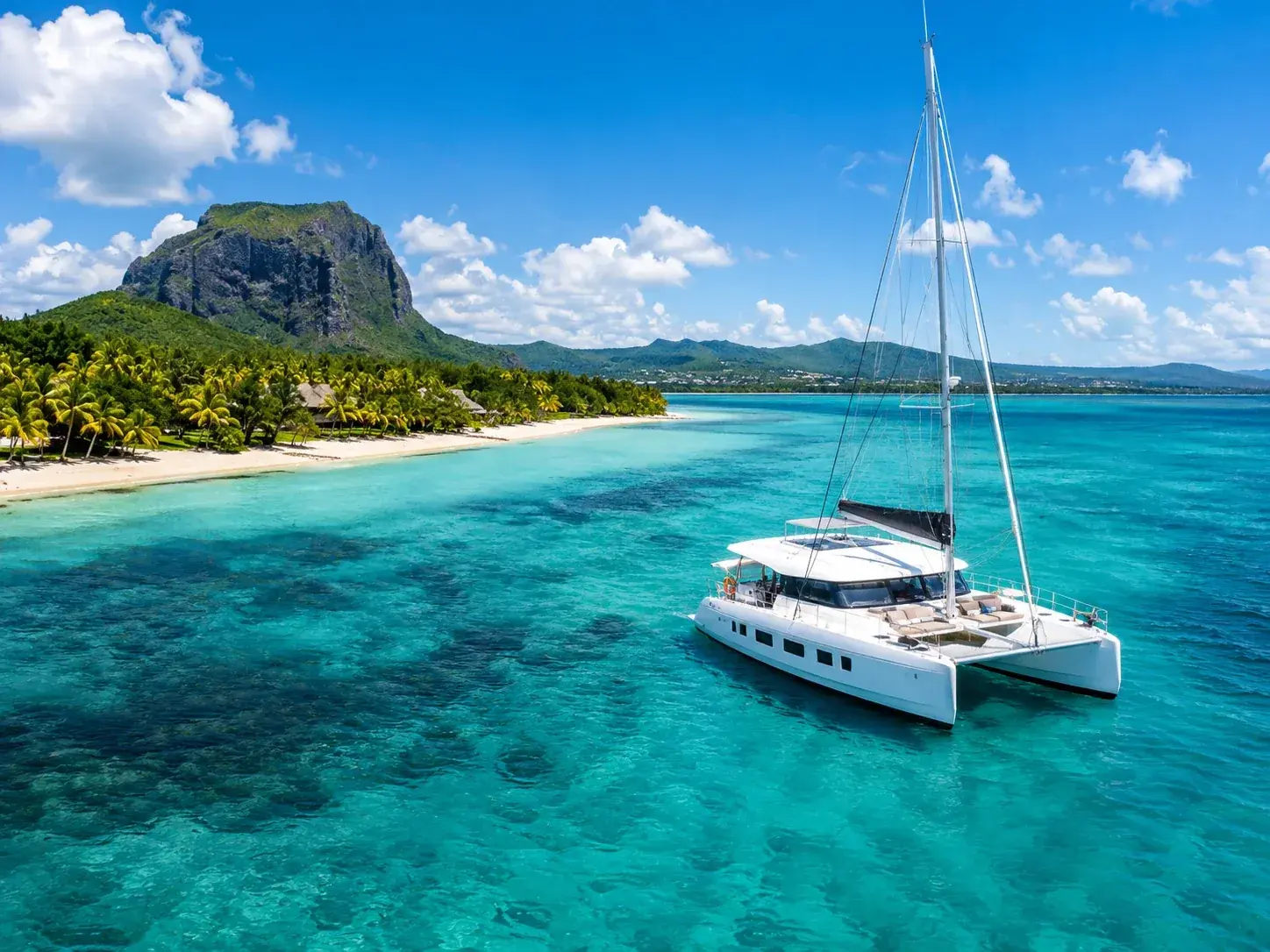
Île aux Cerfs, a day off Trou d’Eau Douce
Where to stay
Stay in Blue Bay
Places to stay that are still available, with current prices, compared across the main booking platforms.