
A day on a catamaran
The net stretched between the hulls, the anchor dropped in a cove, lunch served on board or on an island: a day on a catamaran has become a way of seeing Mauritius. Three coasts, three seas, and the rules that keep a hand on the helm.
November 4, 2026
 AI-generated image
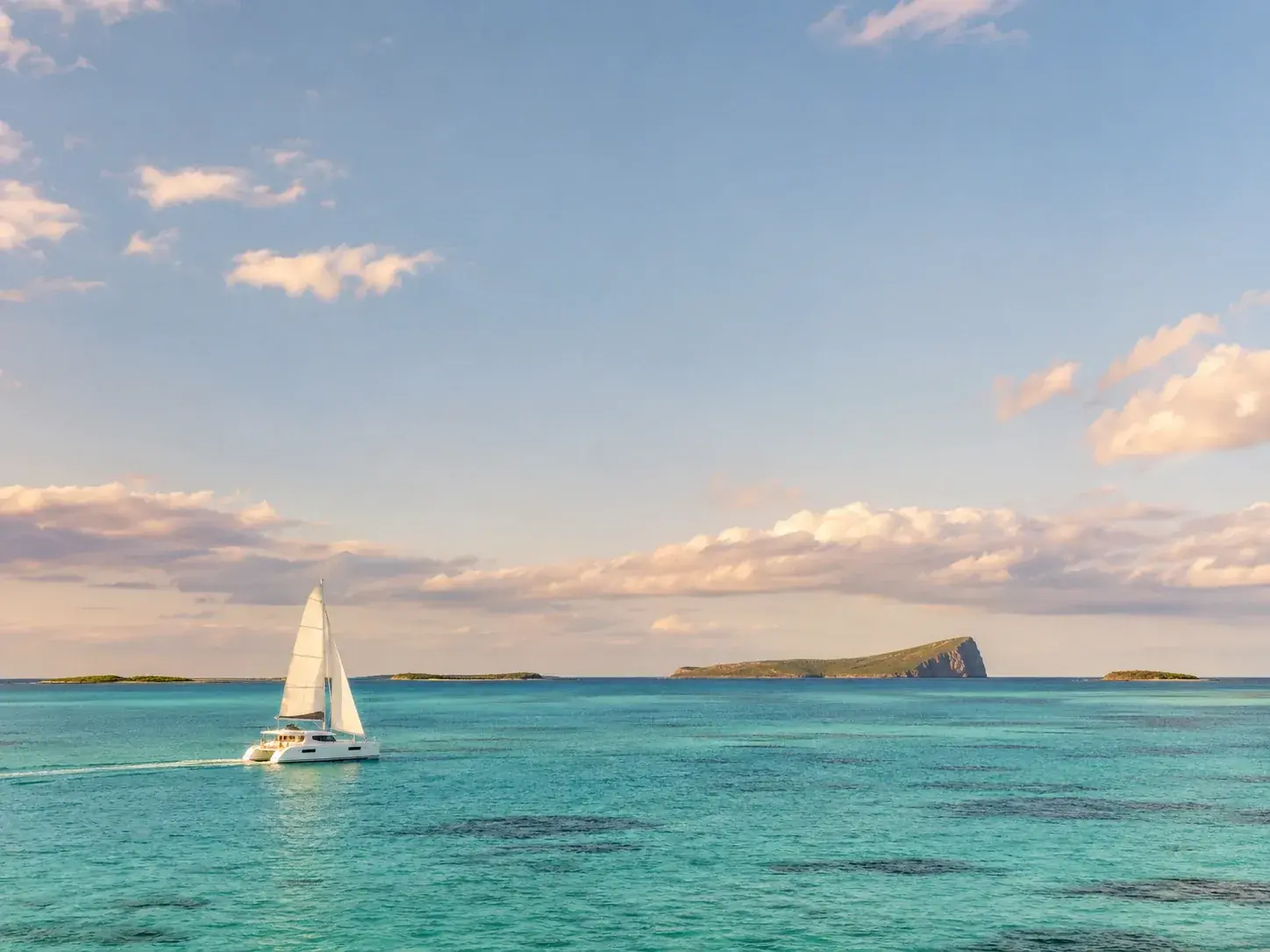
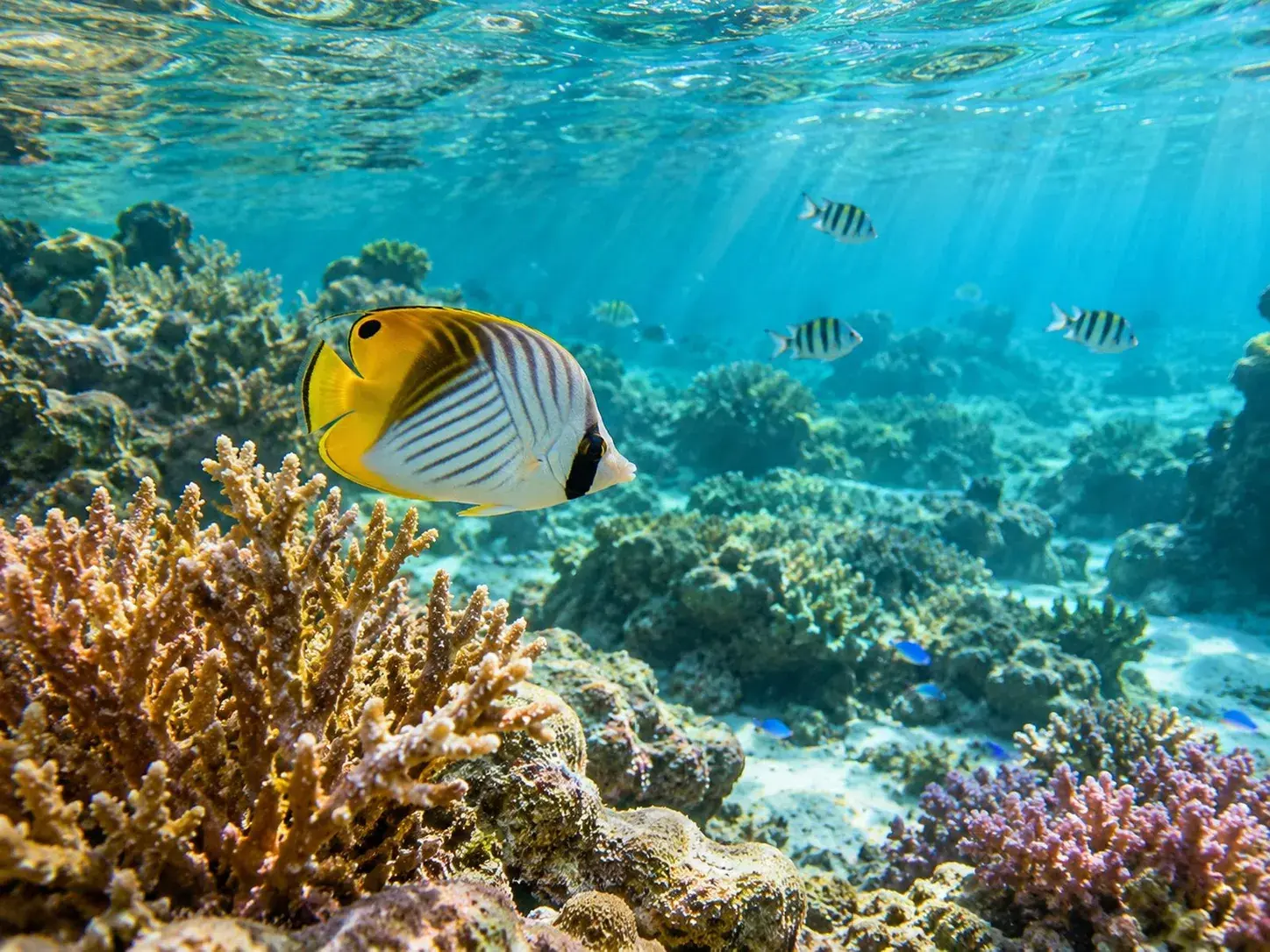
You stretch out on the net strung between the two hulls, above the rushing water. You drop anchor in a secluded cove to swim and look at the seabed through a mask, then climb back aboard for a lunch of fresh salads and fruit. Sometimes a group of dolphins escorts the boat. A day on a catamaran comes down to these few gestures, and it is one of the simplest ways of seeing the Mauritian coast from the sea. What changes from one trip to the next is the coast you choose.
The north, heading for the islands
In the north, catamarans leave from Grand Baie, at the head of its sheltered horseshoe bay, and make for the tip of the island, where Cap Malheureux faces Coin de Mire. The day has a common thread: the offshore islands. Coin de Mire, a nature reserve where no one lands, is admired from the water for its orange cliffs and its seabirds, and the sea around it lends itself to snorkelling. Further on, Gabriel Island offers its white sandbank, and Flat Island, uninhabited, its white lighthouse.
The formats vary little in principle: three islands in a day, lunch served on the island rather than on board, sometimes an all-inclusive package with hotel transfer. In the evening, other catamarans leave Grand Baie for a sunset cruise, cocktail in hand, or for dinner on board with a private group.
 AI-generated image
The east, Île aux Cerfs
In the east, departures are from Trou d’Eau Douce, facing the island, and from the neighbouring coast. The natural destination is Île aux Cerfs, 87 hectares with no residents and no hotel, whose northern tip brings together beaches, bars and grills, and whose east coast, under the filao trees, offers quieter stretches. Many cruises add a trip up to the waterfall of the Grande Rivière Sud-Est, the island’s longest river, approached by water. Others tour the five islands of the south-east. Lunch is often a barbecue, served ashore or on board.
The west, the coast of sunsets
The west has two rhythms. Morning belongs to the dolphins. The law sets it so: commercial dolphin watching takes place only between six in the morning and noon, and swimming near them between six and nine. Cruises in the La Gaulette area therefore combine, early in the day, the search for dolphins, a barbecue and a stop at Île aux Bénitiers, an uninhabited island about two kilometres long and five hundred metres wide, with its beach and small coconut grove. You can swim across the lagoon to Crystal Rock.
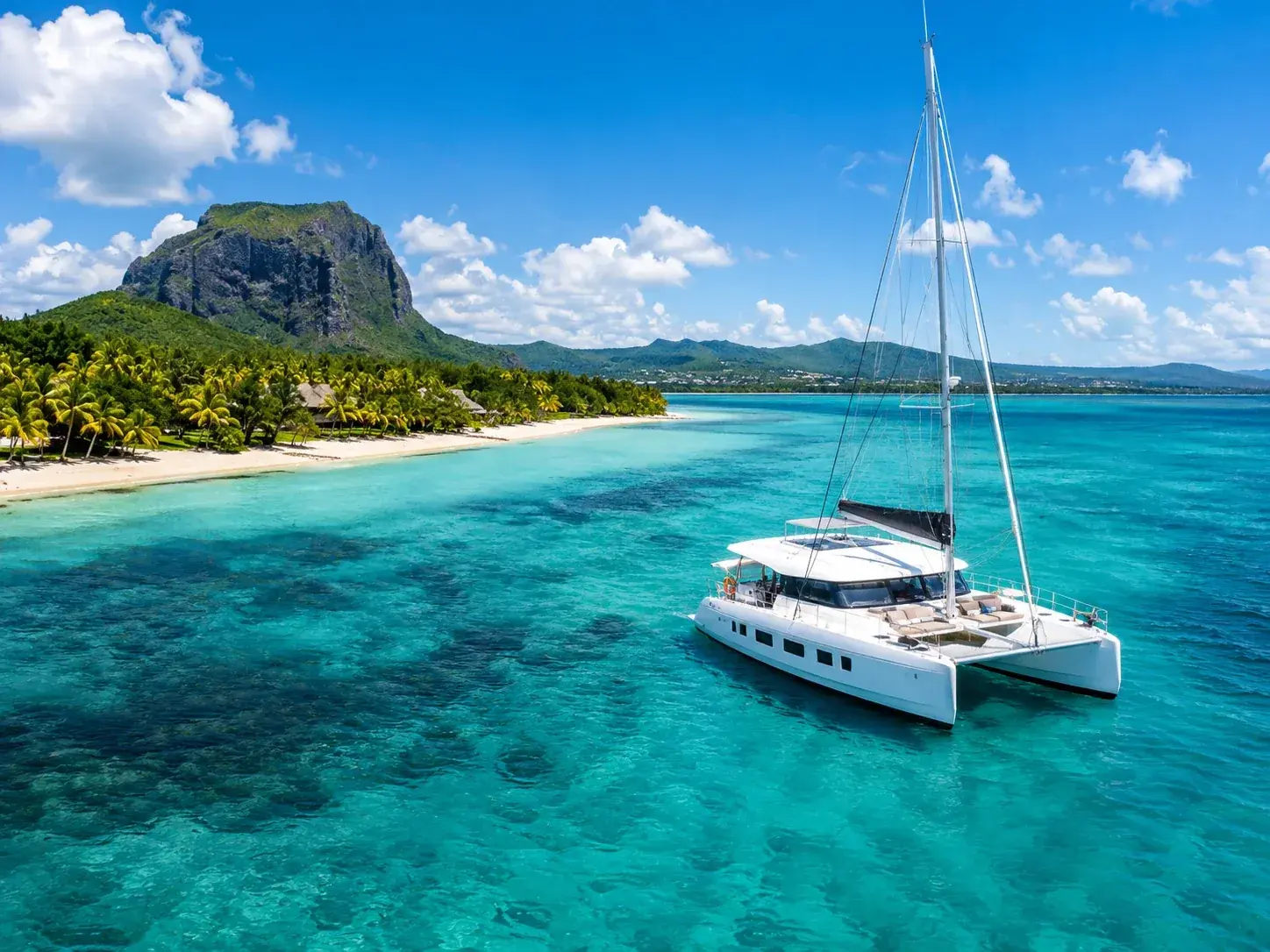
Evening belongs to the sun. The west coast is the coast of sunsets, and it is around La Preneuse, a quiet beach guarded by a Martello tower, that catamarans put to sea to watch the sun sink towards the horizon, with drinks and snacks served on board and Le Morne Brabant on the skyline.
 AI-generated image
What the law requires of the boat
A cruising catamaran is a pleasure craft, and the Tourism Authority Act 2006 regulates it closely. No one may operate one without a pleasure craft licence. On the first application, the boat and its engine are inspected by an approved surveyor. It must carry the prescribed equipment, and insurance must cover the operator’s liability for the death of or injury to passengers and for damage caused. Operating without a licence or without insurance carries a fine of up to 50,000 rupees and one year’s imprisonment, more for a repeat offence.
Whoever is at the helm must hold a skipper’s licence matching the boat’s category. For a pleasure craft used commercially, he or she must be at least eighteen. The law also sets an alcohol limit for the skipper: 23 micrograms per 100 millilitres of breath. Finally, in the Blue Bay and Balaclava marine parks, a vessel may enter only with a permit.
Marine weather is closely watched. The Mauritius Meteorological Services publish forecasts for recreational activities at sea, and two daily bulletins for fishermen.
Choosing your day
The choice comes down to three questions. Which coast, first: the islands and their reserves in the north, Île aux Cerfs in the east, dolphins in the morning and the sun in the evening in the west. Which format, next: a full day with lunch, a half day, or a late-afternoon cruise. Shared or private, finally: many trips can be booked for a single group, up to the private four-hour sunset cruise with dinner included.
For the rest, a catamaran asks little. A hat, water, sun cream, a mask if you have one, and the acceptance that a day at sea is governed by the wind, the swell and the animals far more than by a printed programme.
To book
Things to do from this article
- Book on GetYourGuide →
Catamaran cruise
Full-day catamaran cruise to the northern islands - Book on GetYourGuide →
Catamaran cruise · Cap Malheureux
Full-day catamaran cruise to the northern islands, with lunch - Book on GetYourGuide →
Catamaran cruise · La Gaulette
Catamaran cruise: dolphin watching, barbecue and drinks - Book on GetYourGuide →
Catamaran cruise
Catamaran cruise to Coin de Mire, with lunch - Book on GetYourGuide →
Catamaran cruise · Grand Baie
Sunset catamaran cruise in the north, with drinks and snacks - Book on GetYourGuide →
Catamaran cruise · La Preneuse
Sunset catamaran cruise with drinks and snacks, La Preneuse
Read next
- AI-generated image
The lagoon and its coloured buoys
- AI-generated image
Blue Bay, the coral garden of the south-east
- AI-generated image
Île aux Cerfs, a day off Trou d’Eau Douce
Where to stay
Stay in Mauritius
Places to stay that are still available, with current prices, compared across the main booking platforms.