The reef, the island’s fragile rampart
A hundred and fifty kilometres of reef enclose the lagoons of Mauritius and shelter its coast. In eighteen years, the share of living coral has shrunk by almost two thirds, and the island has taken to farming it.
July 10, 2026
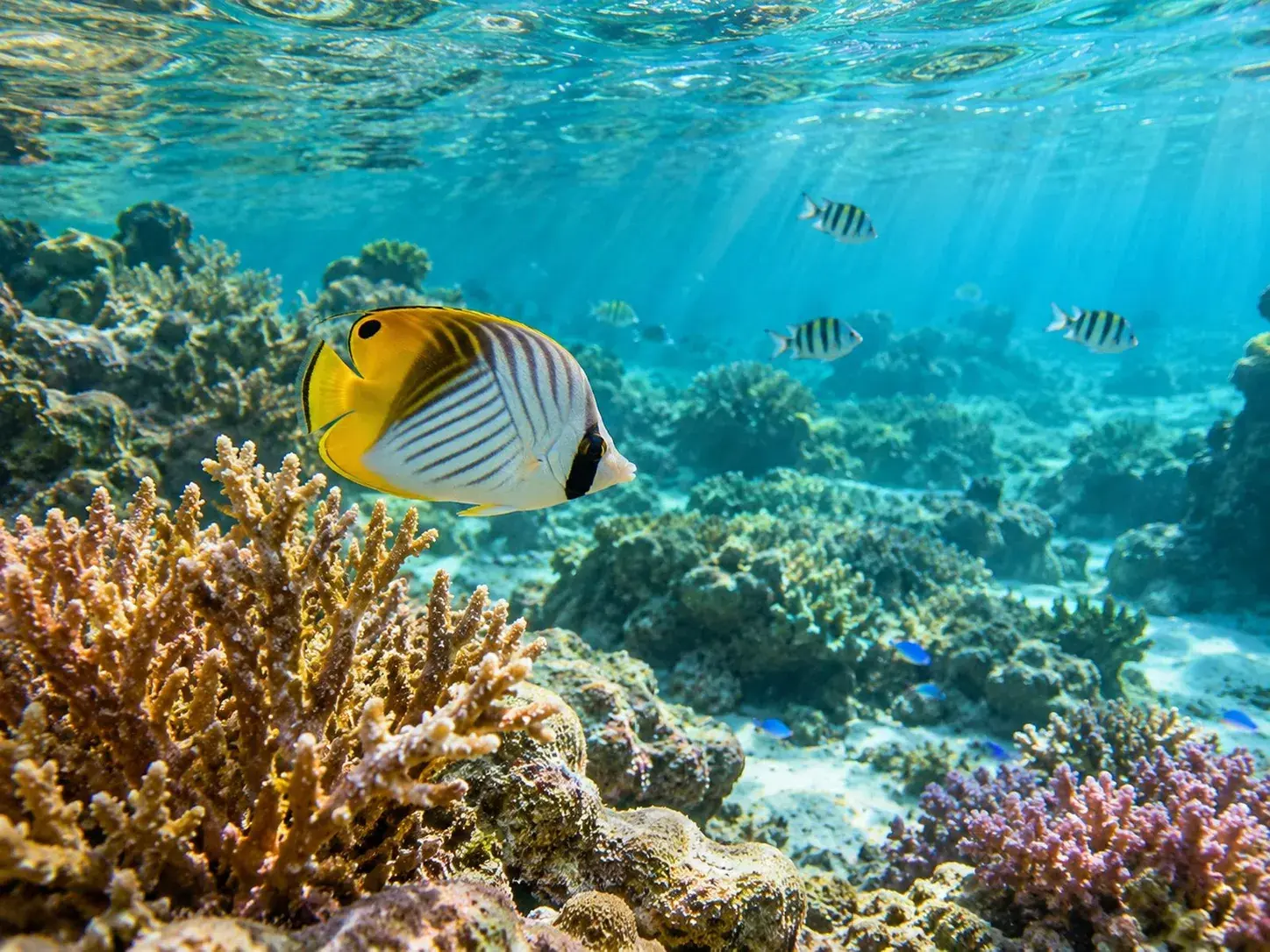 AI-generated image
Seen from the air, the reef traces a white line of surf around Mauritius, set some distance from the shore. It runs for about 150 kilometres and encloses 243 square kilometres of lagoon. Between that line and the beach, the water calms, clears and takes on the shades of turquoise that made the island’s name. The reef is not scenery kept out at sea: it is what makes the lagoon.
A reef that follows the coast
The Mauritian reef is first and foremost a fringing reef, following the outline of the shore, supplemented by isolated patch reefs and stretches of barrier reef. It is home to 159 species of hard coral and some 340 species of fish.
These figures speak of diversity; they say less about use, and the reef is of real use. It protects the coast, and the low-lying homes along it, against flooding from the sea. It sustains inshore and artisanal fishing, the livelihood of the seaside villages. And it carries a good share of tourism, which lives on its seabed, its colours and the calm water it holds back.
Behind it, other habitats complete the whole. Seagrass beds carpet part of the sandy floor, and mangroves line certain bays. Since 1995, a replanting programme has put some 400,000 propagules and young plants into the ground over about twenty hectares, at 21 sites around the island. In 2025, mangroves covered 243 hectares, plantations and natural stands combined, and mangrove trees are protected species under the fisheries law of 2023.
What the reef has lost
The picture comes down to two numbers. In 2000, living coral covered roughly half of the reef floor; by 2018, it covered only around 18 per cent. In eighteen years, then, living cover lost nearly two thirds of its extent.
The causes are known, and they add up. Some are local: coastal development, erosion and siltation, nutrient enrichment of the water, heavy-metal pollution, falling salinity, coral disease, seine-net fishing, outbreaks of predators, cyclones, and recreational use itself, which is on the rise. Others are global: ocean acidification, rising water temperatures and recurring bleaching events.
Bleaching is the most brutal. During the global event of 2016, 40 to 50 per cent of Mauritius’s living coral cover was affected. The consequences go beyond the coral: species disappear locally, reef communities change, biodiversity declines. Then come the effects felt on land, on fishing, on the protection of the shoreline, on the island’s appeal to those who come to see it.
The south-east bears a particular wound as well: the grounding of the Wakashio and the oil spill that followed. An environmental monitoring programme is devoted to it, and a project carried out with Japanese cooperation, from 2022 to 2027, aims to restore this stretch of coast, damaged by the grounding and by other human pressures.
Farming coral
Mauritius began farming its corals early. From 2008 to 2010, the Mauritius Oceanography Institute developed the land-based culture of a few selected species. From 2011 to 2014, it moved on to rehabilitating small areas of reef. From 2017, it began training coastal communities in coral farming and reef repair.
The effort has since grown. A project run with the United Nations and financed by the Adaptation Fund, planned from 2020 to 2026 with a total budget of 10.5 million dollars, is betting on heat-tolerant corals. Its targets are modest and precise: at least 3.2 hectares of degraded reef restored in Mauritius and one hectare in Rodrigues, using farmed corals, and an increase of at least 10 per cent in live coral cover and fish density. Two nurseries have been set up on land, at Albion: one at the Albion Fisheries Research Centre for sexual reproduction, the other at the Mauritius Oceanography Institute for asexual reproduction. At sea, the work is concentrated in the marine protected areas, first among them the Blue Bay Marine Park; coral nurseries have also been laid in the Blue Bay and Balaclava parks to rehabilitate their degraded zones.
Another programme trains registered fishers in two techniques, the coral table and the rope nursery, in four regions of the island: Belle Mare, Bel Ombre, Le Morne and Grand Gaube. The stated aim is to train a hundred trainers and three hundred trainees. Coral is becoming one more trade for those who make their living from the sea.
Keeping watch, and swimming lightly
The reef is closely monitored. The Albion Fisheries Research Centre surveys it at sixteen stations around the island, on the outer slope, in the back-reef and near the shore. It also watches for outbreaks of Acanthaster, the crown-of-thorns starfish, and takes measures to contain them.
For the visitor, the upshot is simple. Recreational use is among the pressures bearing on the reef, and every swimmer is part of it. In the marine parks, taking or damaging coral is forbidden; elsewhere, restraint remains the best way to swim over a habitat that has lost nearly two thirds of its living cover in eighteen years. Look, take photographs, and set down neither hand nor fin.
To book
Things to do from this article
- Book on GetYourGuide →
Boat trip · Blue Bay
Blue Bay: glass-bottom boat and snorkelling - Book on GetYourGuide →
Diving and snorkelling · Blue Bay
Blue Bay: eco-tour and snorkelling for coral protection - Book on GetYourGuide →
Diving and snorkelling · Grand Baie
Coin de Mire: two-hour private snorkelling trip - Book on GetYourGuide →
Boat trip · Trou d’Eau Douce
Speedboat cruise to five islands: snorkelling, lunch and open bar - Book on GetYourGuide →
Diving and snorkelling · Belle Mare
Discover scuba diving at Belle Mare - Book on GetYourGuide →
Boat trip · Trou d’Eau Douce
Speedboat excursion around the five islands with snorkelling and barbecue
Read next
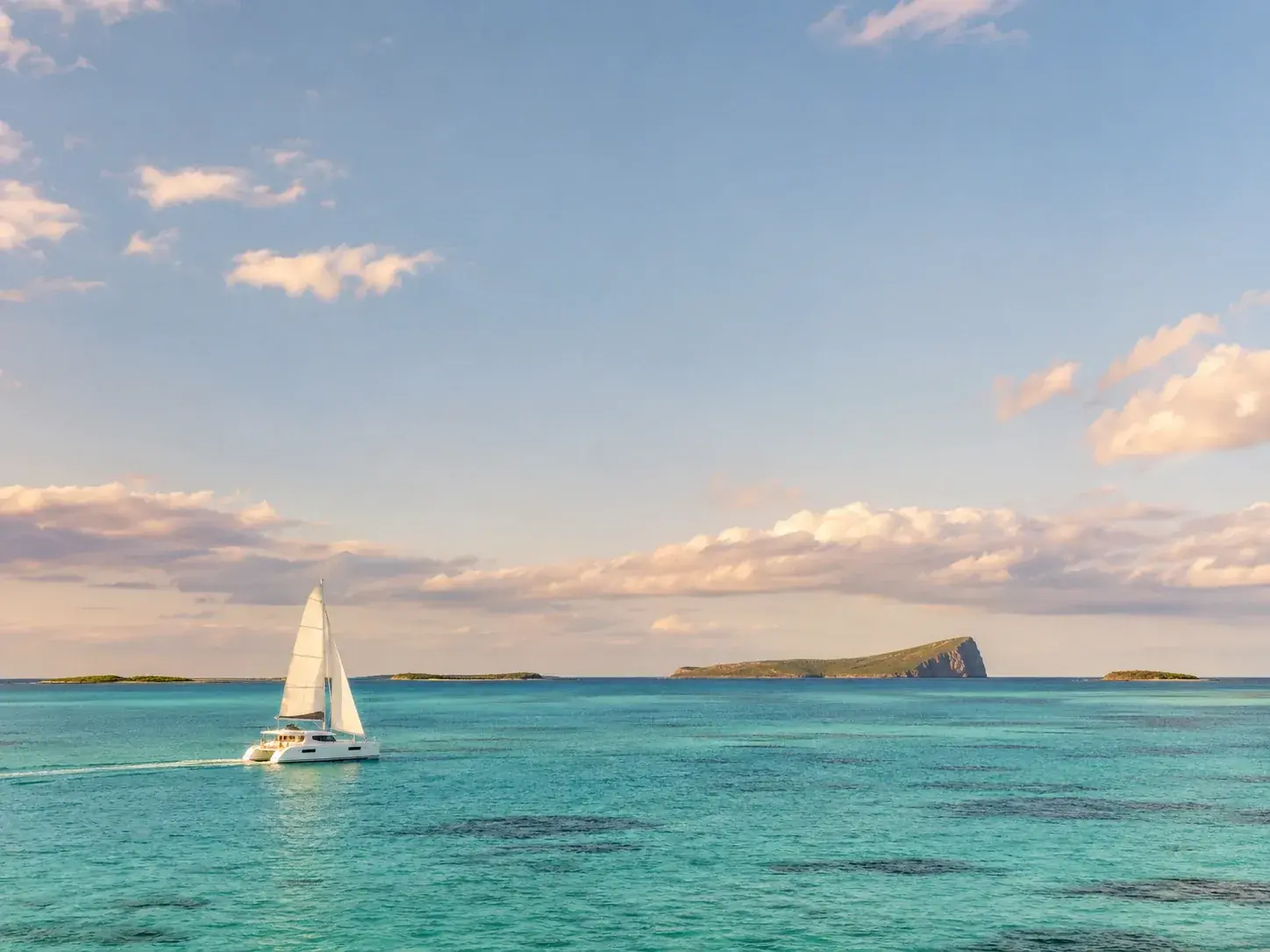 AI-generated image
A day on a catamaran
- AI-generated image
The lagoon and its coloured buoys
- AI-generated image
Blue Bay, the coral garden of the south-east
Where to stay
Stay in Mauritius
Places to stay that are still available, with current prices, compared across the main booking platforms.