Le Morne, a lagoon made for kitesurfing
At the island’s south-western tip, the winter trade wind fills the kites above a shallow lagoon closed off by the reef. You learn on flat water and then, beyond it, go in search of a famous wave.
August 31, 2026
 AI-generated image
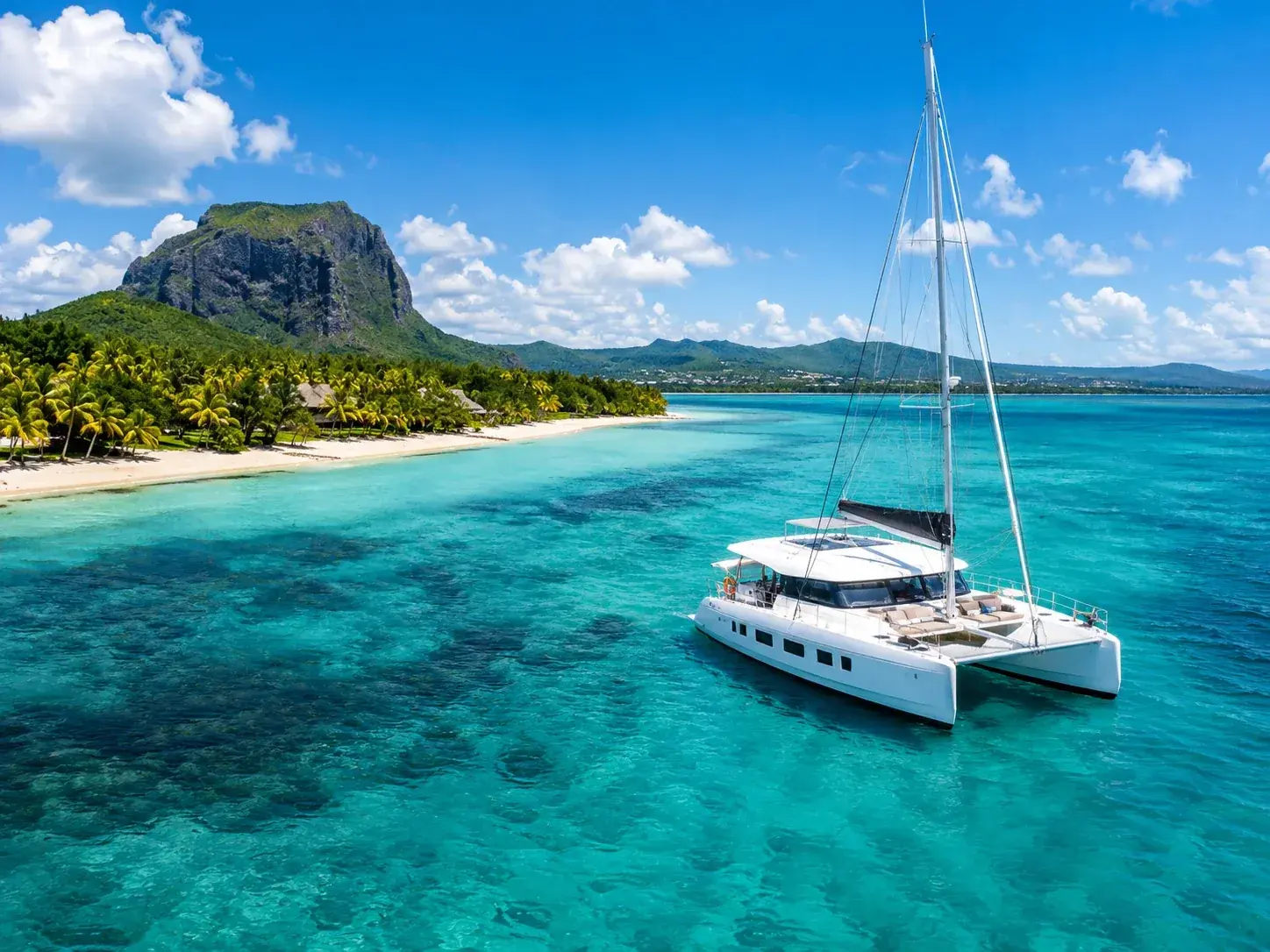
Mauritius has kitesurfing spots all around the island, but it is the south that has the firmest reputation: strong, steady trade winds, especially from April to November. At the south-western tip, the Le Morne peninsula brings together both faces of the sport. In the lagoon, the shallow, sheltered water serves as a school. Beyond the reef, the One Eye wave, at Pointe du Morne, is among the most famous spots on the island for those who already have experience.
The wind season
The kitesurfing calendar follows that of the trade wind. The southern winter, relatively cool and dry from June to September, is also the season when the wind picks up. At Médine, the reference weather station for the west of the island, the mean wind speed is 7.6 kilometres per hour in January; it reaches 15.2 in June and July, then 17.1 in August, averages calculated over the period 1971 to 2000. Between the height of summer and the depth of winter, the mean wind more than doubles.
These figures apply to a station on land, not to the water. They nonetheless show the direction of the season: people come to Le Morne for the wind between April and November, and it is from June to September that the averages are highest, peaking in August. Those looking for a calm sea for swimming will do the opposite sum.
 AI-generated image
A lagoon made for learning
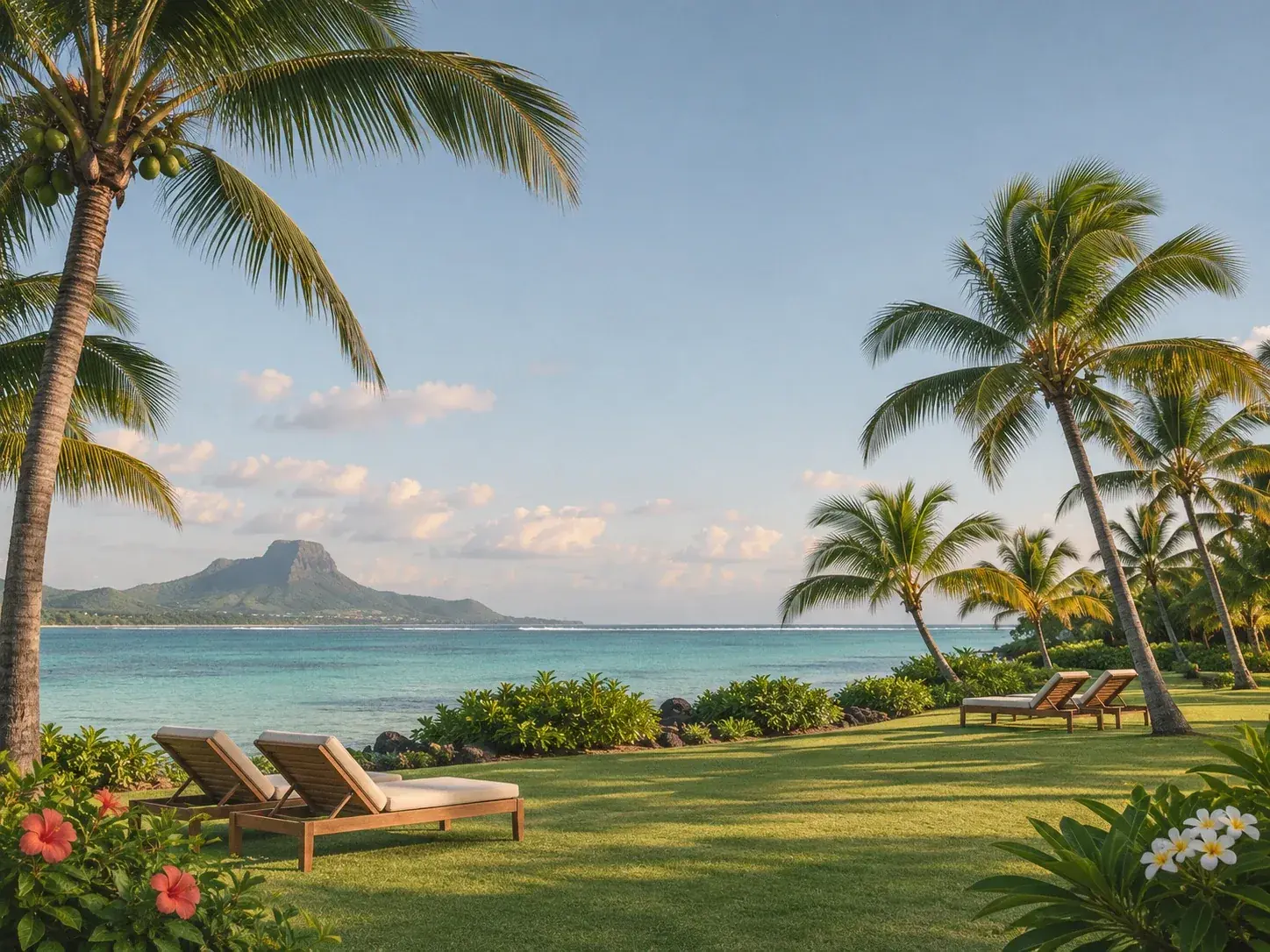
The Le Morne lagoon has its shallowness in its favour, and the barrier of the reef, which holds the swell offshore. The schools have made it their territory. The Kite Lagoon at Le Morne, its shallow water protected by the reef, is one of the peninsula’s practice areas. The Dinarobin, at the foot of the mountain, runs a kitesurfing school affiliated to the International Kiteboarding Organization, the IKO, and to the Association française de kite, along a shore where seven kilometres of beach can be walked. LUX* Le Morne and the St. Regis, on the same peninsula, also offer kitesurfing.
The beach itself is public, and vast. It is made up of four sections, which together cover 22.3 hectares and 3,480 metres of shoreline. The longest, La Pointe Cassis, in Le Morne village, accounts for 1,940 metres on its own: the longest shoreline of any single public beach section in the whole of the west of the island. On days when the wind drops, Le Morne is still a beach.
Beyond the reef
Past the line of surf, the scenery changes scale. The Mascarene islands rest on an undersea plateau that lies no more than 150 metres below the surface, but whose edge plunges to more than 4,000 metres. Off the Le Morne peninsula, currents push sand and silt over that edge. Seen from the air, the phenomenon looks like an underwater waterfall; it is not water falling, but sand sliding. Its shape can be made out from the summit of Le Morne Brabant, more than 500 metres high, and seen in full from a helicopter or a seaplane.
It is on this threshold, between the lagoon and the open ocean, that the One Eye wave forms. It is no classroom: you head out to it once you have already mastered your kite and board.
Sharing the water
The west coast is also dolphin country, and the law settles conflicts of use. No one may knowingly kitesurf, windsurf or ride a jet ski within 500 metres of the nearest dolphin or whale. When a group passes, the kitesurfer moves away, and waiting is part of the sport.
Le Morne is not the island’s only stretch of water. In the north, the Anse la Raie lagoon is a recognised spot, and the waters of Grand Gaube welcome kitesurfing too. On the north-east coast, at Poste Lafayette, more exposed to the wind than the west, it is practised straight from the beach. In the south-east, a kitesurfing and kitefoiling school has set up near Mahébourg. From Bel Ombre, on the south coast, the spots are some twenty minutes away by road.
But it is at Le Morne that everything comes together: a mountain as a backdrop, a lagoon to learn in, a wave to test yourself against, and the winter trade wind to keep the kite aloft. For newcomers to the sport, the safest course is still to take first lessons at an affiliated school, on flat water, and to leave the wave for another trip.
The addresses
Places mentioned
- LUX* Le MorneHotel · Le Morne★★★★★Book on Booking.com →
Read next
 AI-generated image
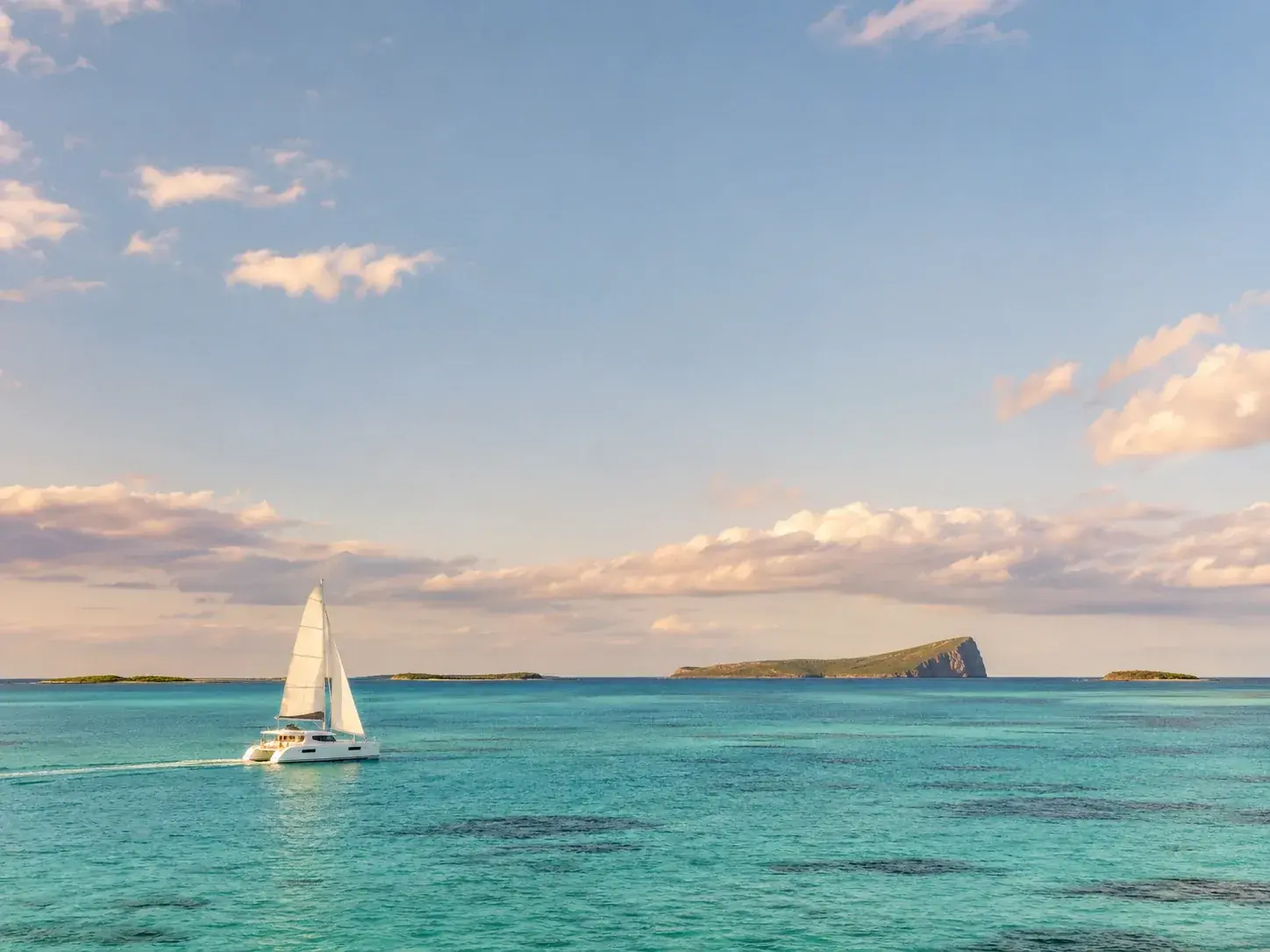
A day on a catamaran
 AI-generated image
The lagoon and its coloured buoys
- AI-generated image
Blue Bay, the coral garden of the south-east
Where to stay
Stay at Le Morne
Places to stay that are still available, with current prices, compared across the main booking platforms.