
Big-game fishing, on the threshold of the open ocean
Around Mauritius, a volcanic island, deep water begins close to the reef. Blue and black marlin, tuna and dorado are pursued here by the day, and an international competition has brought anglers together since the early 1980s.
September 13, 2026
 AI-generated image
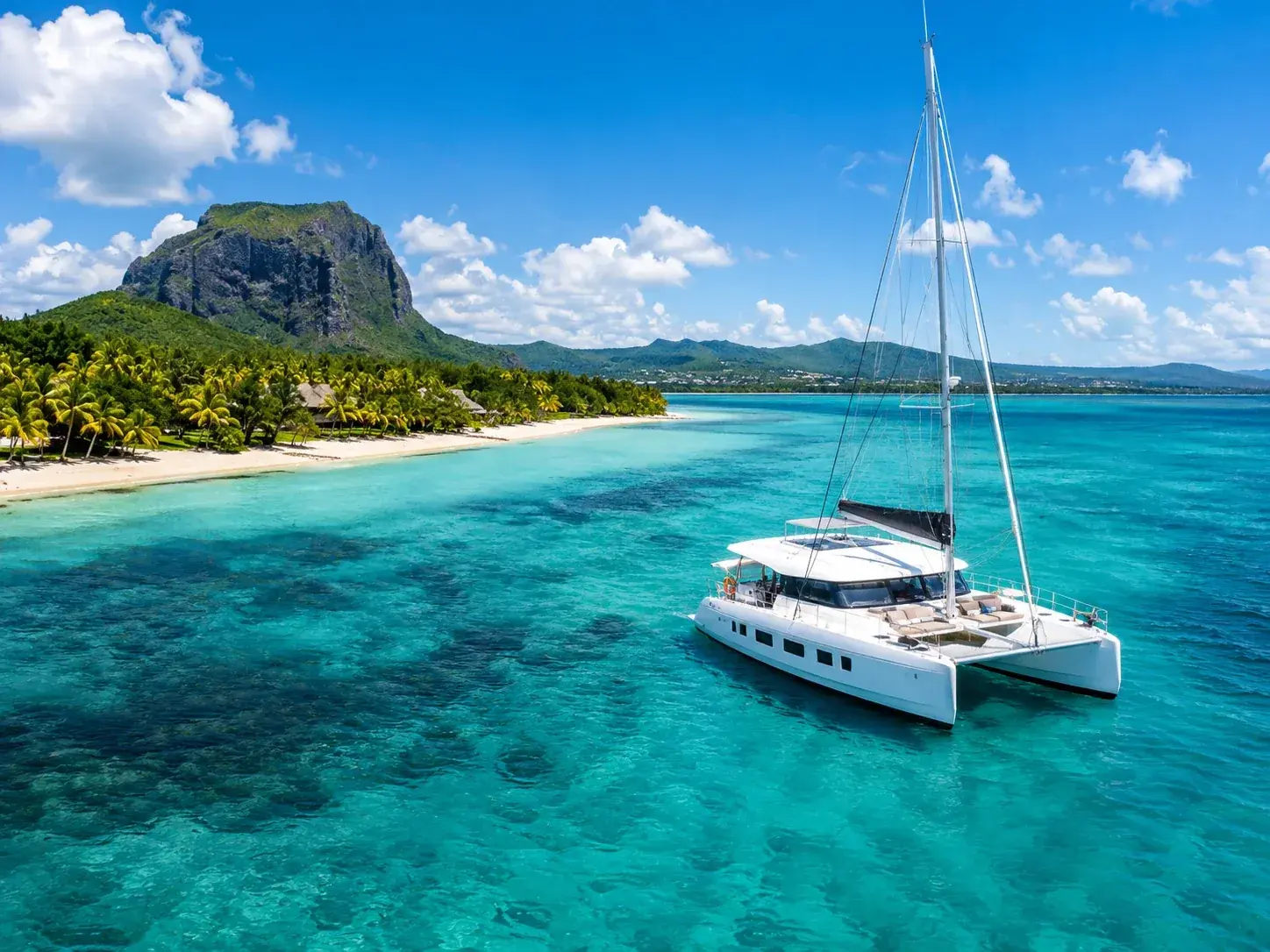
Few islands offer the open sea so close at hand. Mauritius is a volcanic island, surrounded by a steep underwater slope: past the lagoon and the reef, the seabed drops away fast, and deep-sea fishing begins almost as soon as you leave port. The same relief explains why, in the middle of a day’s fishing, ocean-going animals pass within a few miles of the coast.
The island and its deep water
The ocean around the island, rich in nutrients, is a feeding ground for large fish. A full day of big-game fishing takes you some twenty-five nautical miles offshore, to the waters of blue and black marlin, dorado, bonito and tuna. Skippers choose their spots depending on the time of year, and guide anglers in their technique, right up to the fight with the catch.
The underwater relief also makes for a spectacle. The slopes around oceanic islands are so steep that open-ocean species can be seen less than five miles from the shore; in Mauritius, these include pilot whales. The waters of the western slope are also home to sperm whales, present all year round.
This sea is immense on the country’s scale. Mauritius has an exclusive economic zone of 2.2 million square kilometres, including the Chagos region. Fishing is a sector in its own right: in 2024, local fish production stood at 38,445 tonnes, and exports of fish and seafood brought in about 17 billion rupees, roughly a fifth of national exports. Tuna fishing is closely monitored, and inshore fishers also fish for tuna around fish aggregating devices.
 AI-generated image
Ports of departure
Trips can be booked all over the island. In the north, big-game fishing trips leave Grand Baie for the deep offshore waters. In the west, full days of fishing can be booked on a private boat, for a single group. Many of the island’s hotels also offer big-game fishing among their paid activities, from Bel Ombre to Le Morne, and from Tamarin to Belle Mare and Grand Baie.
The presence of fish, like that of any wild animal, cannot be ordered up: a trip promises a day at sea, not a catch.
A competition since the 1980s
Mauritian big-game fishing has its fixture. La Pirogue Marlin World Cup, founded in the early 1980s and organised by the La Pirogue hotel in Flic en Flac, has become the country’s oldest international fishing competition. It has brought together up to forty teams and nearly two hundred participants, from England, Italy, Norway, Sweden and Germany, alongside the Mauritian teams.
Anglers compete for blue and black marlin, but also for yellowfin tuna, dorado and wahoo, and the competition follows the rules of the International Game Fish Association, the IGFA. The 2026 edition runs from 8 to 12 December: a captains’ briefing opens the week, three days of fishing each begin with breakfast at the Le Morne Anglers’ Club, and a prize-giving closes it. Registration starts at 100,000 rupees for a team of two to four anglers.
What the law requires of the boat
Under Mauritian law, a big-game fishing boat is a pleasure craft, and it is subject to the rules of the Tourism Authority Act 2006. It may not put to sea without a pleasure craft licence. On the first application, the boat and its engine are inspected by an approved surveyor. It must carry the prescribed equipment and be covered by liability insurance for the people on board and for any damage caused.
Its skipper must hold a skipper’s licence for the boat’s category, and no one under eighteen may command a pleasure craft used commercially. The law also sets an alcohol limit for whoever is at the helm: 23 micrograms per 100 millilitres of breath. The term “Big game fishing” itself appears among the words whose use in business names the law restricts.
For the visitor, the upshot is simple: board with a skipper who holds these licences, and ask before setting out whether the trip is private or shared, and how many hours it lasts. The open sea in Mauritius is close; it is the open sea all the same.
To book
Things to do from this article
- Book on GetYourGuide →
Boat trip · Rivière Noire
Full-day fishing trip by private boat - Book on GetYourGuide →
Boat trip · Grand Baie
Big game fishing trip from Grand Baie
Read next
 AI-generated image
A day on a catamaran
 AI-generated image
The lagoon and its coloured buoys
- AI-generated image
Blue Bay, the coral garden of the south-east
Where to stay
Stay in Mauritius
Places to stay that are still available, with current prices, compared across the main booking platforms.