Coin de Mire, Flat Island, Gabriel Island: the northern archipelago
Off the northern tip, a handful of islands and rocks closes the horizon. Nature reserves, a former quarantine station, a white sandbank: three of them can be explored from the sea, on a day trip.
September 26, 2026
 AI-generated image
Forty-nine islets surround Mauritius. Seven are nature reserves, eight are national parks. Off Cap Malheureux and Grand Baie, six islets stand out: Coin de Mire, Gabriel Island, Flat Island, Pigeon Rock, Round Island and Serpent Island. They matter greatly for biodiversity, sheltering seabirds, reptiles and remnants of the palm forest that once covered the northern plains. Three of them are the stuff of day trips.
Coin de Mire, a whale of rock
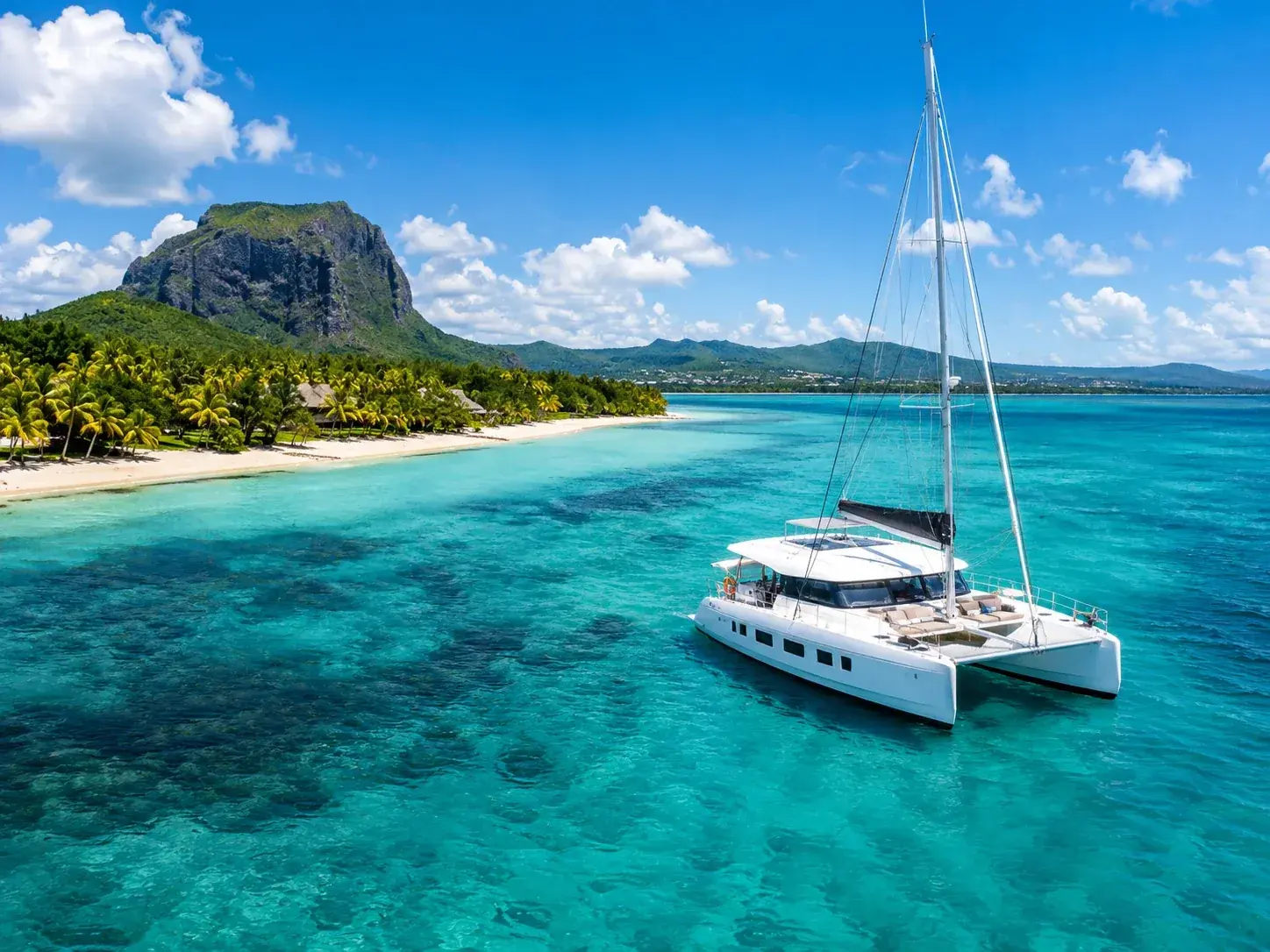
Coin de Mire, which English speakers call Gunner’s Quoin, rises about eight kilometres off the north coast. It is said to have the silhouette of a whale lying still on the ocean, and the resemblance is clearest from the shore. It is a nature reserve of 76 hectares, and no one lands there: everything is seen from the water.
Its rust-orange cliffs serve as perches and nesting sites for seabirds. Red-tailed tropicbirds and wedge-tailed shearwaters wheel above the boats. On the rock, the palm forest has been badly degraded by Madagascar plum, an introduced species, but it still holds native plants: the native acacia, the mazambron marron, and a small plant of the acanthus family, Dicliptera falcata, last recorded in 1858, believed extinct, then rediscovered in 2005.
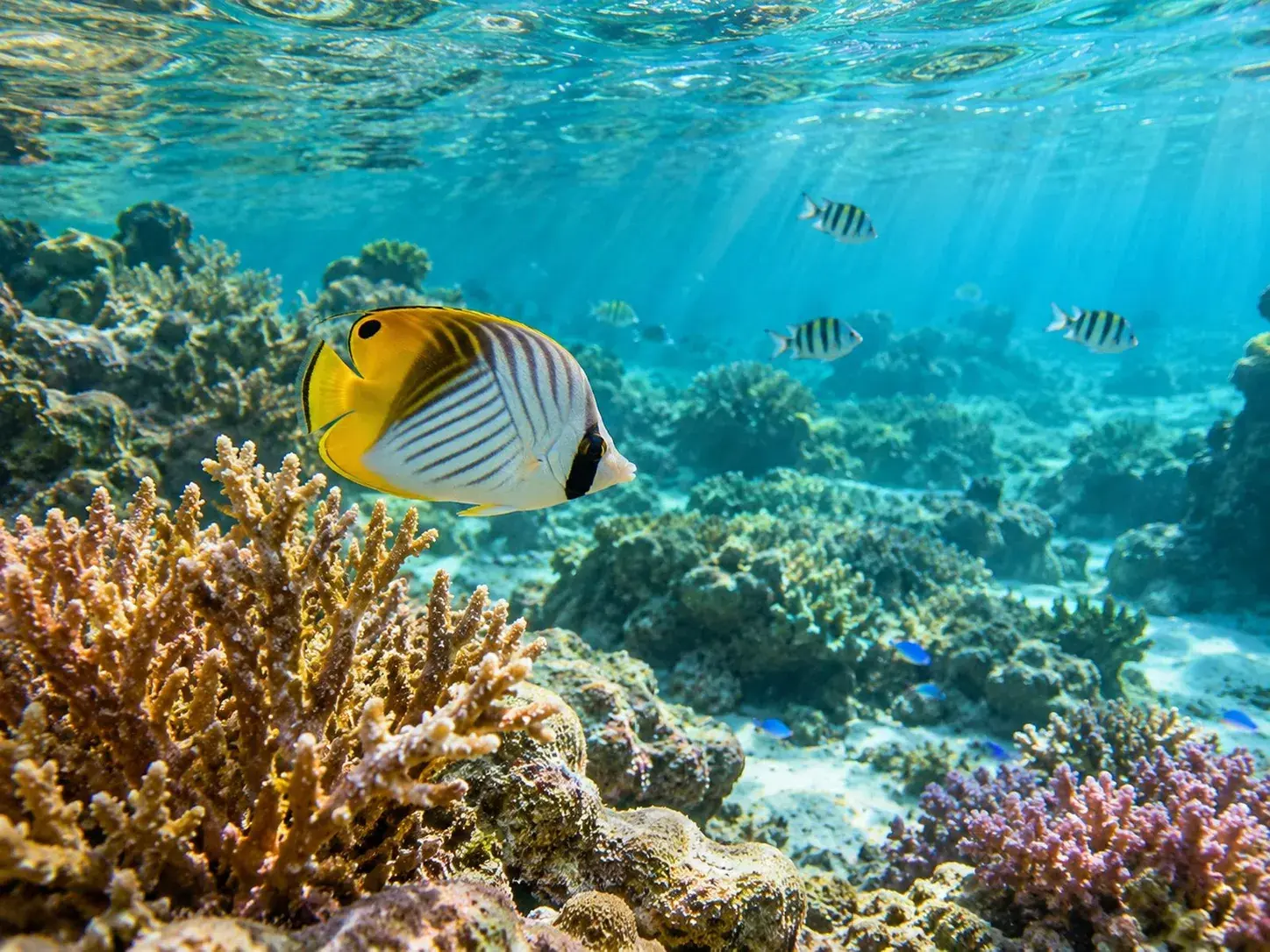
Underwater, Coin de Mire is among the best snorkelling sites on the island: damselfish, moray eels, sometimes a turtle or a passing group of dolphins. Divers have their own sites here, and a wreck, the Djabeda.
 AI-generated image
Flat Island, the former quarantine station
Flat Island is the largest of the northern islands, at 253 hectares, and it too is a nature reserve. From the mid-nineteenth century to the 1930s, it served as a quarantine station for people suffering from cholera, smallpox and malaria. Buildings overrun by vegetation remain, and a cemetery can still be made out in the south of the island. A white lighthouse, still standing, serves as a landmark for fishermen.
Degraded as it is, the island retains species found nowhere else, among them a discreet skink, a close relative of Bojer’s skink, that lives only there. Seabirds nest on it, and a few plants of the old palm forest survive. For the visitor, Flat Island is above all a day of quiet beaches and lagoon.
Further out, Pigeon Rock, a national park of less than one hectare, is a volcanic plug that rises sheer from the sea and is frequented by seabirds. At its foot lies the Shark Pit, a site reserved for experienced divers, where grey reef sharks and whitetip reef sharks circle.
Gabriel Island, the sandbank
A narrow lagoon, rich in marine life, separates Flat Island from Gabriel Island, only five minutes from its neighbour. Gabriel is a nature reserve of 42 hectares, covered in coastal dune vegetation. Much of the islet is carpeted with baume de l’île Plate, Psiadia arguta, a plant that grows nowhere else in the world.
People come for its pure white sandbank and its clear water, where you swim before stretching out on the sand. The white-tailed tropicbird lives here, as do the orange-tailed skink and Bojer’s skink. A slow walk around the islet gives an idea of what the Mauritian coastline may have looked like before development.
Round Island and Serpent Island, seen from afar
The last two are admired from a distance. Round Island, a nature reserve since 1957, is one of the oldest island restoration projects in the world. Goats were eradicated in 1979 and rabbits in 1986, and the palm forest is returning. The island is the only known breeding site in the Indian Ocean of the Round Island petrel, and the Round Island boa was saved from extinction here. Access is for research only.
Serpent Island, the furthest out, has no snakes. It is an almost bare rock, home to a large colony of sooty terns, brown noddies and lesser noddies.
Getting there
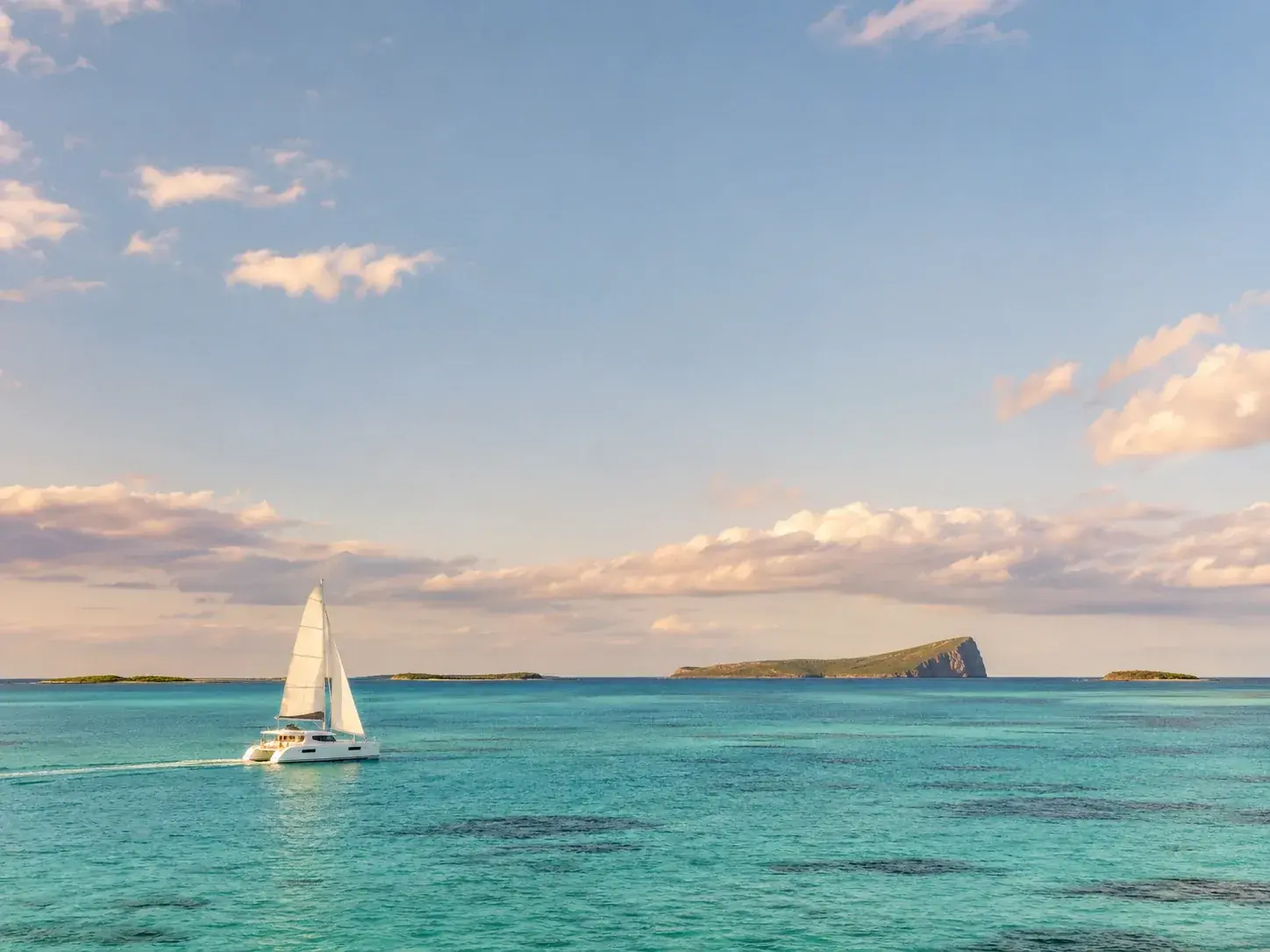
The northern islands are reached by catamaran or speedboat, from Grand Baie or Pereybère. The most common trips link three islands in a day: Coin de Mire seen from the water with a snorkelling stop, then Gabriel Island and Flat Island, with lunch served on the beach or on board. Other trips, on private boats, take the time for a barbecue on the sand. In every case, these are reserves: leave the plants, the birds and the reptiles as you found them.
To book
Things to do from this article
- Book on GetYourGuide →
Diving and snorkelling · Grand Baie
Coin de Mire: two-hour private snorkelling trip - Book on GetYourGuide →
Catamaran cruise
Full-day catamaran cruise to the northern islands - Book on GetYourGuide →
Catamaran cruise · Cap Malheureux
Full-day catamaran cruise to the northern islands, with lunch - Book on GetYourGuide →
Catamaran cruise
Catamaran cruise to Coin de Mire, with lunch - Book on GetYourGuide →
Boat trip · Calodyne
Speedboat excursion to the three northern islands, with barbecue - Book on GetYourGuide →
Read next
 AI-generated image
A day on a catamaran
 AI-generated image
The lagoon and its coloured buoys
- AI-generated image
Blue Bay, the coral garden of the south-east
Where to stay
Stay in the north
Places to stay that are still available, with current prices, compared across the main booking platforms.