
Tamarin, the dolphins’ morning
Off the west coast, dolphins live year-round in the waters of Tamarin, Black River and Le Morne. Approaching them is governed by precise regulations, which set the hour, the distance and the number of swimmers.
July 23, 2026
 AI-generated image
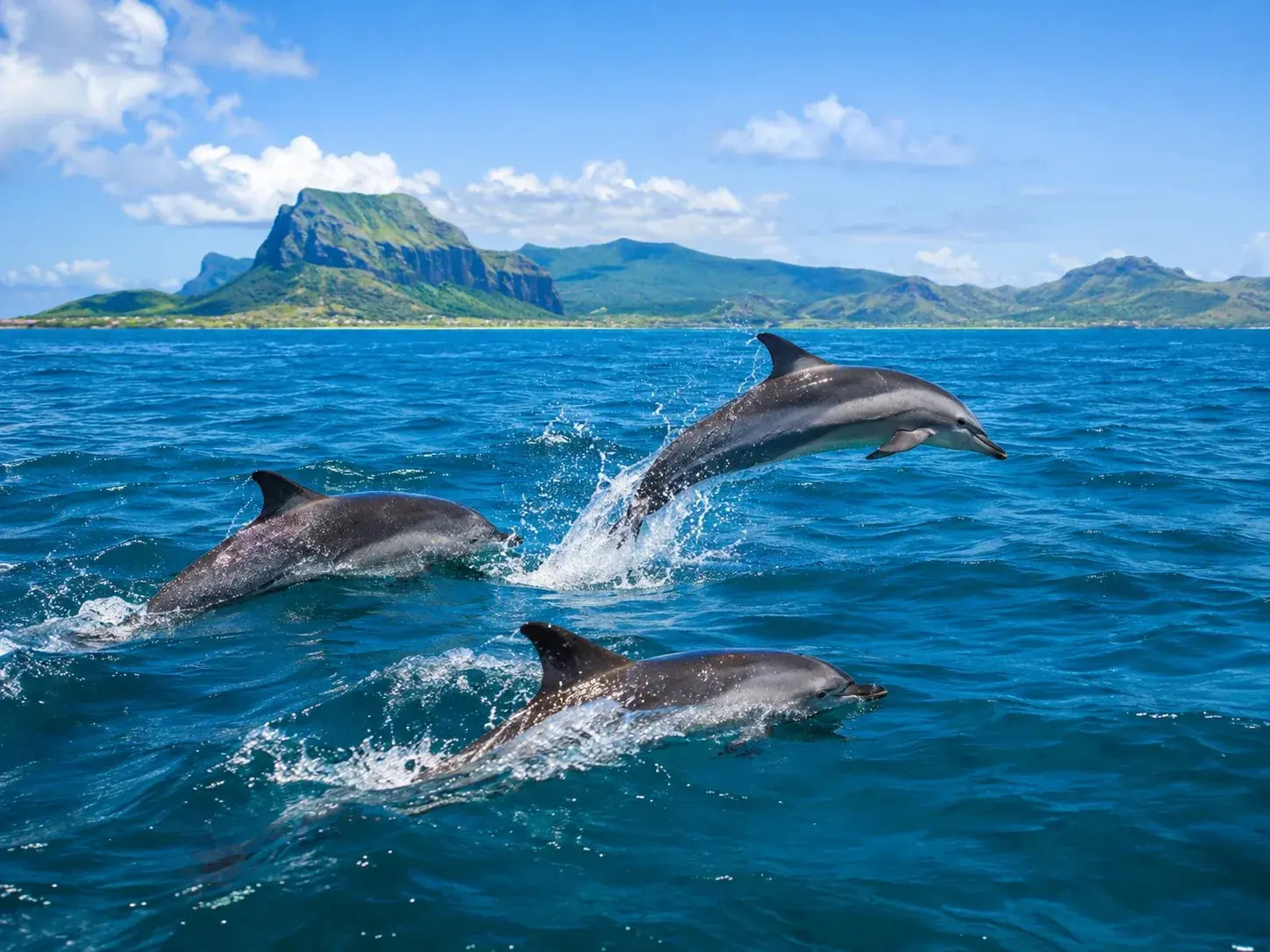
The west coast is the realm of Mauritius’s dolphins. Two species are seen above all, the bottlenose dolphin and the spinner dolphin, which often travel in groups of around twenty. On some days, more than a hundred glide together towards deep water off the Le Morne peninsula. Tamarin, La Preneuse, Black River, La Gaulette, Le Morne, Flic en Flac: it is around these coastal villages that the morning trips in search of them are concentrated. Tamarin Bay can even be explored by kayak, without an engine, at water level.
Dolphins that live here
What the boats call the bottlenose dolphin actually covers two closely related species. The Indo-Pacific bottlenose dolphin forms a small resident population in Mauritius’s coastal waters: an estimate published in 2014 put it at 58 individuals off the south-west of the island. The common bottlenose dolphin is also seen regularly, often in the company of other species, and groups were observed every year from 2008 to 2014 off the south-west coast.
The spinner dolphin also has its residents, which mingle with passing visitors. In 2015, the part of the population that frequents the south-western corner of the island was estimated at between 140 and 400 individuals. Animals identified from photographs have been found again in both Mauritius and Réunion: the two islands share some of their dolphins.
In all, fourteen species of cetacean have been recorded off Mauritius. But it is these coastal dolphins, faithful to their waters, that the morning trips find again from one day to the next. They are also wild animals, and no trip can command their presence.
The 2012 regulations
Since 1 November 2012, commercial dolphin and whale watching has been governed by regulations made under the Tourism Authority Act. They distinguish two activities, each requiring its own licence: watching from the boat, and watching combined with swimming with the dolphins.
The boat must display, somewhere clearly visible, a label issued by the Tourism Authority, and be fitted with an approved propeller guard. The skipper must hold a specific certificate, granted after an examination of his or her knowledge of dolphins and whales, of how to handle a boat in their presence and, for swimming, of the techniques of swimming near dolphins.
The hours are fixed too. Commercial watching takes place between six in the morning and noon; swimming, between six and nine. The dolphins’ morning, then, is no figure of speech: it is the law.
The approach is governed by two circles. No boat may come within 50 metres of the nearest dolphin. From 50 to 150 metres lies a restricted zone, where boats move at no-wake speed, enter and leave at that same pace, and where any sudden change of speed or course is forbidden. The boat approaches the animals from the side and follows a course parallel to theirs; it never comes from behind or head-on, never circles them and does not cut through a group. When the boat is stopped, the engine stays in neutral. When dolphins ride the bow wave, the skipper keeps speed and course steady.
Getting into the water
Swimming comes with its own conditions. On board there must be at least one lifeguard, a member of the crew, recognisable by his or her clothing and equipped with an approved buoyancy vest, as well as a first-aid kit and oxygen equipment. The operator is insured for the activity. The Alpha flag is hoisted: a flag of at least 60 by 30 centimetres, white at the hoist and blue in its swallow-tailed fly.
Before entering the water, each swimmer fills in and signs a waiver, then receives a briefing on swimming calmly and quietly. No more than three people may be in the water at the same time, lifeguard included, whether they are swimming, diving or wearing a mask and snorkel.
Some prohibitions apply to everyone, swimmers and passengers alike. No one feeds a dolphin, or throws food or objects near one. No one touches it or tries to touch it, by hand or otherwise. No one makes a noise to attract it. These rules are handed in writing to each participant, on board, before the encounter.
 AI-generated image
The rest of the water
The regulations also protect the dolphins from those who have not come for them. No one may knowingly kitesurf, ride a jet ski, paraglide, dive or windsurf within 500 metres of the nearest dolphin. On a coast where people also kitesurf and dive, the rule is anything but theoretical.
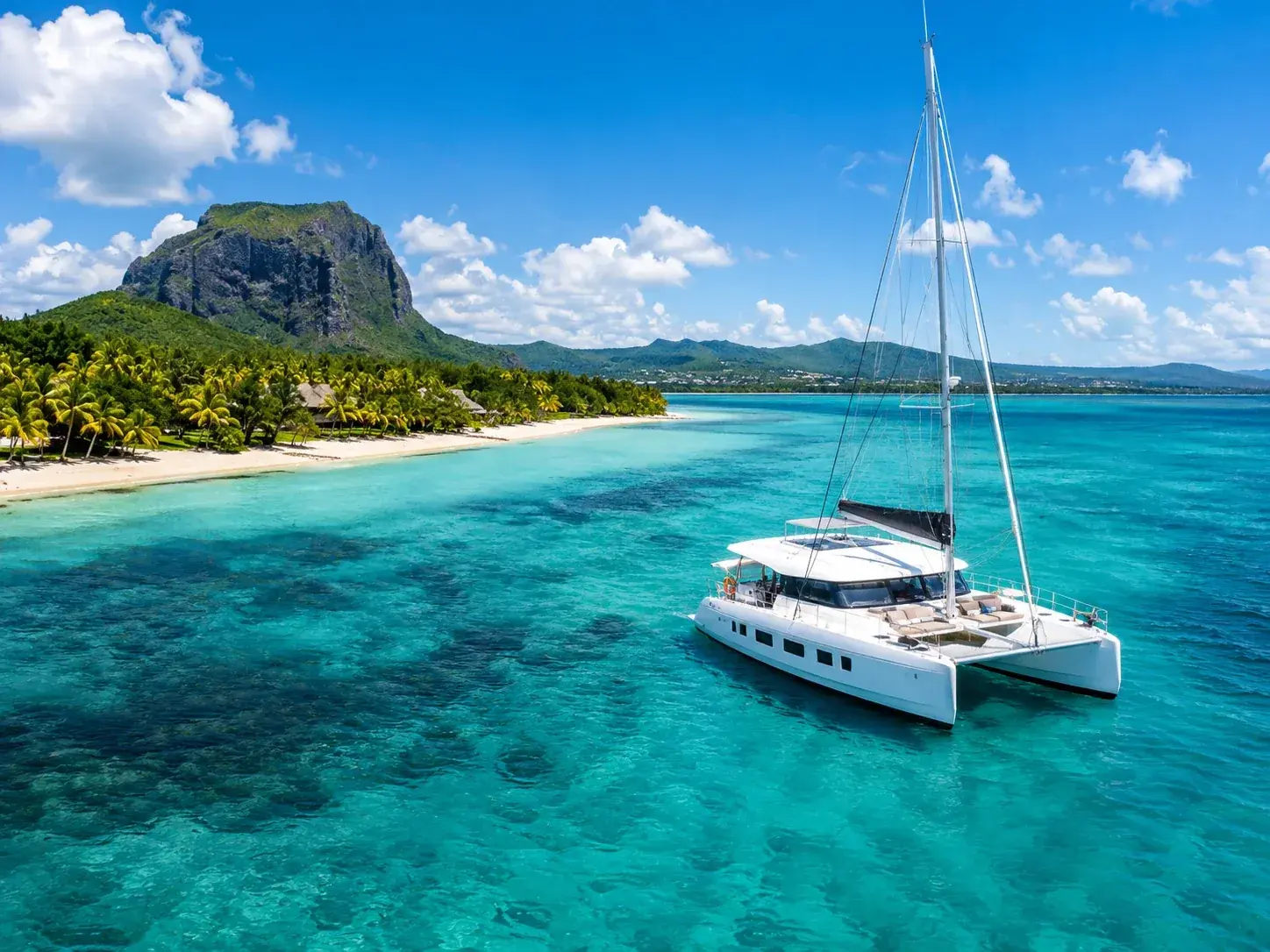
Kayaking offers another way to approach. Guided kayak trips leave from Tamarin to watch the dolphins in the bay, without an engine. Others combine the encounter with a stop at Île aux Bénitiers, an uninhabited island about two kilometres long and five hundred metres wide set in the south-western lagoon, or with a swim out to Crystal Rock.
The best guarantee, in short, is to choose a boat that carries the label, to set out early, and to accept that a morning at sea may go by without a single dolphin. Those of the west coast are at home here; we are only passing through.
To book
Things to do from this article
- Book on GetYourGuide →
Dolphins and whales · La Gaulette
Private cruise: dolphins, turtles and rays - Book on GetYourGuide →
Dolphins and whales · Flic en Flac
Private excursion: dolphins, sea turtles and Île aux Bénitiers - Book on GetYourGuide →
Dolphins and whales · Flic-en-Flac
Private whale-watching excursion, with pick-up - Book on GetYourGuide →
Dolphins and whales · Le Morne
Le Morne: eco-friendly dolphin-watching trip - Book on GetYourGuide →
Dolphins and whales · Le Morne
Lydia Boat, Le Morne: eco-friendly whale and dolphin-watching trip - Book on GetYourGuide →
Dolphins and whales · Rivière Noire
Whale watching for a private group, Black River
Read next
 AI-generated image
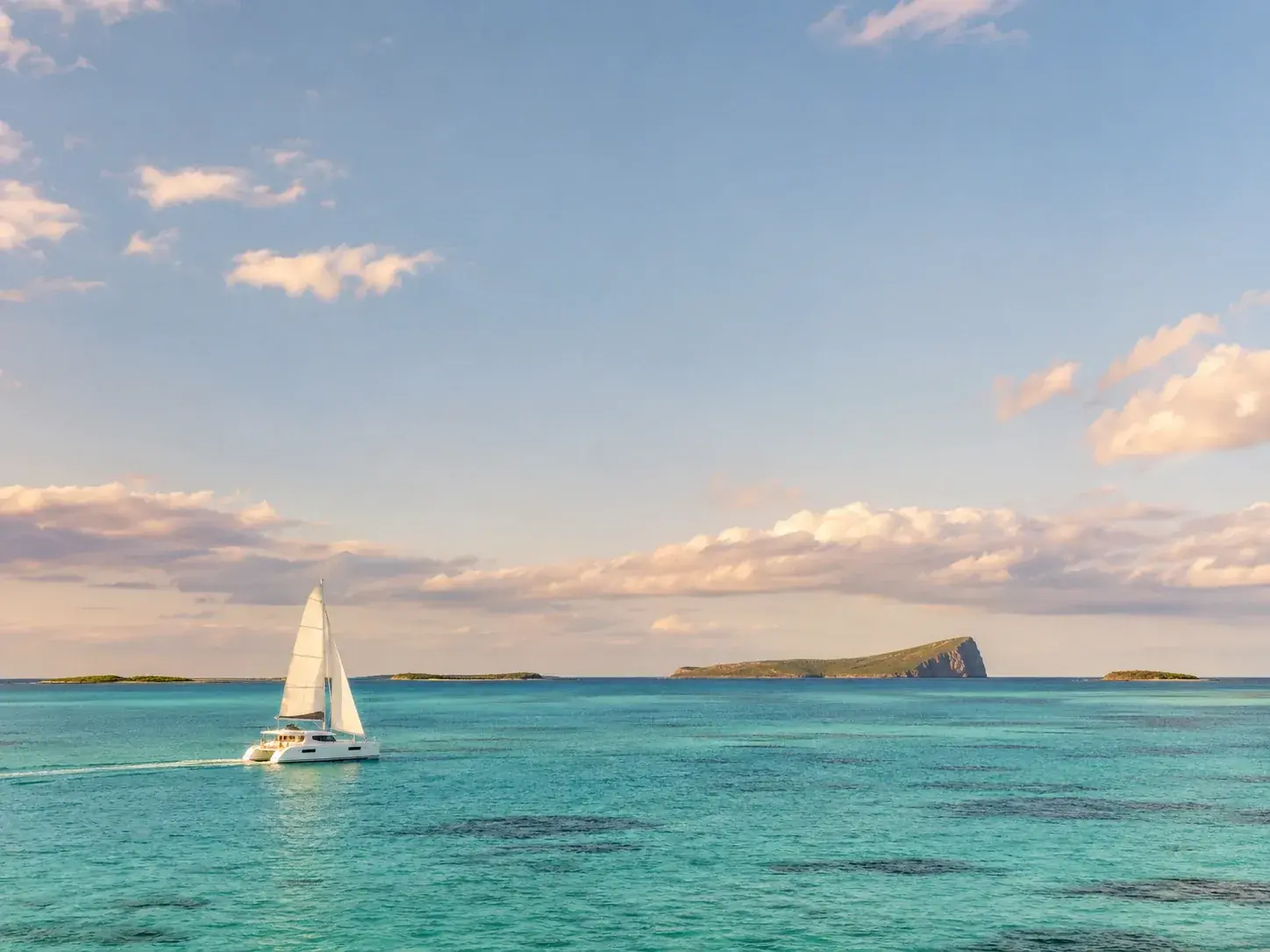
A day on a catamaran
 AI-generated image
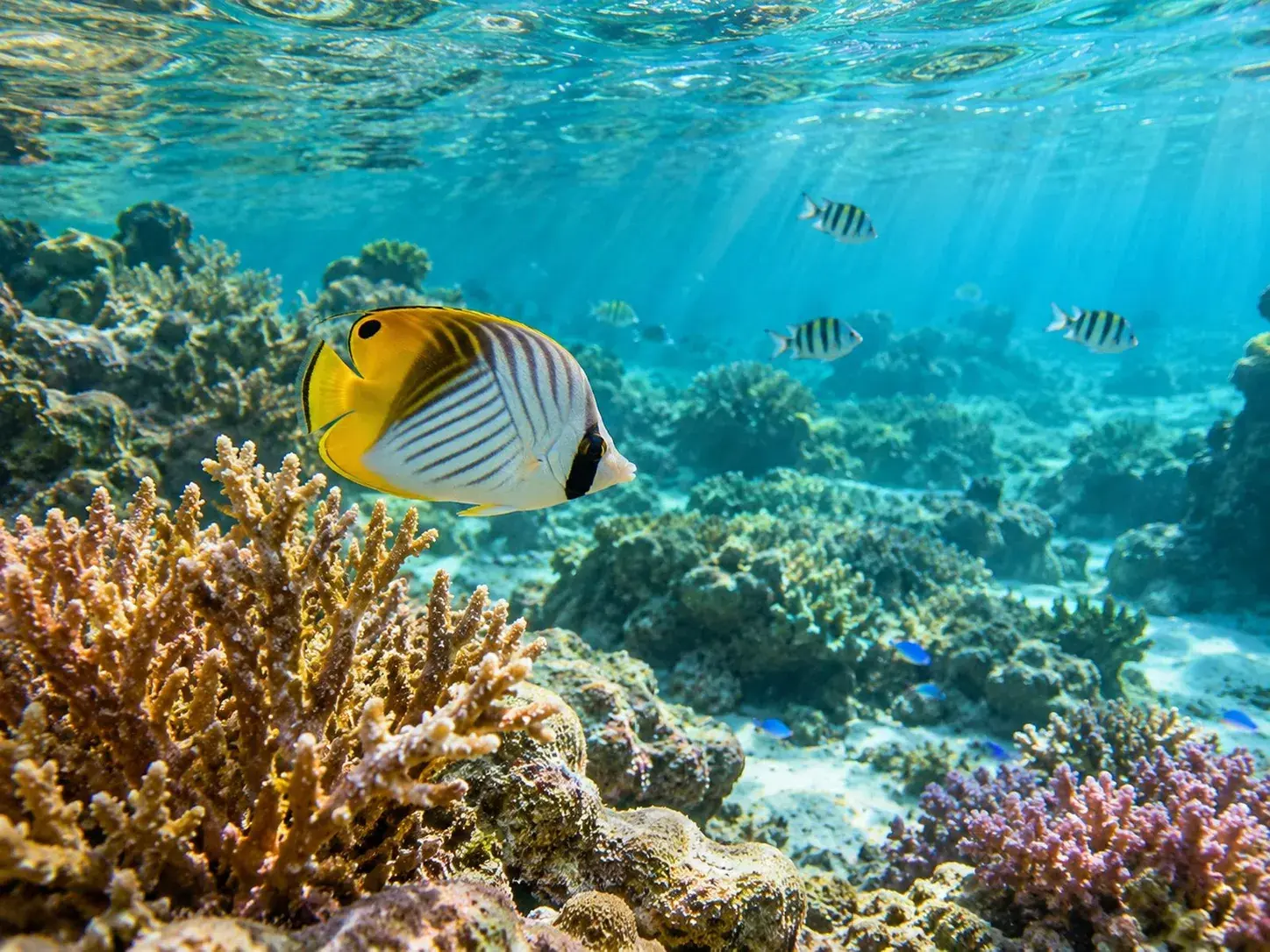
The lagoon and its coloured buoys
- AI-generated image
Blue Bay, the coral garden of the south-east
Where to stay
Stay in Tamarin
Places to stay that are still available, with current prices, compared across the main booking platforms.