
Nutmeg, clove and vanilla: the spice island
In 1770, Pierre Poivre brought nutmeg and clove from the Banda Islands to Pamplemousses. Two and a half centuries later, spices still scent the gardens, the cooking pots and the teacups of Mauritius.
October 7, 2026
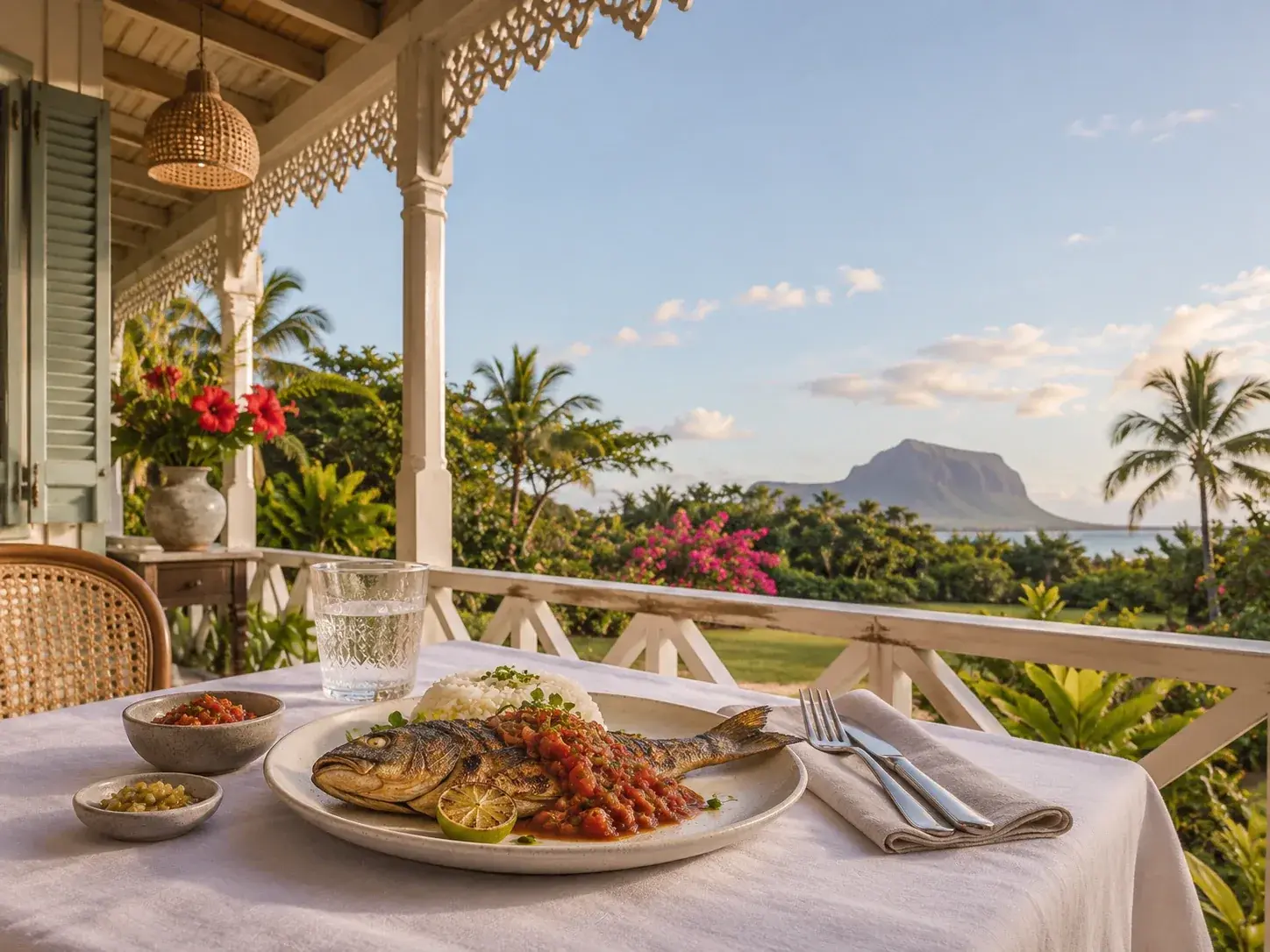 AI-generated image
The story of spices in Mauritius begins with a wager. The trade in tropical spices long made the fortune of European cities such as Venice, and it was closely held by those who controlled supply. It was to gain a share of it that travellers attempted new sea routes to Africa, the Americas and Asia. Île de France, as Mauritius was then called, wanted trees of its own.
Pierre Poivre and the Banda Islands
In 1767, Pierre Poivre was appointed intendant of the island. He had already been there twice, and he had travelled as far as the Moluccas, then under the control of the Dutch East India Company. He had smuggled thousands of spice seedlings and fruit trees to Mauritius and Réunion, in the hope of starting a trade there. To that end, he settled at the Mon Plaisir estate, in Pamplemousses, which he bought for himself in 1770.
In June of that year, Poivre introduced to Pamplemousses the first two spices to come from the island of Banda: nutmeg and clove. He turned the garden into a nursery where these precious plants could acclimatise, and he also gathered there plants from other regions and as many native species as he could. The botanist Nicolas Céré, born in Pamplemousses and director of the garden from 1775, saw the first clove trees of Mon Plaisir bear fruit in October 1776, then, in December 1778, the first nutmeg.
This success also has a dark side, which the garden does not hide. Much of the work there was done by enslaved people. In 1761 there were already fourteen, from India, Senegal, Mozambique and Madagascar, aged between fifteen and fifty. Their number grew under Poivre and Céré. Some, such as Rama, became highly skilled at propagating plants and were sent to train other gardeners in the French colonies, before being freed. It was also from Mauritius that clove was introduced to Zanzibar, in 1818, and Zanzibar is today among the major producers of the spice.
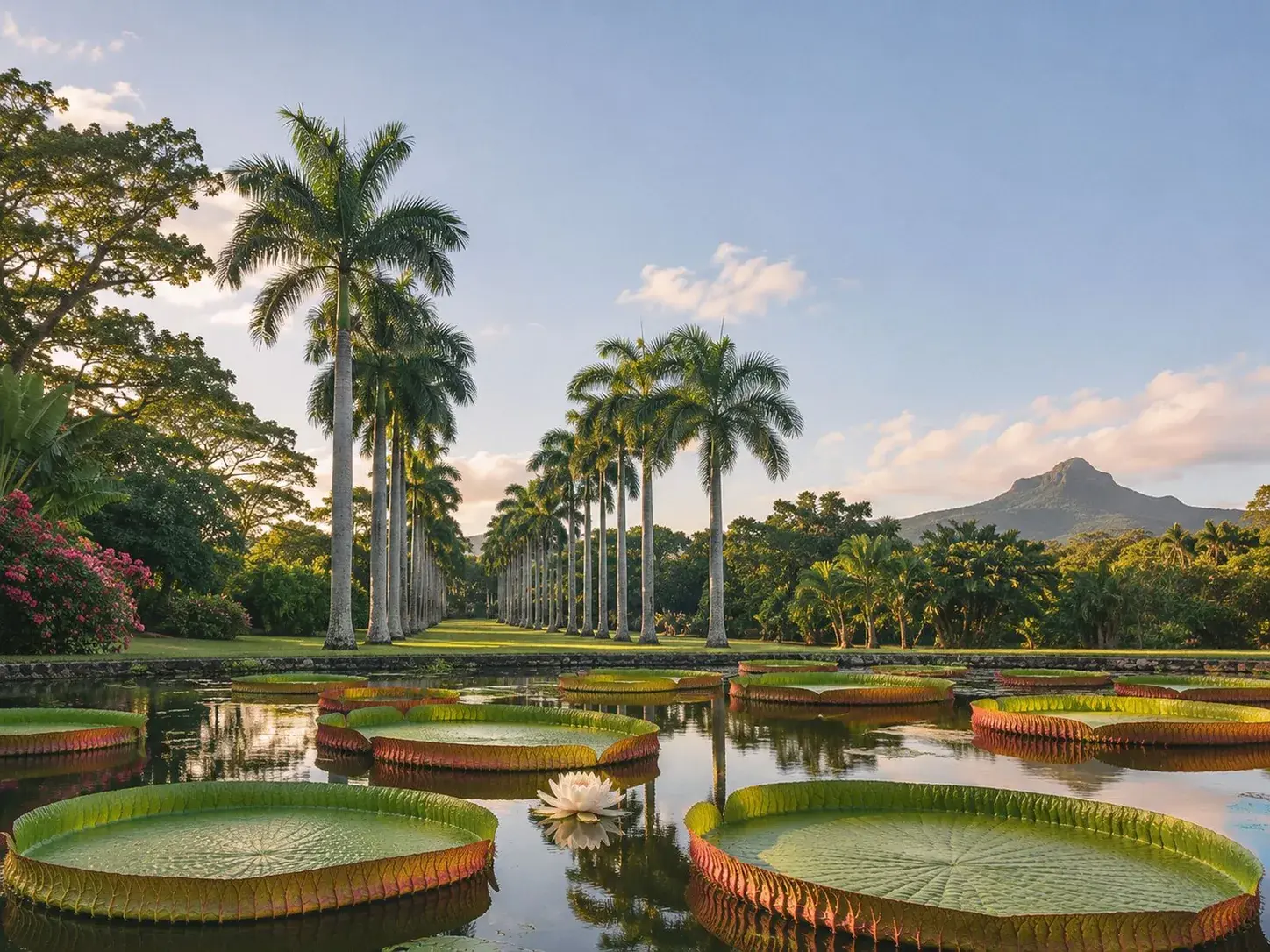 AI-generated image
The Pamplemousses spice corner
The Sir Seewoosagur Ramgoolam Botanical Garden, at Pamplemousses, keeps this memory alive. Its collections include twenty-seven species of spice, and nutmeg, clove and cinnamon have been grown there since 1770. The spice corner lies near the Liénard Obelisk, at the corner of Avenue Labourdonnais and Avenue Liénard.
It is a place to learn how to look at these trees. The nutmeg has male and female trees: the male bears small, creamy-yellow, bell-shaped flowers, the female a pale amber fruit that looks like a large apricot. When ripe, six to nine months after flowering, the husk splits to reveal a dark brown nut, almost enclosed by a red aril, the mace; nut and mace are both spices. The clove is a flower bud picked green, before it opens, then dried in the sun for a few days until it turns brown. Cinnamon, finally, comes from a tree eight to fifteen metres tall, native to Sri Lanka and southern India, whose bark is used.
Vanilla, from garden to cup
Vanilla has taken a more discreet place in Mauritius, but it runs all through the island’s tastes. At the Domaine de Saint Aubin, near Rivière des Anguilles, the tropical spice gardens sit alongside vanilla orchids, which can be explored alone or on a guided tour. Not far away, La Vanille Nature Park occupies the site of a former vanilla plantation that once belonged to a sugar estate.
Above all, vanilla flavours what people drink. Vanilla tea is one of the island’s best-loved flavours. At Beau Plan, the shop of L’Aventure du Sucre offers tastings of vanilla and vanilla paste among some thirty island products, and Le Fangourin, its restaurant, serves a crème brûlée made with fresh vanilla pods. The unrefined sugars of Mauritius themselves develop natural notes of vanilla, honey or liquorice. On the Chamarel plateau, Le Chamarel Restaurant brings together the region’s coffee, vanilla, honey, rum and chocolate in a terroir lunch, and its delicatessen counter sells spices, jams, vanilla pods and Chamarel coffee.
Spices of the cooking pot
In everyday cooking, spices do not show themselves: they are measured out. Mauritian biryani calls for a cinnamon stick, star anise, cardamom, cloves and fennel seeds, in small quantities, so as not to mask the saffron and the caramelised onion. Rougaille combines ginger, thyme, chilli, coriander and curry leaves. Fish vindaye owes its flavour to mustard and turmeric.
Some of these spices grow on the island. In 2025, Mauritius harvested nearly 2,300 tonnes of ginger on 117 hectares, and more than 3,100 tonnes of chillies. Two and a half centuries after Poivre, the wager on spices has left the island a garden, century-old trees and a cuisine that can no longer do without them.
The addresses
Places mentioned
- Le FangourinRestaurant · Beau Plan
- Le Chamarel RestaurantRestaurant · Chamarel
Read next
- AI-generated image
Lychees, pineapples and jamalacs: the markets of Mauritius
- AI-generated image
Sugar cane, the plant that made the island
- AI-generated image
Bois Chéri and the Tea Route
Where to stay
Stay in Mauritius
Places to stay that are still available, with current prices, compared across the main booking platforms.