Bois Chéri and the Tea Route
Other islands have their wine routes; Mauritius has its Tea Route. At Bois Chéri, the island’s oldest plantation, you follow the tea leaf all the way to the cup, and taste vanilla tea.
September 24, 2026
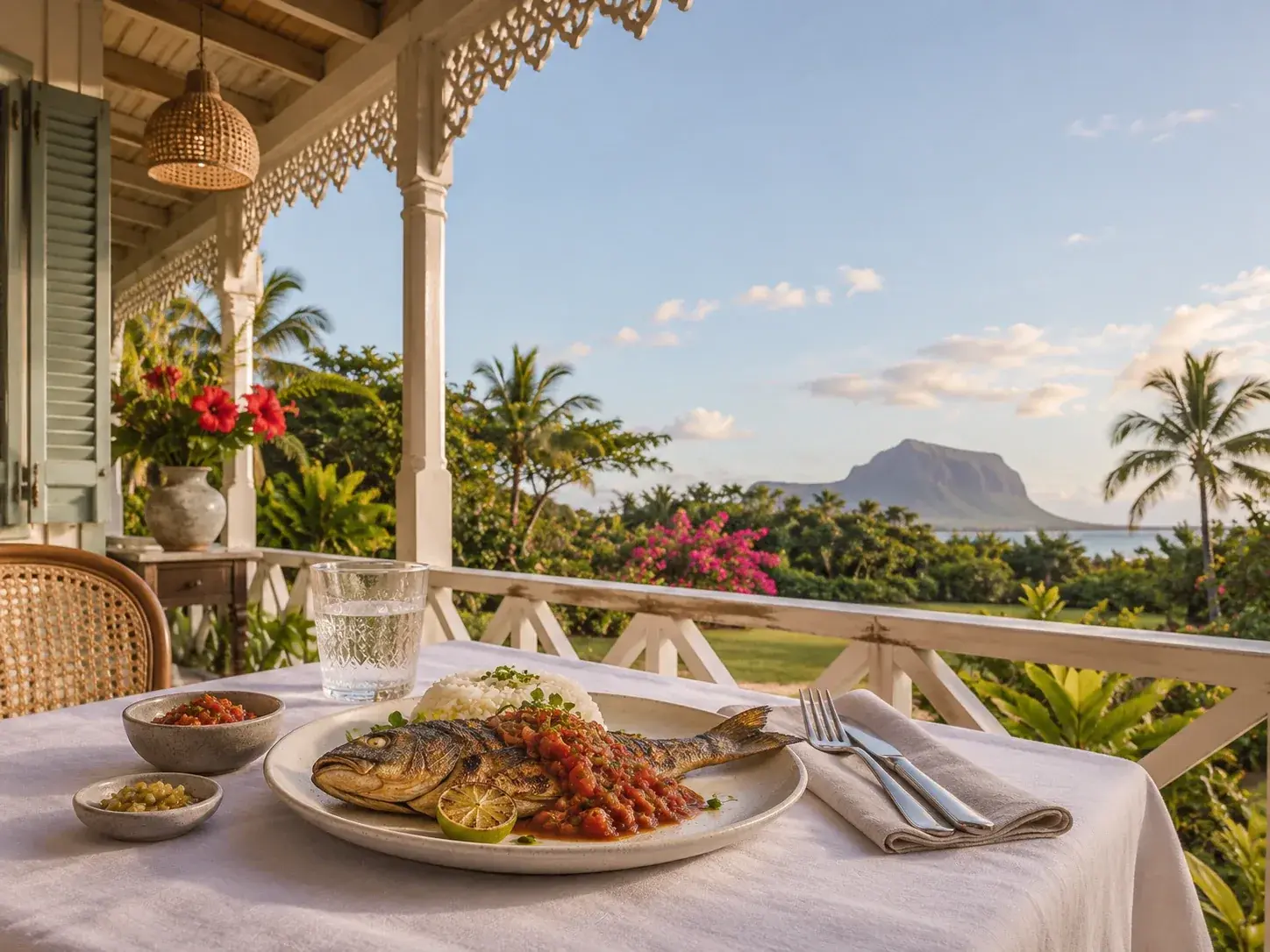 AI-generated image
Some islands are explored through their vineyards. Mauritius can also be explored through its tea bushes. In the uplands of the south, where the air cools and the vegetation turns a deep green, plantations lay out their regular rows across the slopes. Tea has been grown here since the end of the nineteenth century, and Mauritians still drink it with fervour, whether they call it tea, cha or chai.
One route, three estates
The Tea Route links three estates: the Domaine des Aubineaux, near Curepipe, Bois Chéri and Saint Aubin. It leads from tea plantations to a tea museum, then on to spice gardens. It can be done as an organised coach excursion, or with a private driver-guide, in a single day. Lunch and a tea tasting are taken in one of the old houses along the way.
Each stage has its own character. The Domaine des Aubineaux, the first house on the route, offers days with a cookery class and lunch. Saint Aubin, near Rivière des Anguilles, is a former sugar estate whose colonial house is a listed national heritage site; visitors walk through gardens of tropical spices, vanilla orchids and anthurium nurseries, and lunch in the traditional dining room, facing the gardens. Between the two, Bois Chéri is the tea stop proper.
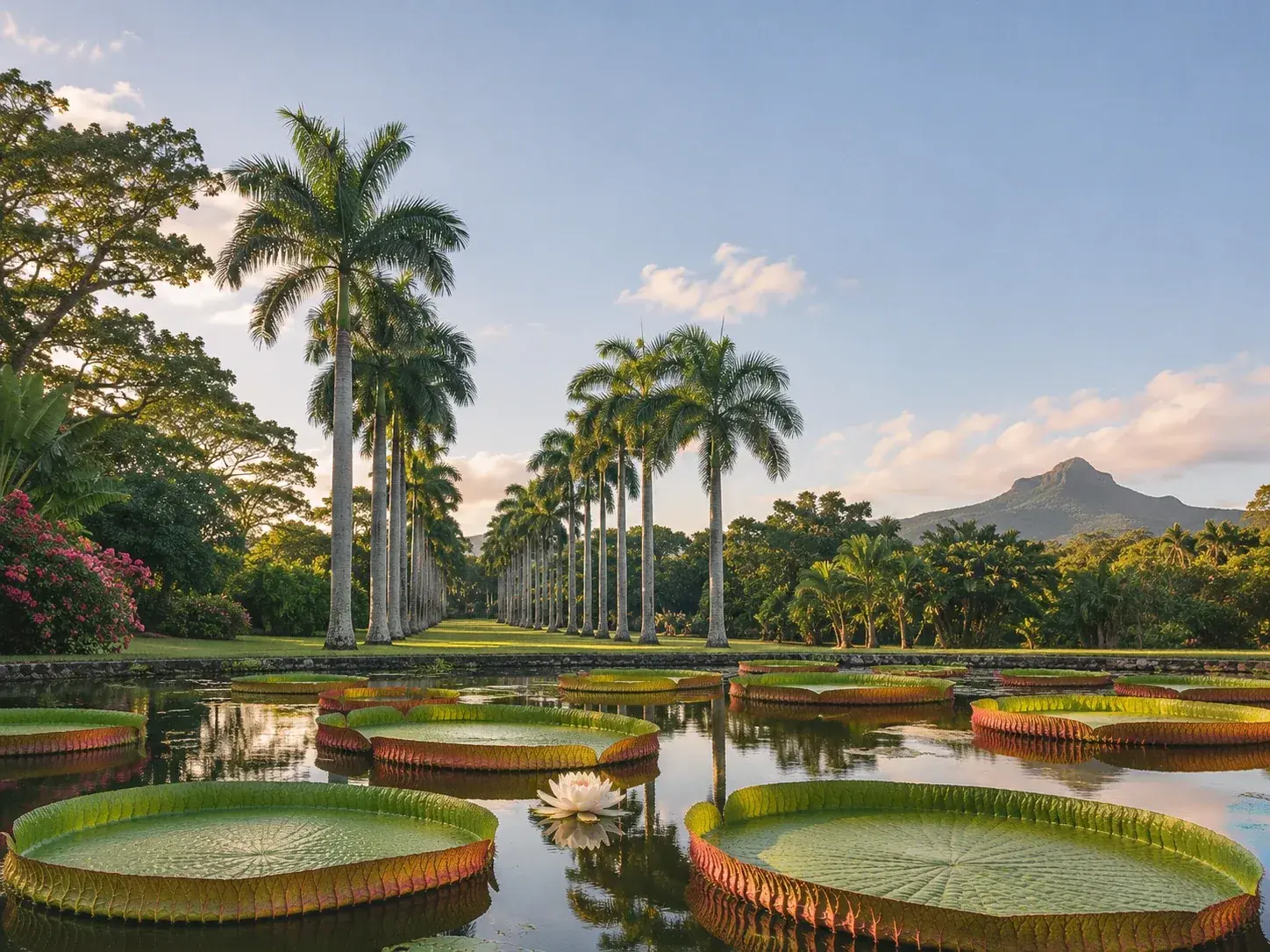 AI-generated image
Bois Chéri, the oldest plantation
Bois Chéri, in the uplands of the Savanne district, is the oldest tea plantation on the island. A guided walk explains the old methods of manufacture and the place tea holds in the history of Mauritius. Lunch can be taken on site, finishing with a tasting. In the island’s factories and plantations, more than twenty flavours of tea can be sampled.
The estate is half an hour’s drive from Bel Ombre and the south coast. Excursions often pair it with La Vanille Nature Park, at Rivière des Anguilles, or with a detour to Saint Aubin. Picking, meanwhile, remains a labour of patience: Sati, a tea picker on the island, has been gathering the finest leaves for forty years.
What Mauritian tea amounts to
Tea now occupies only a small place in the island’s countryside. In the 1990s it still covered 3,028 hectares. For want of competitiveness on export markets, with an ageing workforce, old plantations and the vagaries of the climate, the area fell to 672 hectares in the 2013-2014 season. The decline did not stop yields from holding up for a time: between 2009 and 2013, the area shrank by 5.7 per cent, yet the green-leaf harvest rose from 7,663 to 7,981 tonnes. In 2013, some 442 hectares were held by smallholders each farming less than one hectare. In 2025, the total area stood at 623 hectares, against 635 the year before.
That year, the island harvested 5,317 tonnes of green leaf and produced 1,033 tonnes of processed tea, against 6,018 and 1,186 tonnes in 2024. Most of the leaf does not come from the large estates, which supplied only 321 tonnes in 2025, but from small producers: independent growers, sharecroppers and planters grouped in cooperatives. In 2013 there were around 1,338 registered tea growers and three large factories. In the mid-2010s, most of the tea drunk on the island was produced there, and Mauritian black tea had found small markets abroad, in Australia, France, Japan, Mayotte, Réunion, South Africa, Switzerland and the United Kingdom.
The industry long had its own body, the Tea Board, set up by an Act of 1975. Its regulatory functions were taken over by the National Agricultural Products Regulatory Office, established by an Act of 2013, which licenses tea growers, manufacturers, importers and exporters, and sets the price of the leaf.
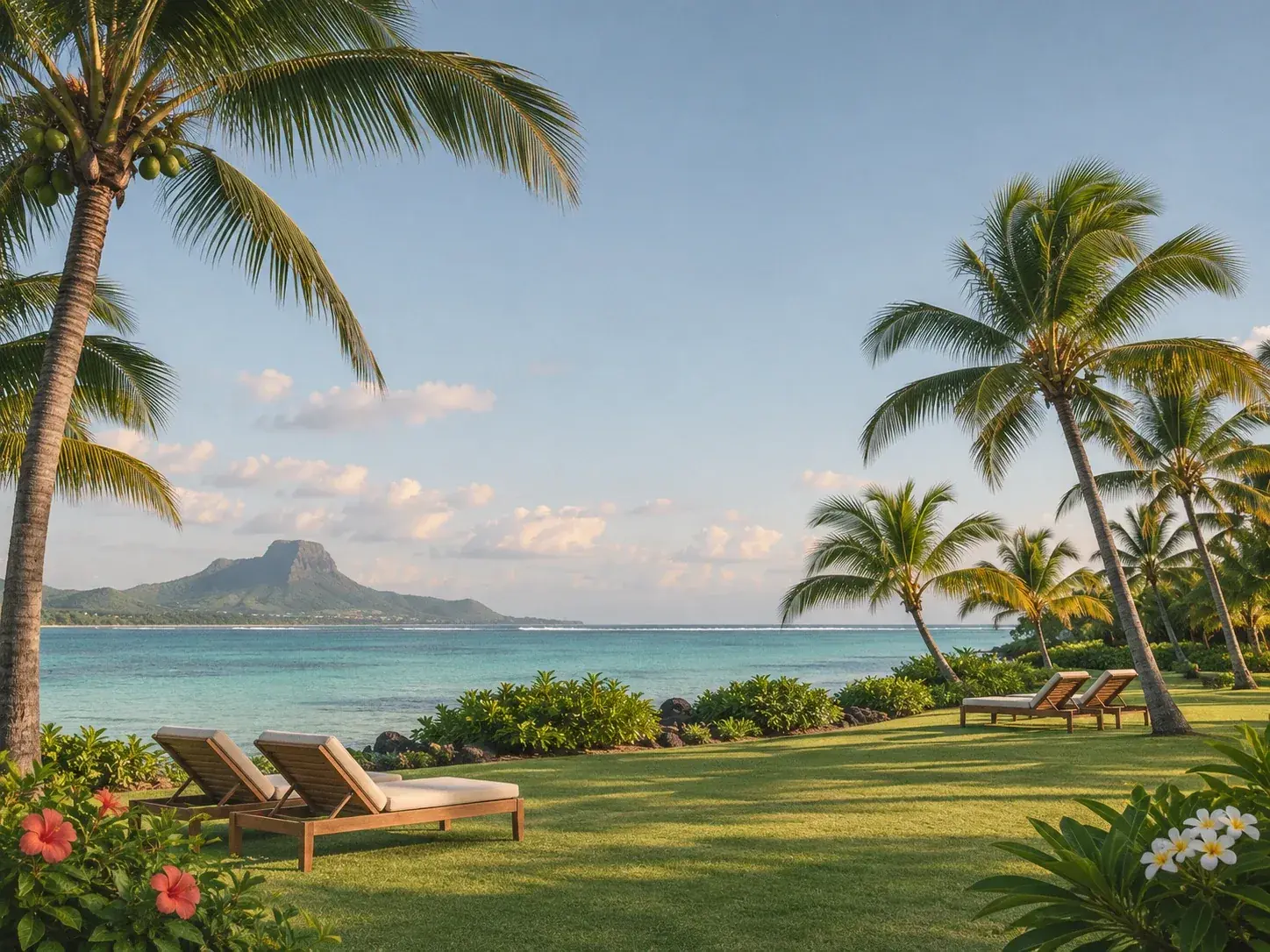 AI-generated image
Vanilla tea
If you taste only one tea, make it this one. Vanilla tea is one of the island’s best-loved flavours. It brings together two plants met on the same route: the tea bush of the Savanne uplands and vanilla, the orchid seen in the gardens of Saint Aubin, close by.
The hotels have carried the habit on. In several Attitude hotels, the Teabaz is a self-service tea bar, open from late morning to early evening. But a cup drunk at Bois Chéri, after a walk between the rows of tea bushes, has another flavour: that of an old crop, now rare, that still holds the slopes of the south.
To book
Things to do from this article
- Book on GetYourGuide →
Day tour by car
South coast tour, with a tea factory visit and Gris Gris - Book on GetYourGuide →
Day tour by car
Discovering the Tea Route, with rum tasting - Book on GetYourGuide →
Day tour by car · Bois Chéri
Bois Chéri tea factory, with lunch and transport - Book on GetYourGuide →
Day tour by car
Tea itinerary and crocodile park, with lunch - Book on GetYourGuide →
Day tour by car
Tea, rum and vanilla itinerary, with lunch - Book on GetYourGuide →
Day tour by car
The Tea Route with the crocodile park
Read next
- AI-generated image
Lychees, pineapples and jamalacs: the markets of Mauritius
- AI-generated image
Sugar cane, the plant that made the island
- AI-generated image
Nutmeg, clove and vanilla: the spice island
Where to stay
Stay in the south
Places to stay that are still available, with current prices, compared across the main booking platforms.