
A week on the water
More than a hundred dive sites, a sailing centre recognised by the Royal Yachting Association, trade winds that make the south-west a kitesurfing ground, and dolphins off the west coast. A week in the water, from the north to Le Morne.
October 24, 2026
 AI-generated image
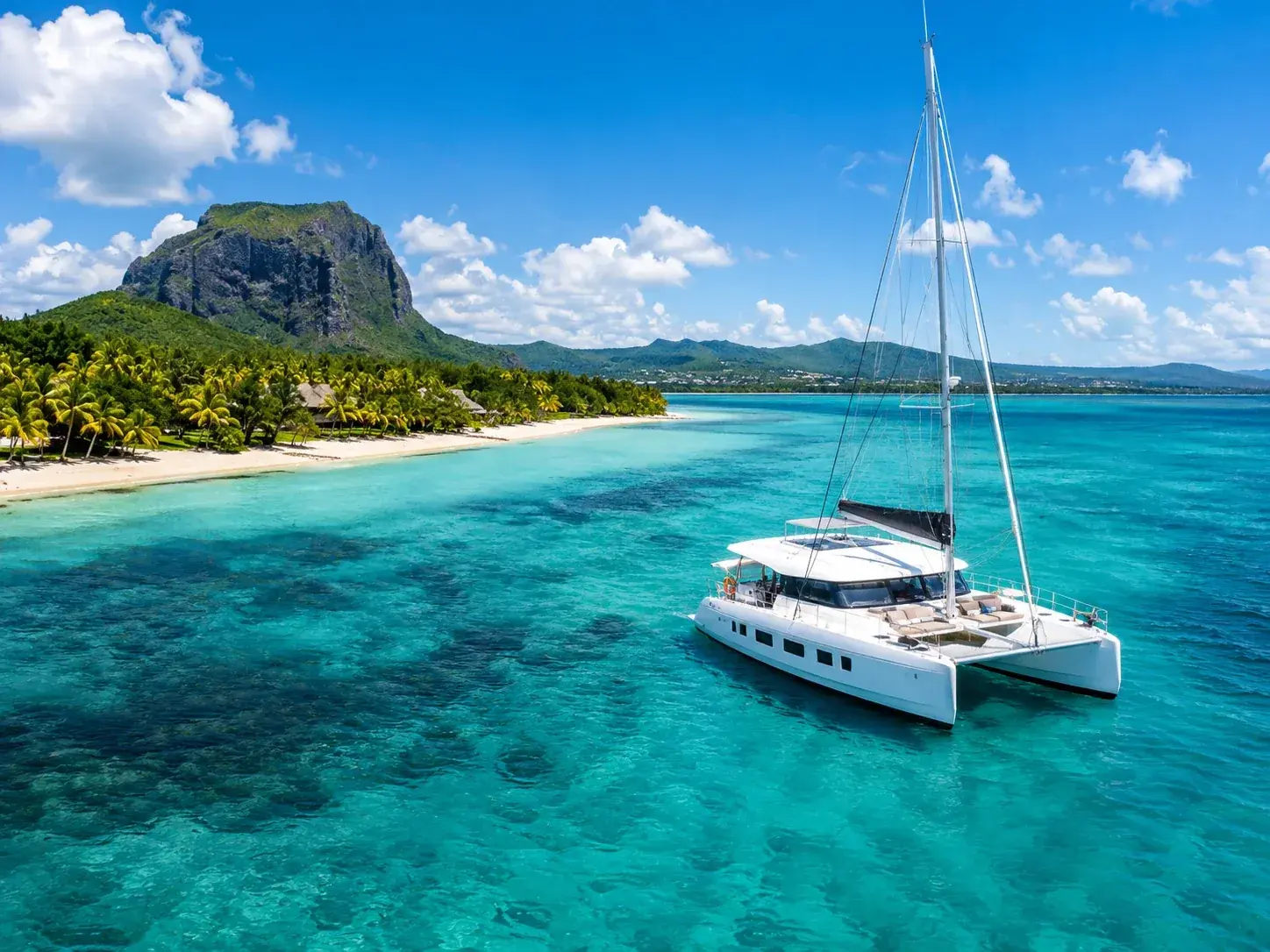
Mauritius has more than a hundred dive sites within reach of its shores, among them La Cathédrale, where a drop-off mingles with large boulders that form caves and arches. It also has shallow lagoons for learning to sail, and a south-west where the trade winds blow hard and steadily. A week given over entirely to the sea can be spent between two bases: the north for diving and sailing, the south-west for wind and dolphins.
Days one and two: diving in the north
At Pereybère, the Hibiscus Boutique Hotel has been home since 2007 to the ORCA Dive Club, which works to PADI and SSI standards and trains divers from beginner to divemaster. A first dive starts in the hotel pool, then moves to the sea, from a boat that leaves from the jetty. Trips head for nearby sites, Coin de Mire, the Sharks Pit and Trou aux Biches, and the club fills its tanks with air or nitrox. For a first dive, the north has shallow sites, such as the one divers call the Grand Baie Aquarium, just fifteen metres deep and open to all levels.
On the second day, you stay on the surface. Offshore, Coin de Mire is a nature reserve where no one lands; you run along its orange cliffs by catamaran and slip into the water with mask and snorkel, over seabeds counted among the best on the island. At Pointe aux Piments, the Victoria Beachcomber’s diving academy, affiliated to CMAS and PADI, takes its students to three wrecks, drop-offs and reefs, and trains children from the age of ten.
 AI-generated image
Day three: sailing at Mont Choisy
On Mont Choisy beach, the Coral Azur’s Wildwind Sailing Centre is recognised by the British Royal Yachting Association. It launches dinghies, catamarans and paddleboards that convert into windsurfers, with instructors for beginners and seasoned sailors alike, and its outings go as far as the northern islands. In Grand Baie, the Mauricia Beachcomber is the immediate neighbour of the Grand Baie Yacht Club, and sailing is part of the stay.
Day four: the east, without a boat
The east coast has its own ways into the water. In front of the Radisson Blu Poste Lafayette, a snorkelling trail is marked out in the lagoon, to discover marine life without boarding a boat. At Belle Mare, a guided walk on the floor of the lagoon does not even require you to know how to swim. And off Trou d’Eau Douce, Île aux Cerfs has a lagoon sheltered by the reef, where water-skiing, wakeboarding and parasailing are on offer.
 AI-generated image
Days five and six: the wind of the south-west
The south is known for its strong, steady trade winds, especially from April to November, and the names that count in kitesurfing are in the south-west. One Eye, at the Pointe du Morne, is among the best-known spots on the island. The Dinarobin, at the foot of Le Morne Brabant, runs a school there affiliated to IKO, the International Kiteboarding Organization, and to the Association française de kite. LUX* Le Morne lives on the edge of the Kite Lagoon, its shallow waters sheltered by the reef. Further north, at Tamarin, the Veranda Tamarin runs a surf school, and kitesurfing can be learned at the Heritage C Beach Club.
On the sixth day, you dive in the west. In Tamarin Bay, scuba dives cater for beginners and experienced divers alike, and at Flic-en-Flac, the Villas Caroline have their own dive centre, run by an instructor qualified to CMAS level three.
Day seven: dolphins and whales
The west is the dolphins’ favourite ground: bottlenose and spinner dolphins often travel there in groups of about twenty, sometimes more than a hundred, on their way to the deep waters off Le Morne. Sperm whales are present all year round, humpback whales from July to November, during their migration, though no one can count on seeing them on any given day.
Trips are governed by regulations dating from 2012. Dolphins are not fed, and nothing is thrown into the water near them. A boat approaches them only from the side, on a course parallel to theirs, at a speed that raises no wave. Those who go into the water are first briefed to swim calmly and quietly, and no more than three swimmers, lifeguard included, are in the water at any one time. The boat you choose carries a registration number beginning with PC, the mark of vessels operated commercially, and everyone wears the life jacket provided.
In the evening, at La Preneuse, fishing boats bob in front of the Martello tower, and this is where many boat trips set out. You watch the sun go down here, with Le Morne Brabant in the distance. The week ends where it might have begun.
To book
Things to do from this article
- Book on GetYourGuide →
Diving and snorkelling · Blue Bay
Blue Bay: eco-tour and snorkelling for coral protection - Book on GetYourGuide →
Diving and snorkelling · Grand Baie
Coin de Mire: two-hour private snorkelling trip - Book on GetYourGuide →
Catamaran cruise
Full-day catamaran cruise to the northern islands - Book on GetYourGuide →
Catamaran cruise · Cap Malheureux
Full-day catamaran cruise to the northern islands, with lunch - Book on GetYourGuide →
Catamaran cruise · La Gaulette
Catamaran cruise: dolphin watching, barbecue and drinks - Book on GetYourGuide →
Catamaran cruise
Catamaran cruise to Coin de Mire, with lunch
The addresses
Places mentioned
- Hibiscus Boutique HotelHotel · Pereybère★★★Book on Booking.com →
- LUX* Le MorneHotel · Le Morne★★★★★Book on Booking.com →
Read next
 AI-generated image
A rainy day in Mauritius
- AI-generated image
A week on foot
 AI-generated image
The south in three days
Where to stay
Stay in Mauritius
Places to stay that are still available, with current prices, compared across the main booking platforms.