
The south in three days
Cliffs pounded by the swell, waterfalls you can swim in, a poet’s house, tea plantations and a sacred lake: the south of Mauritius is the wildest region of the island. Three days are enough to grasp its character, from Bel Ombre to Souillac and up into the heights of Savanne.
September 28, 2026
 AI-generated image
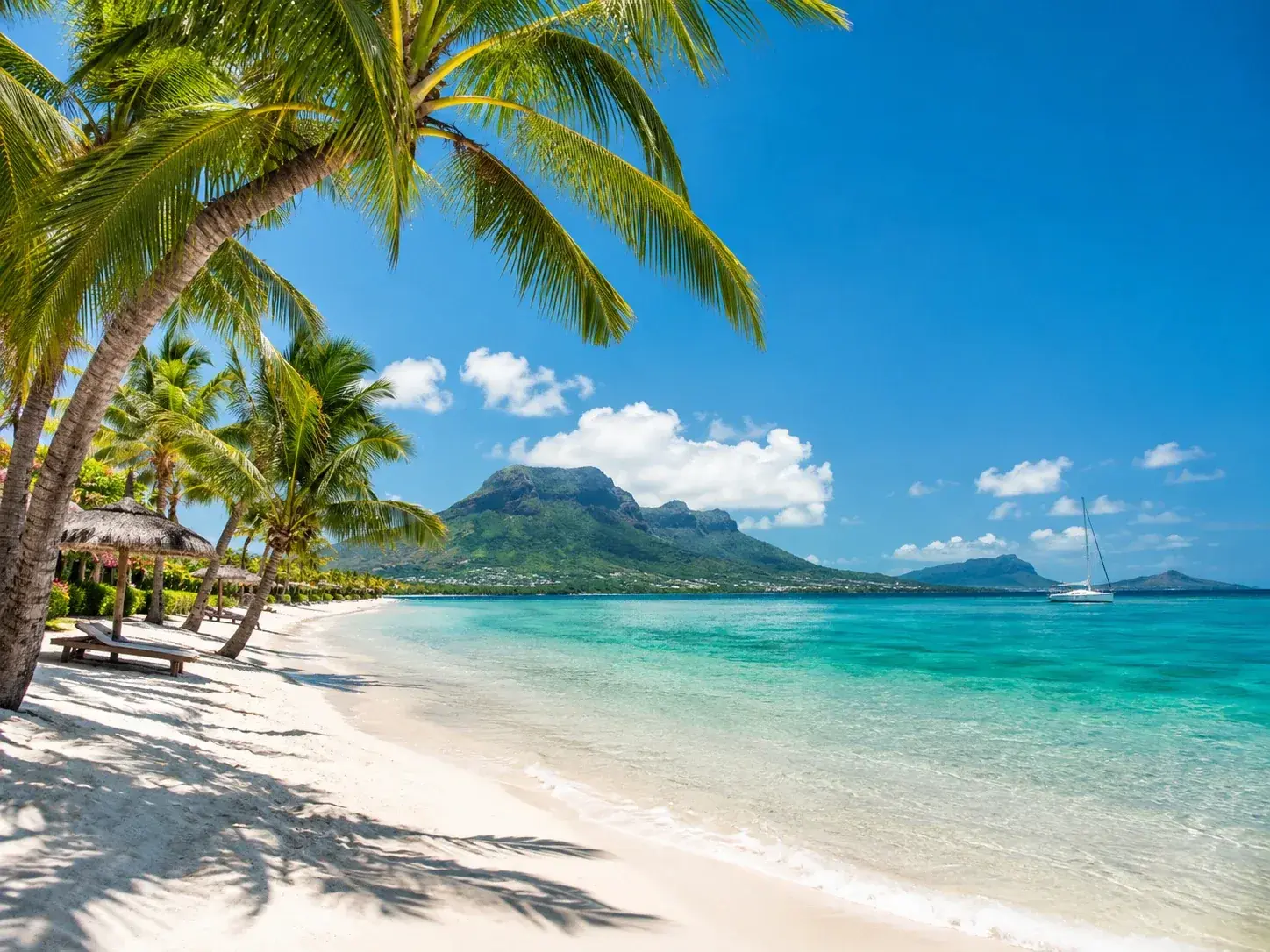
The south of Mauritius has a bearing all its own. Its fishing villages have kept their character, its beaches open out wide, and the swell crashes against cliffs of volcanic rock. It is a calmer, more discreet region, where people come for the landscape rather than the bustle. Three days are enough to see its three faces: the Bel Ombre estate, the Souillac coast, then the uplands.
Day one: Bel Ombre, forest and mansion
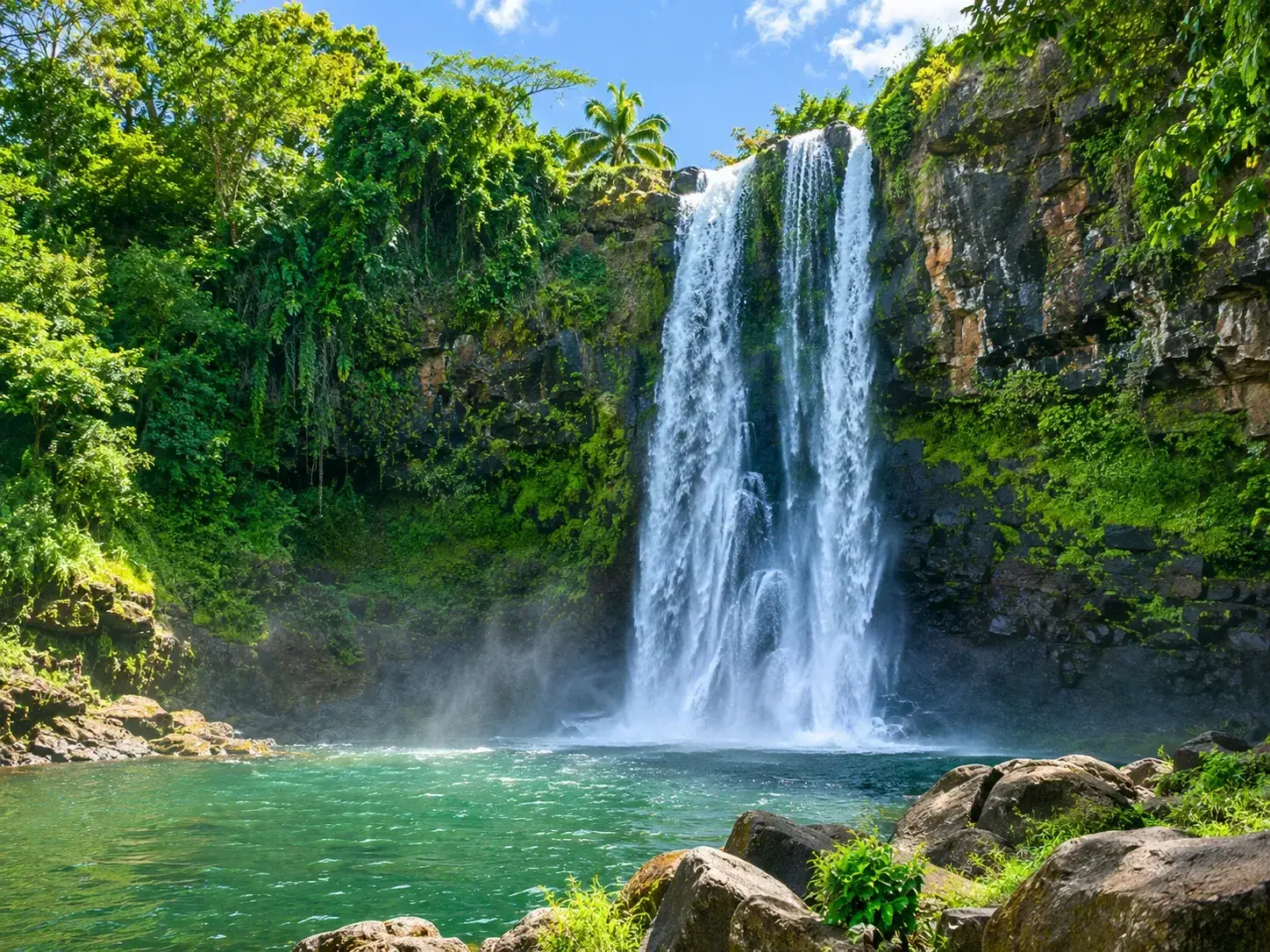
The Bel Ombre Nature Reserve covers 1,300 hectares at the heart of a 2,500-hectare estate. It takes its name from the old sugar mill, founded in the nineteenth century, whose chimney still dominates the landscape. Every outing there is accompanied, by guides trained by the Mauritian Wildlife Foundation. The two-hour hike follows trails through endemic forest, with a stop at a waterfall where you swim when the weather allows; you may come across monkeys, kestrels or the pink pigeon. Departures are at 9.30am and 1.30pm, and must be booked in advance.
At lunchtime, Le Château de Bel Ombre serves seasonal Mauritian cooking in a colonial mansion surrounded by gardens, from 11.30am to 3pm. The house asks for smart dress: closed shoes, no sandals and no swimwear. In the afternoon, the World of Seashells displays 8,000 shells of 1,500 species, from every sea, gathered by a Mauritian collector who had inherited the collection from his parents. The day ends on Bel Ombre’s public beach, or a little further east, on the beach at Saint-Félix.
 AI-generated image
Day two: Souillac, from the poet’s house to the cliffs
Souillac is the village of the far south. The morning starts at the Robert Edward Hart Museum, on Rue Autard, at the water’s edge. The poet, born in Port Louis in 1891, withdrew here in 1941; after a cyclone destroyed his first house, his friends had a pavilion of coral stone built for him, La Nef, where he died in 1954. The house has stayed as he lived in it: his desk, his violin, his typewriter, his manuscripts. The museum is closed on Sundays and public holidays, and on Wednesdays opens only at 11am.
The Telfair Garden is a few minutes away. Planted with tropical vegetation, it runs down to the shore, and a coastal path leads from it to a wild sandy beach, then, after a short walk, to Gris Gris. There, no one swims: the currents are strong and the waves huge. You look at the cliffs, listen to the ocean, and carry on to La Roche qui Pleure, where the waves smash against the rocks.
The afternoon turns inland. At 2.5 kilometres from Souillac, Rochester Falls drop ten metres down a wall of sharp-edged rectangular rocks, like masonry; you can swim there in hot weather, but never during or just after heavy rain, when the ground turns slippery and the water rises. For a proper walk, Cascade Léon is reached in an hour to an hour and a half, along four kilometres of easy trail, and you can swim behind the falls, where a cave lies hidden. Cascade Mamzelle, on a hidden path known mainly to locals, is best done with a guide, and takes two hours for the same distance.
Day three: tea, spices and the sacred lake
The third day climbs into the uplands of the Savanne district. Mauritius has no wine route, but it does have a Route du Thé, linking the Domaine des Aubineaux, Bois Chéri and Saint Aubin. Bois Chéri, the oldest tea plantation on the island, is visited on a guided walk through the tea bushes that ends with a tasting, where the vanilla tea is the one to try. The Domaine de Saint Aubin, near Rivière des Anguilles, a former sugar estate, shows its tropical spice gardens, its vanilla orchids and its anthurium nurseries; its old colonial house, listed as national heritage, serves lunch facing the gardens, and its distillery offers tastings of its rums.
In the afternoon, the road leads to Ganga Talao, Grand Bassin, a crater lake set high in the mountains of Savanne and a holy place of Mauritian Hinduism. A thirty-three-metre statue of Shiva guards the entrance to the site, and you walk around the lake, among colourful shrines and monkeys. During Maha Shivaratri, the faithful come here on pilgrimage from all over the island, on foot, and share the road.
Returning by the coast
If you are heading back west, the Macondé road, the B9, follows the shore for some forty kilometres between Souillac and Grande Rivière Noire, with the sea on one side and vegetation and mountains on the other. At Baie du Cap, a narrow staircase climbs the Macondé rock, from where the view takes in both sea and countryside. The wind can blow hard up there: keep well back from the edge.
To book
Things to do from this article
- Book on GetYourGuide →
Horse riding · Le Morne
One-hour horse ride at Le Morne, with ocean views - Book on GetYourGuide →
Boat trip · Le Morne
Private boat: Île aux Bénitiers, a swim near dolphins and lobster - Book on GetYourGuide →
Entry ticket · Chamarel
Entrance ticket for the Seven Coloured Earth geopark, Chamarel - Book on GetYourGuide →
Quad and off-road · Bel Ombre
Buggy ride in the Bel Ombre nature reserve - Book on GetYourGuide →
Entry ticket · Chamarel
Chamarel: entry ticket to the Seven Coloured Earth Geopark - Book on GetYourGuide →
Day tour by car · Chamarel
Chamarel: tour of the four parks
The addresses
Places mentioned
- Bel Ombre Nature ReserveHike · Bel Ombre
- Le Château de Bel OmbreRestaurant · Bel Ombre
- Telfair GardenGarden · Souillac
- Rochester FallsHike · Souillac
- Cascade LéonHike · Souillac
- Cascade MamzelleHike · Souillac
Read next
 AI-generated image
A rainy day in Mauritius
 AI-generated image
A week on the water
 AI-generated image
A week on foot
Where to stay
Stay in the south
Places to stay that are still available, with current prices, compared across the main booking platforms.