Port Louis, a capital born of a harbour
Chosen in 1732 for its natural harbour and built from 1735 onwards, Port Louis changed its name three times between the Revolution and the Empire. Its façades tell the island’s story to those who know how to read them.
October 5, 2026
 AI-generated image
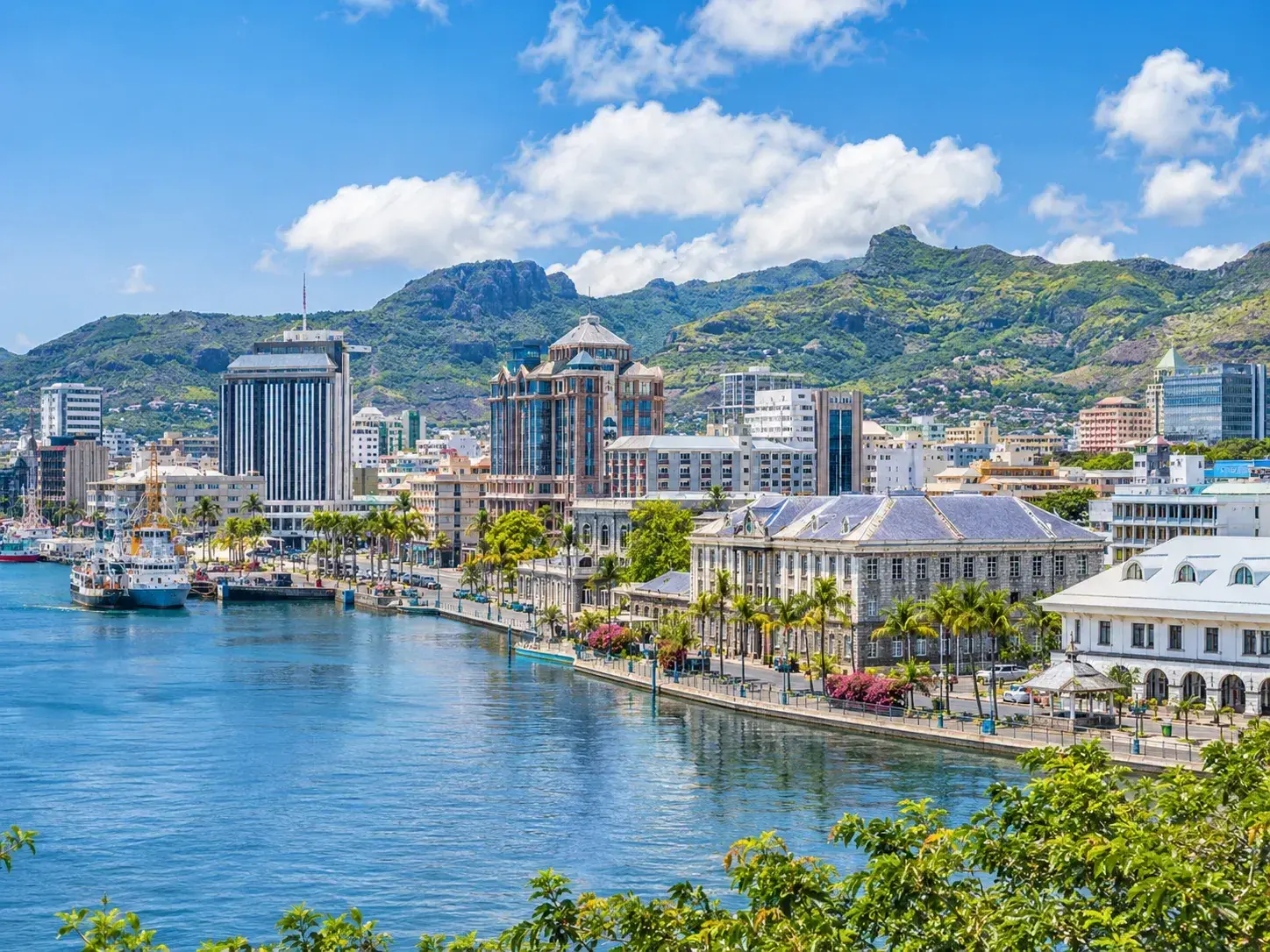
Port Louis was not always the capital. The French first set up their government at Vieux Grand Port, in 1722, on the site of the old Dutch fort. But from 1732 it was Port Louis that was chosen as the port of the Isle de France: a natural haven, in a strategic position in the Indian Ocean. The administration followed. In 1735 Governor Mahé de La Bourdonnais launched the building of the town, which became a naval base and a shipbuilding centre.
The Company town
The first buildings were those of a colony equipping itself: a windmill, a bakery, workshops, fortifications, warehouses and the military hospital of 1740, put up by slaves and contract workers. The hospital now houses the Intercontinental Slavery Museum. The Company’s Garden, in the town centre, owes its name to the French East India Company. Bordered by the Ruisseau du Pouce and the Ruisseau de la Butte à Tonier, it gathers in its shade the statues of Rémy Ollier, Adrien d’Épinay, Brown-Séquard, Léoville L’Homme and Manilall Doctor.
Not far from the harbour, Parc-à-Boulets bears a name from the late eighteenth century. In 1781 it was called Les Forges, after the workshop that stood there; it became the Parc à Boulets in 1791.
Port de La Montagne, Port Nord-Ouest, Port Napoléon
The Revolution gave the town the island’s first municipality, in 1790. Thomas Enouf was its first mayor, and ten more French mayors followed him. The town’s name followed the regimes: Port Louis until 1793, Port de La Montagne in 1794, Port Nord-Ouest from 1795 to 1803. When General Decaen took over the government of the island in 1803, the municipality was abolished and the town became Port Napoléon. Only with the British conquest of 1810 did Governor Robert Farquhar restore its original name.
The British town
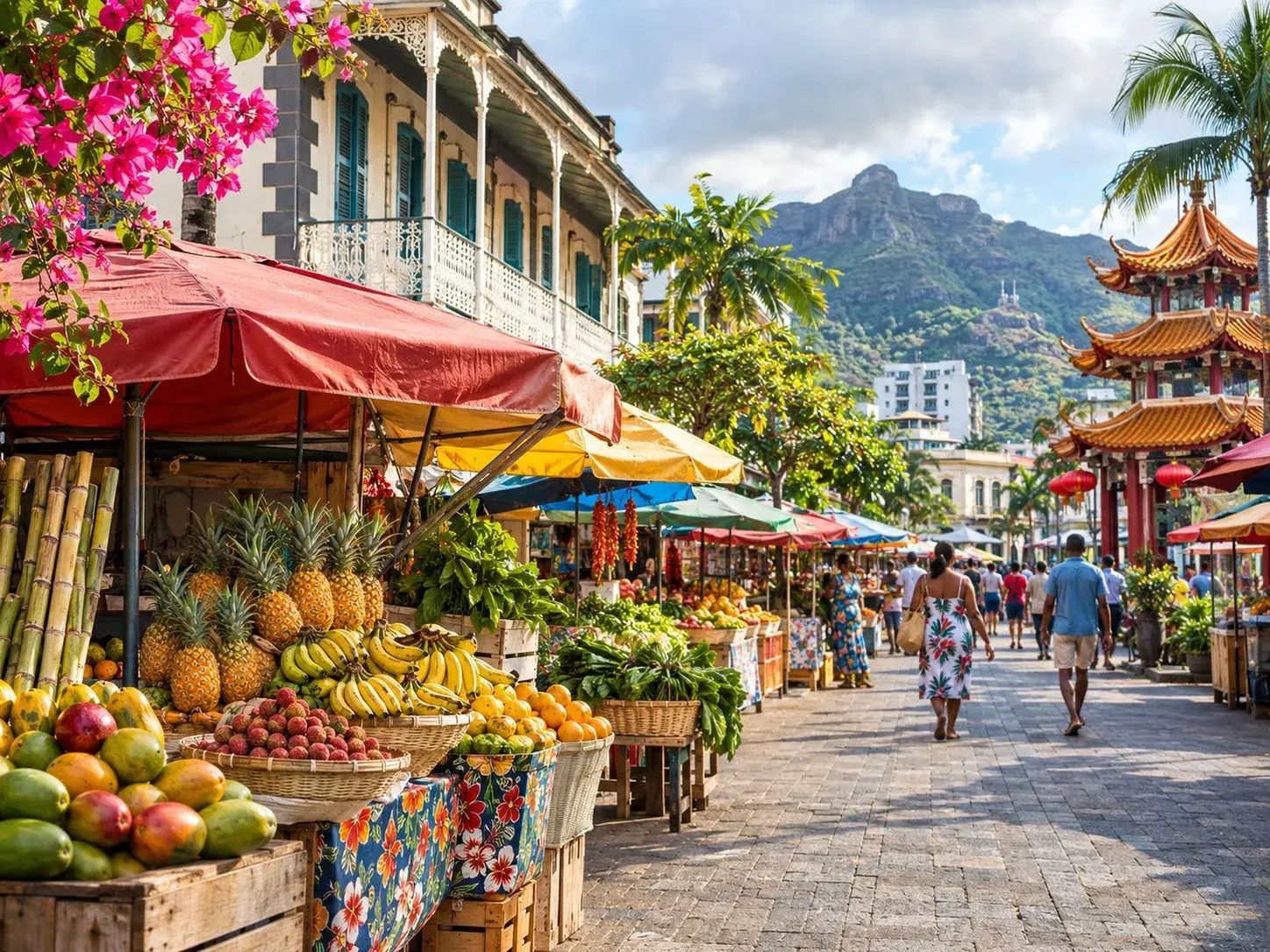
The nineteenth century gave Port Louis its face of stone. The Champ de Mars, opened in 1812 at the foot of an amphitheatre of hills, is the second-oldest racecourse in the southern hemisphere; it was on its turf that independence would be proclaimed, in 1968. On the hill, the Citadel, or Fort Adelaide, was built between 1830 and 1840 to defend the capital. The customs house, a three-acre complex built in 1831 and 1832, was demolished in 1987; only its gateway survived, moved stone by stone and turned into a memorial. The Central Market, opened in 1844 by Governor Gomm, is the oldest in the country. Its first traders came from Madras, Pondicherry and Tranquebar, and its three gateways of stone and wrought iron with floral motifs remain its signature.
The town grew and diversified. The Chinese community built the Kwan Tee Pagoda at Les Salines in 1842. The Immigration Depot, today’s Aapravasi Ghat, was built in 1849 on the shore of Trou Fanfaron bay. The Civil Hospital went up in 1854, the main post office in 1870, and the Mauritius Institute building between 1880 and 1884, facing the Company’s Garden: it houses the Natural History Museum, the oldest museum in the country. In 1850 the first municipal elections of the British era gave the town a council of eighteen elected members, with Louis Léchelle as mayor. Finally, in 1933, the Granary, a grain store of more than two acres, became the largest red-brick building in Mauritius.
Reading the town today
Port Louis bears the trace of each of its waves of settlement. Near the Immigration Depot, the former immigrants’ yard, from which those returning to India or bound elsewhere in the Indian Ocean departed, has become the northern bus station, still known as Immigration Square. Around the Route Royale, Chinatown took shape with the arrival of many Chinese immigrants in the 1940s. In Plaine Verte, on the former Rue Desforges, which now bears the name of Sir Seewoosagur Ramgoolam, the wooden house where the future father of the nation lived from 1935 to 1965 has become a cultural centre; it had earlier been home to Dr Maurice Curé, founder of the Labour Party.
The town today has thirty-two municipal councillors, four for each of its eight wards. For those who want to read it, guided heritage walks leave by reservation from near the Aapravasi Ghat, in groups of no more than twenty people. They link the former military hospital, Parc-à-Boulets, Immigration Square, the windmill, the main post office, the Granary and the Central Market. In a handful of streets, nearly three centuries of history can be covered on foot.
To book
Things to do from this article
- Book on GetYourGuide →
City tour · Curepipe
Domaine des Aubineaux, with lunch, cooking class and transfer - Book on GetYourGuide →
City tour · Grand Baie
Grand Baie: walking tour of coastal food and culture - Book on GetYourGuide →
City tour · Grand Baie
Grand Baie: guided food walking tour - Book on GetYourGuide →
City tour · Port-Louis
A day at the horse races with a local guide - Book on GetYourGuide →
City tour · Tamarin
Lakaz Chef: local cooking class - Book on GetYourGuide →
City tour · Trou aux Biches
Luxury beach picnic, by Emmsi
The addresses
Places mentioned
- The Company’s GardenGarden · Port-Louis
Read next
 AI-generated image
Aapravasi Ghat and Le Morne: two places that explain the island
- AI-generated image
Since 1992, the Republic of Mauritius
- AI-generated image
12 March 1968, independence day
Where to stay
Stay in Port Louis
Places to stay that are still available, with current prices, compared across the main booking platforms.