
The west, at the hour of sunset
The west coast is the driest on the island and the only one to see the sun sink into the ocean. From Flic en Flac to La Preneuse: beaches long and tiny, a red-striped lighthouse, a watchtower and dolphins offshore.
July 29, 2026
 AI-generated image
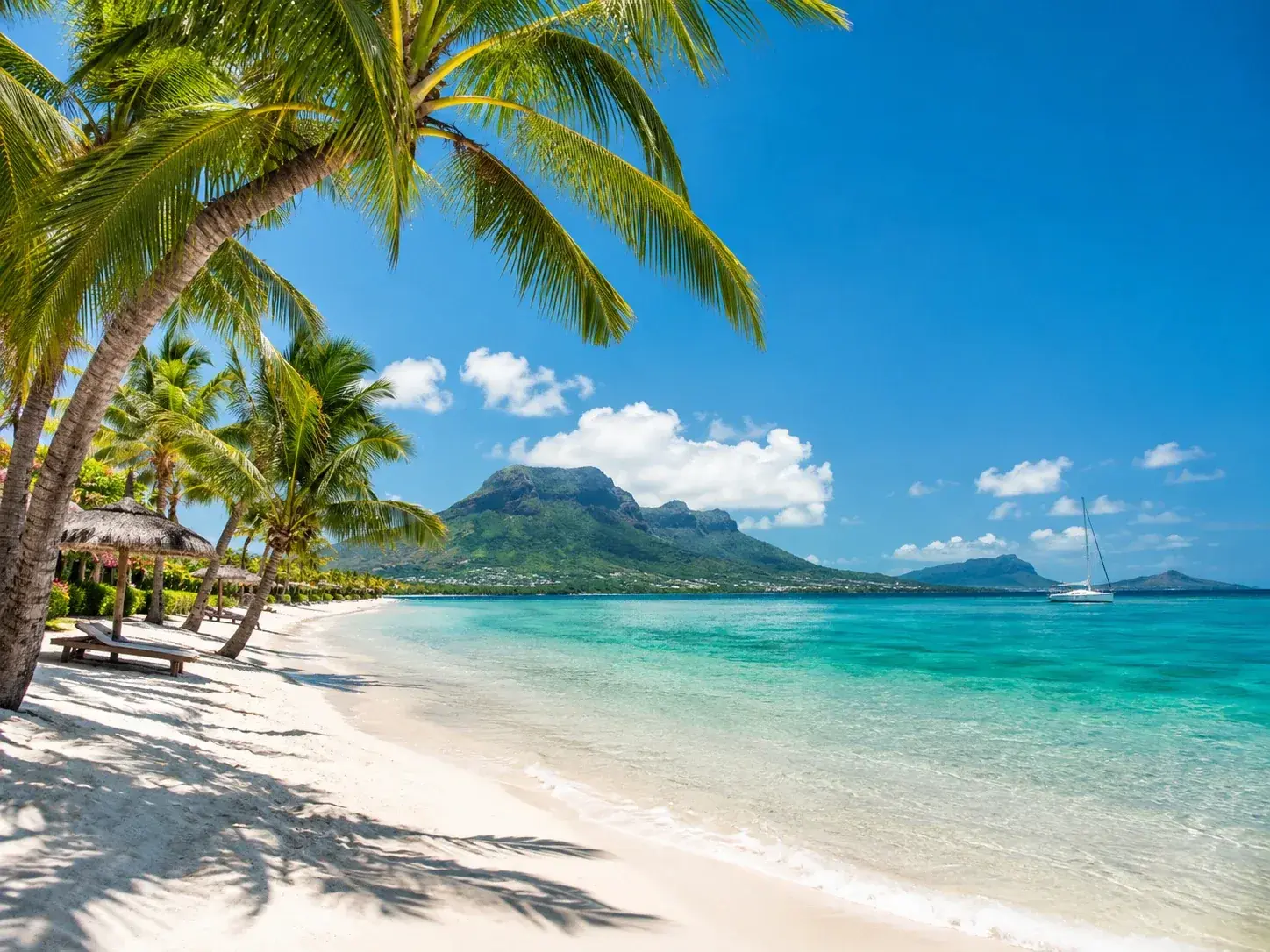
There is an hour, on the west coast, when people stop swimming. The sun drops towards the horizon, the light turns orange, fishing boats stand out as silhouettes on the water, and people come down to the sand for that moment alone. This is the coast of the setting sun, the one that watches it sink into the ocean, and it is also the driest on the island.
A coast sheltered from the rain
The figures confirm what a visitor senses within a few days. At Médine, the weather station that represents the west, an average of 781 millimetres of rain falls each year, two and a half times less than on the east coast. From July to November there are two or three days of rain a month, and less than 30 millimetres of rainfall monthly. The sun shines for more than seven hours a day all year round, and for eight hours in November and December.
Winter nonetheless has a character of its own. The mean wind speed, which does not exceed 8 kilometres an hour in January, rises above 15 from June to September and reaches 17 in August. The west is dry; that does not make it windless.
As for the setting sun, it keeps to the calendar. In early November it disappears at around 18:18; at the end of December, at around 18:52. At the same time of year it rises between 5:20 and 5:30: the days of the southern summer start early and end before seven in the evening.
Flic en Flac, the long beach
Flic en Flac is the great beach of the west, a stretch of sand some eight kilometres long, one of the longest on the island. Public land here covers 18.7 hectares and 3.1 kilometres of shoreline, in five sections opened between 1940 and 2021, from the landing stage in the north to Wolmar in the south. There are three toilet blocks, two car parks and a beach services office.
People look for shade under the filaos that line the sand, grab a bite from the street food stalls set up nearby, and snorkel over a warm lagoon and a coral reef. Offshore, two well-known dive sites, Snake Reef and the Cathedral, are within reach by boat. On Easter Monday a duty ambulance is stationed here and also covers Wolmar, its neighbour, an oddity with its 50 metres of shoreline for more than a hectare of public land.
Albion and its lighthouse
North of Flic en Flac, Albion is a small, quiet village. Its golden sand borders clear, calm water, well suited to a spell of snorkelling. The public beach occupies the Pas Géométriques d’Albion, 1.8 hectares and 205 metres of shoreline, and it has its own lifesaving group, the Albion Life Saving Group, which assists swimmers.
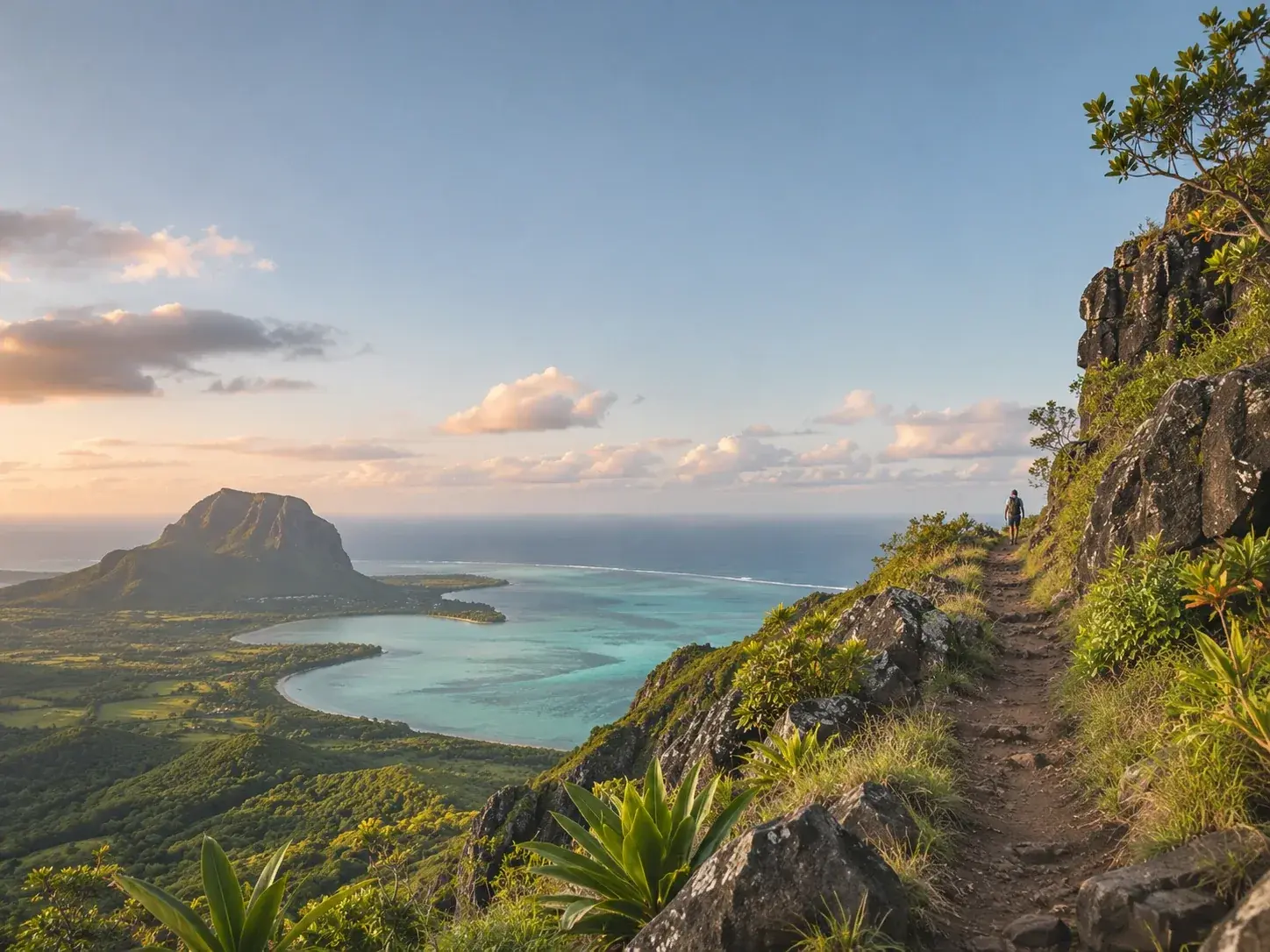
In the evening, Albion is a prime spot for the sunset, when the light often sets the ocean ablaze in vivid orange. On the rocky coast nearby, the Pointe aux Caves lighthouse, known as the Albion lighthouse, raises its 30 metres of red and white stripes above the waves. It is still in service: at night it emits two white flashes every ten seconds and guides ships towards the harbour of Port Louis. You can ask permission to climb its staircase and take in the coast from Pointe aux Sables to Flic en Flac; failing that, a walk along the clifftop, in the salt wind, is enough to fill the wait for dusk.
Further north still, Pointe aux Sables brings together three public plots, the oldest public since 1940, and Sable Noir, at Grande Rivière Nord-Ouest, accounts for the only two public beaches in the district of Port Louis.
 AI-generated image
La Preneuse and Tamarin, between tower and salt pans
Further south, La Preneuse is a small, calm beach made for strolling. A well-preserved Martello tower, a small defensive fort, overlooks it, and cannons stand in a line along the white sand. The shore is protected by sandbags, so the water is not easy to reach everywhere. Fishing boats bob in front of the beach, and many boat trips leave from here, some at sunset, others out to sea, where dolphins are often seen. In the evening, people watch the sun go down here, with the bulk of Le Morne Brabant in the distance.
Dolphins are, in fact, one of the signatures of this coast. Bottlenose and spinner dolphins often move about here in groups of around twenty, and the west coast is the part of the island where you have the best chance of seeing them.
Neighbouring Tamarin has one of the oldest public beaches on the island, open to all since 1940, with 410 metres of shoreline. At the entrance to the village, at the foot of La Tourelle mountain, lie the last salt pans still worked in Mauritius, where nearly 1,500 tonnes of salt are produced using methods that have barely changed in two centuries. Come early in the morning to see the salt workers at their task, before heading to the beach for the end of the day.
Planning your evening
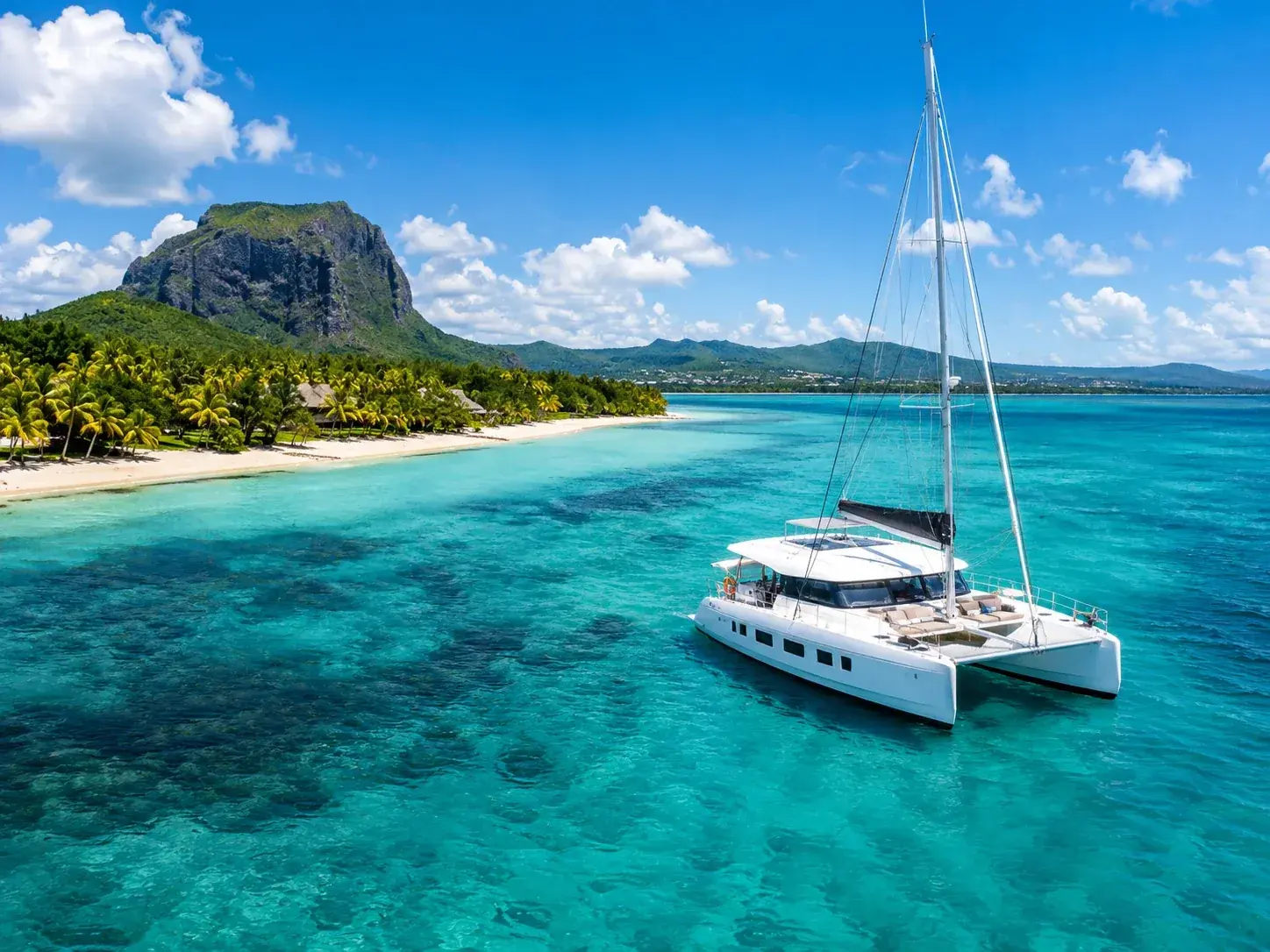
The west coast lends itself to a simple ritual. In the afternoon, a swim at Flic en Flac or Albion while the sun is still high. An hour before sunset, a move to an open viewpoint: the clifftop at Albion, the tower at La Preneuse, the sand at Tamarin. Then the wait, facing west, for the moment the disc touches the horizon. For those who would rather watch from the water, the catamarans of La Preneuse offer sunset cruises.
The rest belongs to the season. In winter the west is at its driest and the wind blows harder; in November and December it offers its sunniest days. And whatever the season, a torch is never superfluous for finding your way back to the car once the sun has set.
To book
Things to do from this article
- Book on GetYourGuide →
Catamaran cruise · La Preneuse
Sunset catamaran cruise with drinks and snacks, La Preneuse - Book on GetYourGuide →
Boat trip · Flic-en-Flac
Excursion to Île aux Bénitiers and Crystal Rock - Book on GetYourGuide →
Kayak and paddleboard · Tamarin
Kayak excursion to watch dolphins in Tamarin Bay - Book on GetYourGuide →
Kayak and paddleboard · Tamarin
Guided kayak excursion in search of dolphins, Tamarin - Book on GetYourGuide →
Kayak and paddleboard · Tamarin
Guided sundowner kayak excursion, Tamarin - Book on GetYourGuide →
Kayak and paddleboard · Tamarin
Guided stand-up paddleboard excursion on the Tamarin River
Read next
- AI-generated image
Public beaches: the shore that belongs to everyone
- AI-generated image
The sea through the seasons
 AI-generated image
The islets, beaches out at sea
Where to stay
Stay in the west
Places to stay that are still available, with current prices, compared across the main booking platforms.