The islets, beaches out at sea
Around Mauritius, a ring of islets carries the beaches on beyond the lagoon. Some are reached by shuttle for a day on the sand, others can be visited only with a guide, and others still can only be admired from the boat.
October 15, 2026
 AI-generated image
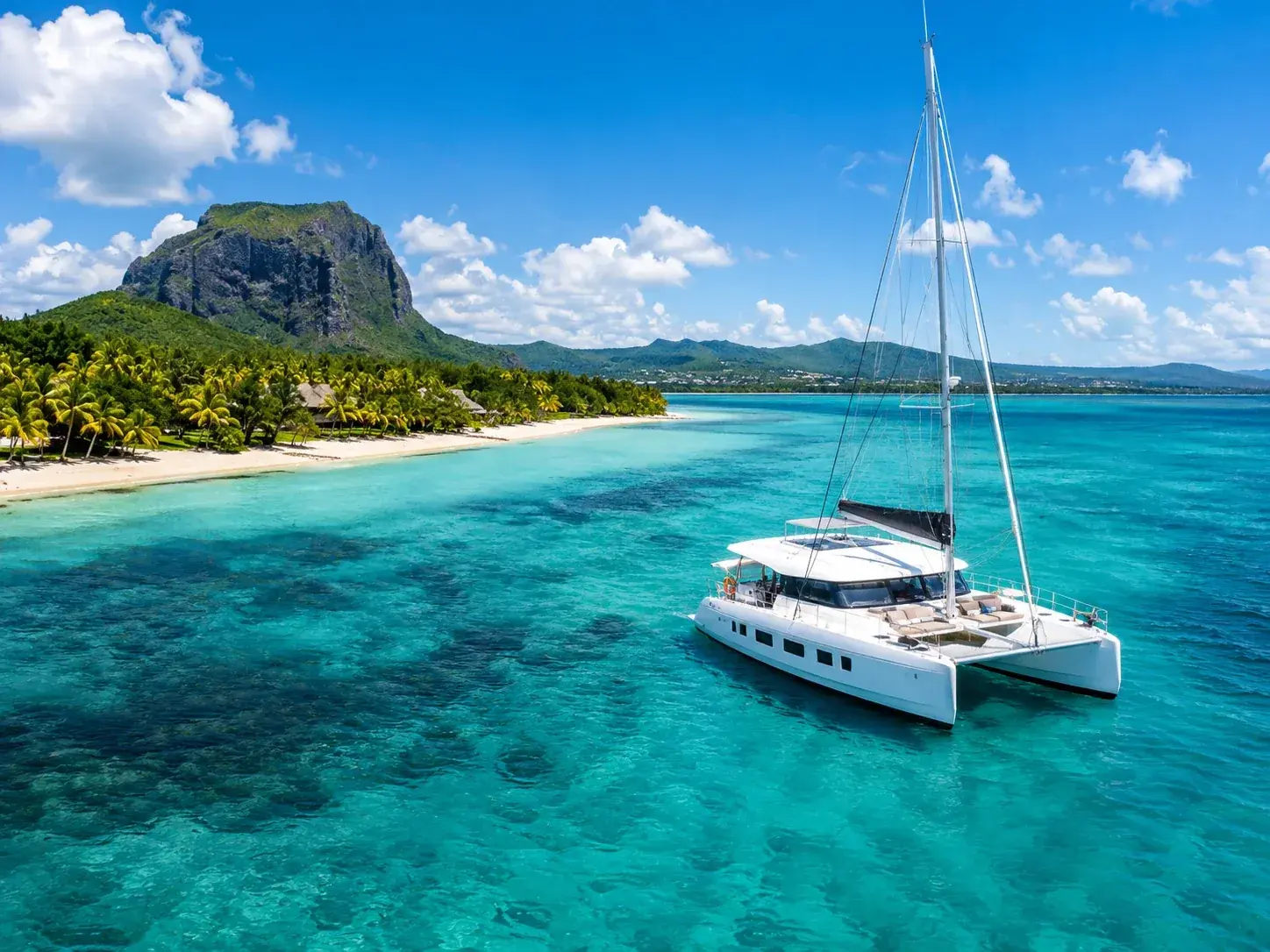
Mauritius does not end at its shoreline. Beyond the lagoon, and sometimes in the middle of it, a ring of islets extends the island: white sandbanks reached for the day, nature reserves entered only with a guide, and rocks that you simply skirt by boat. Each has its rules, and you need to know them before setting off.
Île aux Cerfs, a beach for the day
Off the east coast, Île aux Cerfs is among the most visited islands in Mauritius. It covers 87 hectares and no one lives there: no hotel has been built on it, and people come for the day. The shortest crossing leaves from the Pointe Maurice jetty at Trou d’Eau Douce, where boats shuttle every thirty minutes, from 9:30 to 18:00, to the Masala jetty. Golfers have their own shuttle, more frequent and starting earlier, to the course designed by Bernhard Langer.
The northern tip of the island gathers the white-sand beaches, the turquoise lagoon and the beach bars where lunch is taken with your feet in the sand. The reef makes the lagoon ideal for water sports, from parasailing to waterskiing. Those looking for calm follow the island’s east coast, beneath the filaos, until they find their own patch of sand, and swim in clear, shallow water. Just one constraint to bear in mind: the last return shuttle leaves at 18:00.
 AI-generated image
The northern islands
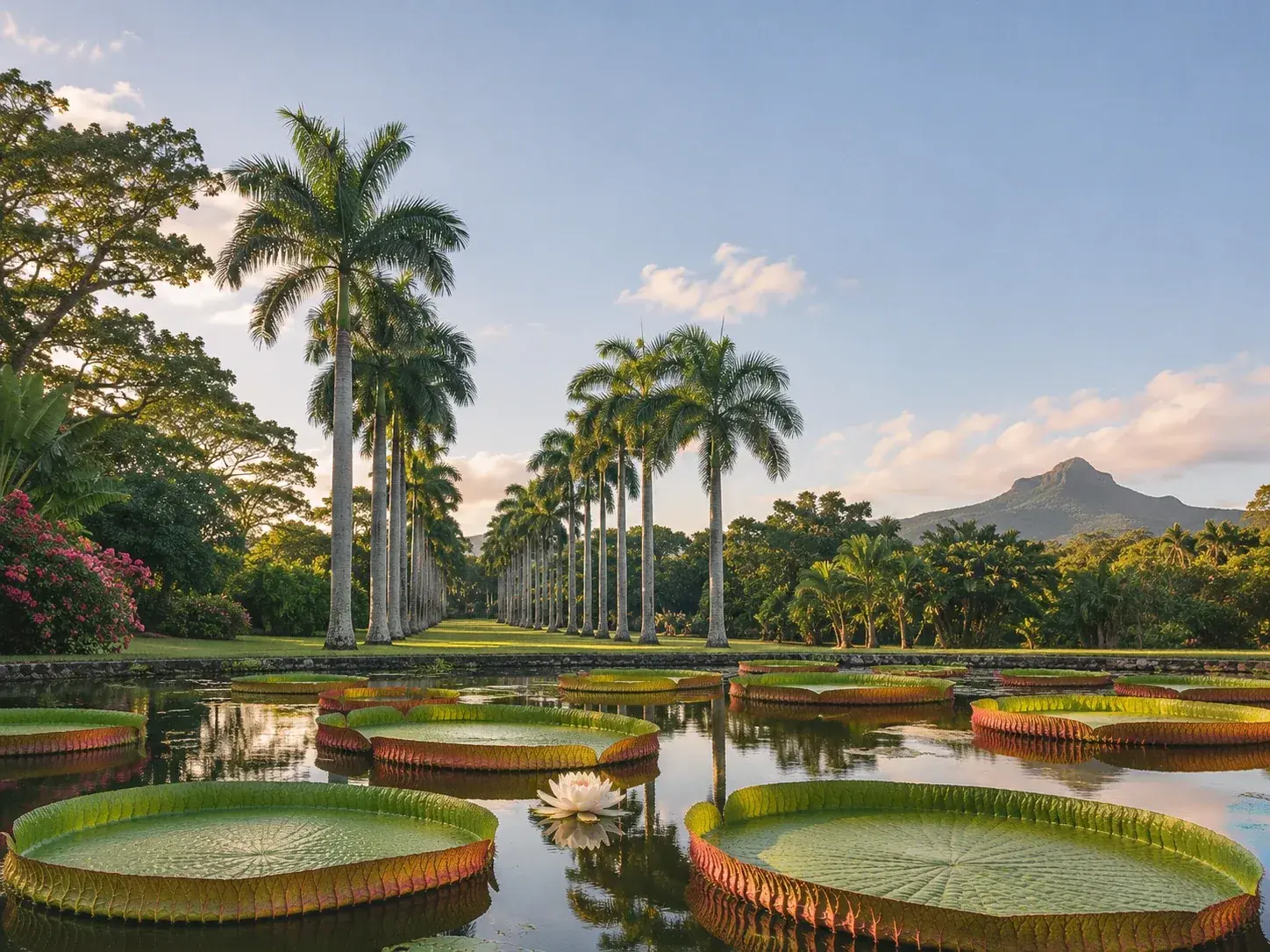
Off the northern tip, five islands make up a small archipelago. Gabriel Island is the one where you land for the beach: a sandbank of pure white, crystal-clear and calm water, a verdant nature reserve. Here you may come across the white-tailed tropicbird, the orange-tailed skink and Bojer’s skink, and a walk around the islet gives an idea of what Mauritius was like before it was developed. Boats and catamarans take you there from Grand Baie or Pereybère.
Five minutes away, Flat Island tells another story. From the middle of the nineteenth century to the 1930s, it served as a quarantine station for patients with cholera, smallpox and malaria. What remains are buildings overrun by vegetation and a cemetery still recognisable in the south, while a white lighthouse continues to guide fishermen. At the foot of the neighbouring rock, Pigeon Rock, experienced divers descend into the shark pit, where grey reef sharks and whitetip reef sharks circle.
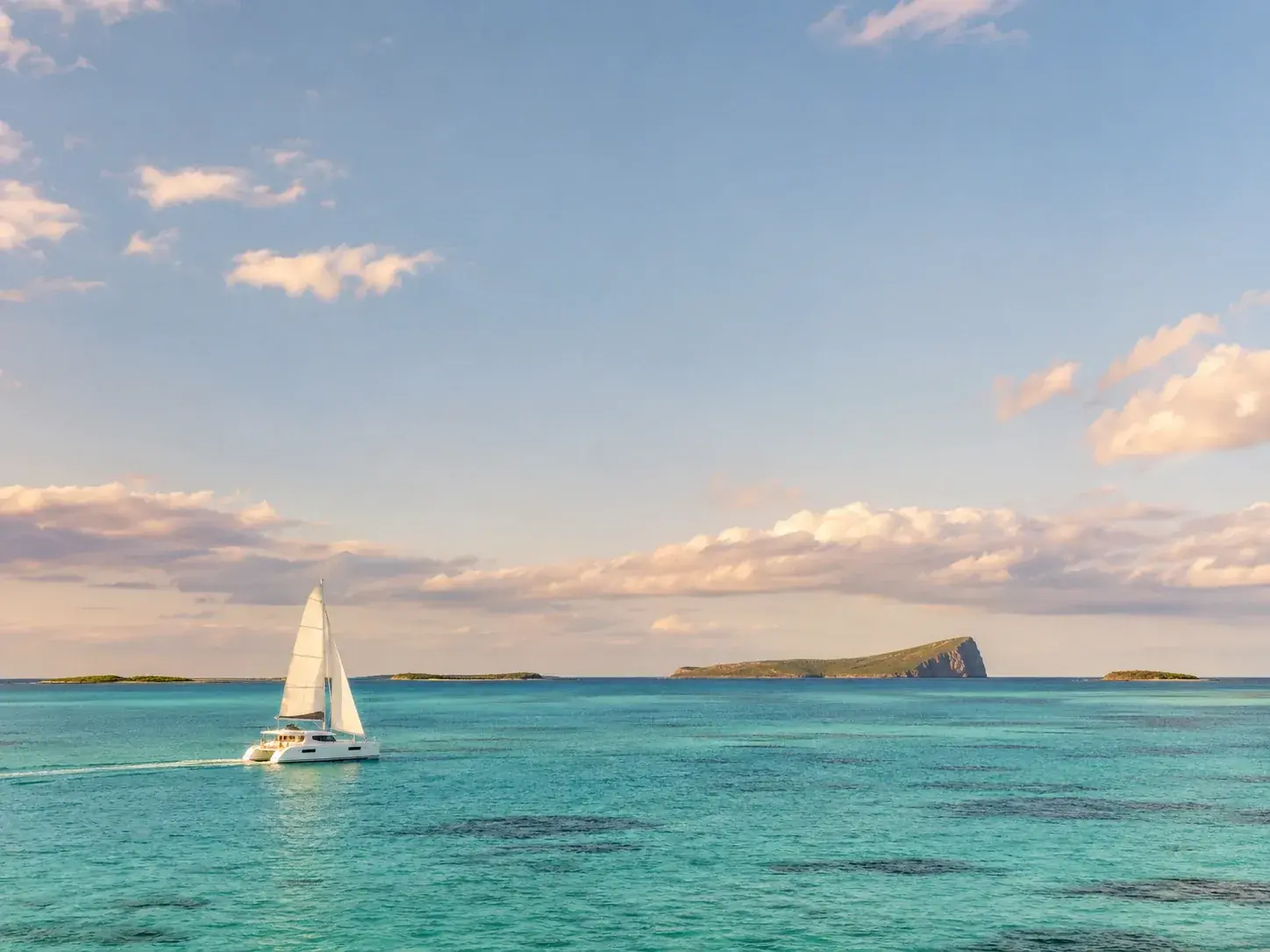
Coin de Mire, some eight kilometres from the coast, cannot be visited on foot: it is a nature reserve, and landing there is forbidden. People come to see its rust-coloured cliffs from the water, with tropicbirds, terns and masked boobies gliding above them, and slip into the sea for some of the finest snorkelling on the island. Round Island, a nature reserve since 1957, is one of the oldest island restoration projects in the world; it has seen the Round Island boa come back from the brink of extinction, and access is limited to scientific research. Serpent Island, the most remote of the five, shelters no snakes but a vast colony of seabirds; there is no landing here either, but its waters, with excellent visibility, draw divers along a fifty-metre drop-off.
On the north coast, a less well-known islet became public land as early as 1963: Matapan islet, included within Melville public beach.
Île aux Aigrettes, a forest of old
Off the south-east coast, Île aux Aigrettes is a small islet ringed with coral and covered in ebony forest. Declared a nature reserve in 1965, it has been the subject of long conservation work, which has recreated a habitat there for rare species long since vanished. It can be explored only on a guided tour, in search of rare plants, reptiles, tortoises and rare birds: the pink pigeon, the Mauritius fody, the Mauritius olive white-eye. Here the beach is merely the threshold: you come for the forest.
 AI-generated image
Île aux Bénitiers, the lagoon of the south-west
On the other side of the island, Île aux Bénitiers rests in the lagoon near Le Morne. It measures barely two kilometres by five hundred metres, and no one lives there. The day is spent picnicking on the sand, watching birds and exploring a small coconut grove. In the lagoon, you snorkel out to Crystal Rock, a rock shaped like a giant clam.
You get there by fishing boat from La Gaulette or Case Noyale, on the coast opposite, or on an organised excursion by catamaran or speedboat, often with a barbecue at lunchtime. The crossing sometimes brings an encounter with dolphins.
Choosing your islet
The islets fall into three families. The beach islands, Île aux Cerfs, Gabriel Island and Île aux Bénitiers, are reached for the day and enjoyed with your feet in the water. The reserves visited with a guide, such as Île aux Aigrettes, are booked in advance and explored on foot. And the forbidden sanctuaries, Coin de Mire, Round Island and Serpent Island, are admired from the boat or discovered underwater.
In every case, the islet sets its own rhythm: that of the boat, of the tide of visitors at the busy tip, of the last departure. You do not come to escape the island, but to see it as it appears from the sea.
To book
Things to do from this article
- Book on GetYourGuide →
- Book on GetYourGuide →
- Book on GetYourGuide →
Boat trip · Trou d’Eau Douce
Island adventure on the south-east coast - Book on GetYourGuide →
Boat trip · Le Morne
Private boat: Île aux Bénitiers, a swim near dolphins and lobster - Book on GetYourGuide →
Boat trip · Blue Bay
Blue Bay: glass-bottom boat and snorkelling - Book on GetYourGuide →
Read next
 AI-generated image
Public beaches: the shore that belongs to everyone
- AI-generated image
The sea through the seasons
- AI-generated image
Sunday at the beach, the Mauritian way
Where to stay
Stay in Mauritius
Places to stay that are still available, with current prices, compared across the main booking platforms.