
The wild south, beaches for watching the sea
On the south coast, the ocean pounds cliffs of volcanic rock, and some beaches do not lend themselves to swimming. Gris Gris, the Pont Naturel, Le Souffleur, Pomponette: a coastline to explore on foot, for the spectacle.
August 24, 2026
 AI-generated image
There are beaches in Mauritius where nobody comes to swim. On the south coast, the ocean pounds cliffs of volcanic rock, the currents are strong, and sand alternates with pebbles and rocky headlands. People come here to walk, to listen to the sea, to watch it break. This is the rawest side of the island, the side of fishing villages and hidden coves, and it is best discovered with its limits in mind.
The region has twenty-seven public beaches, and it is the least endowed of the four in shoreline: a little under eleven kilometres of seafront, against more than fifteen in the east. Several of them are nonetheless among the oldest on the island, opened to the public as early as 1940.
Gris Gris and La Roche qui Pleure
Gris Gris lies near Souillac, in the southernmost part of the island. Public since 1940, the beach covers 3.8 hectares and 220 metres of shoreline, and it resembles no other: here the currents are strong and the waves immense, so no one swims or snorkels. People walk, look at the cliffs and listen to the roar of the ocean. From the beach you can reach La Roche qui Pleure, the weeping rock, where the waves come crashing in.
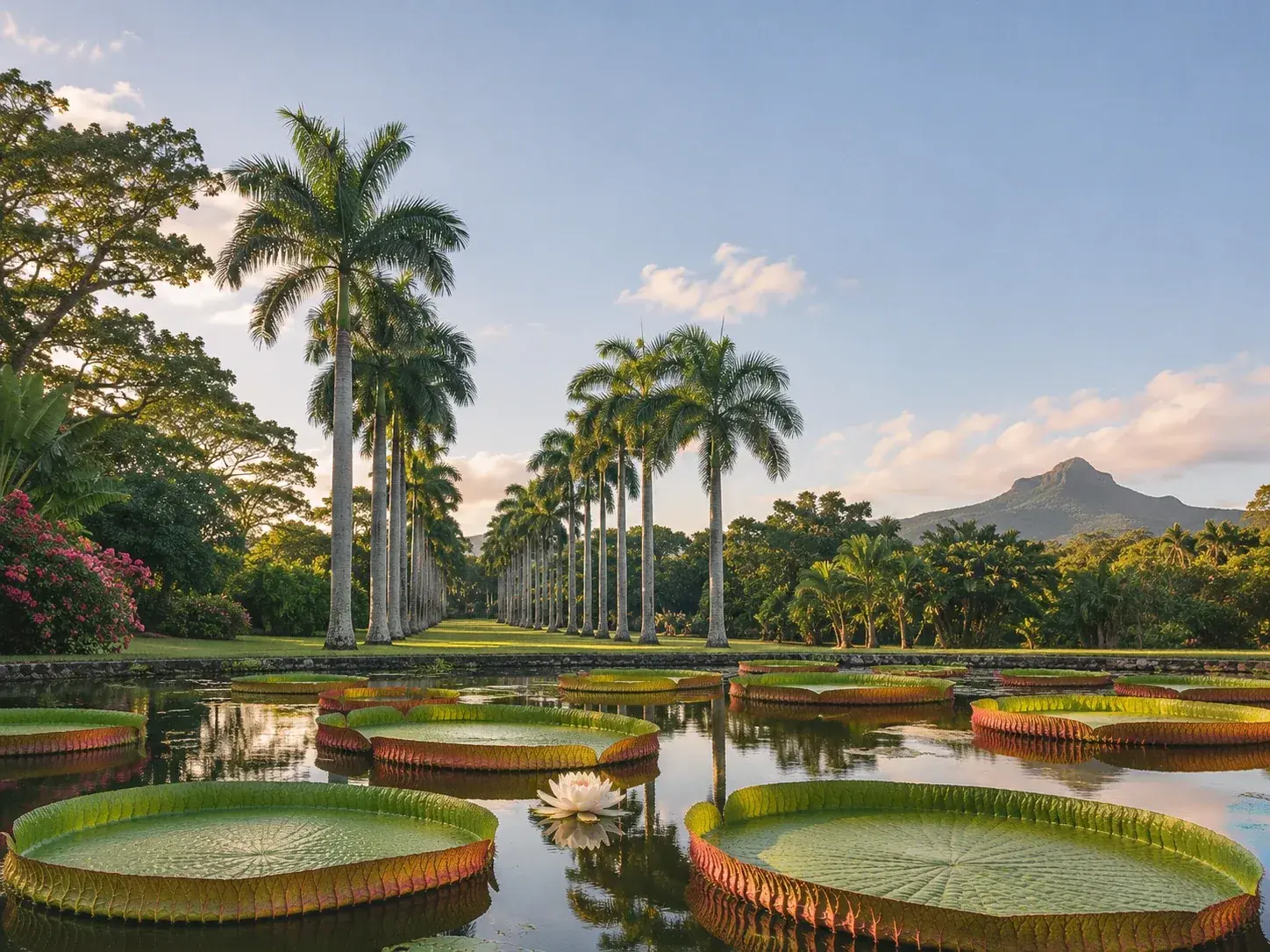
In Souillac itself, Telfair Garden offers the gentlest way into this landscape. You first pass through its tropical vegetation, then a coastal path leads out onto a wild sandy beach, facing the waves that break against the nearby cliffs. It is a place to picnic and contemplate the sea, not to swim, and a short walk along the coast leads from there to Gris Gris. The garden, Telfair beach and the cliffs can thus be covered in a single walk.
 AI-generated image
The Pont Naturel and Le Souffleur
To the east, on the Grand Port coast, two natural curiosities draw photographers more than swimmers. The Pont Naturel is an arch of volcanic rock that spans the waves for two metres; you would think it built, yet it is entirely natural. Water rushes into small holes in the rock and comes out again with a whistle. The sea here is strong and violent, the waves smash against the cliffs, and the spot is not suitable for swimming. It is reached by bumpy tracks, and you should not get too close to the edge.
Le Souffleur, not far away, owes its name to a jet of water that shoots into the air like a geyser. The Pont Naturel lies between it and Le Bouchon, and these sites are linked on foot from La Cambuse, across rocky terrain, in walking shoes.
Beaches where you can swim, with care
Not every beach in the south is to be avoided, but none should be visited without care. La Cambuse, about ten minutes’ drive from the airport, is a broad stretch of sand that looks untouched, with trees for shade and benches for picnics facing the lagoon. The currents can be strong: worth knowing before going into the water.
Saint-Félix, between Souillac and Bel Ombre, ranks among the most beautiful beaches on the south coast and among the calmest on the island, with a few hotels, a few snack bars and sports grounds along the edge of its milky sand. The water is shallow near the shore, but the currents further out and the coral reefs reserve swimming for experienced swimmers. The beach, wide and gentle, lends itself readily to volleyball and to resting in the shade of the coconut palms.
Not far from Saint-Félix, Pomponette and Riambel almost touch: two quiet beaches of white sand, in one of the least developed parts of the island. The sea at Pomponette can be very dangerous, with extremely strong currents; Riambel is where swimming is safest. A little further on, Rivière des Galets shows quite a different face: in place of fine sand, thousands of small pebbles, where people stop to watch the waves break. It is the longest public shoreline in the south, 1,530 metres.
Reading the sea before going in
On this coast more than anywhere else, the sea changes mood. The Meteorological Services issue a high waves warning when a distant swell or a faraway storm threatens the coastline, twelve hours in advance where possible, by special communiqué. The advice that comes with it fits into one sentence: avoid the beach and the sea.
On Easter Monday, a patrol ambulance based at Saint-Félix covers Bel Ombre, Sainte-Marie, Rivière des Galets, La Prairie, La Preneuse and Baie du Cap. This arrangement applies to that day alone.
The south rewards those who approach it on foot. The Macondé road, which follows the sea between Souillac and Grande Rivière Noire, links most of these sites: in a single day you can go from the cliffs of Gris Gris to the pebbles of Rivière des Galets, stopping at Riambel for a swim. Here, a swim is a reward, not a right.
To book
Things to do from this article
- Book on GetYourGuide →
Quad and off-road · Bel Ombre
Buggy ride in the Bel Ombre nature reserve - Book on GetYourGuide →
Guided hike · Souillac
Hiking circuit in the wild south, with a guide - Book on GetYourGuide →
Day tour by car · Souillac
The wild south coast and Gris Gris - Book on GetYourGuide →
Day tour by car · Bel Ombre
Family excursion at Bel Ombre, with lunch and entrance tickets - Book on GetYourGuide →
Guided hike · Souillac
Gris Gris: coastal walk and waterfall, guided nature outing - Book on GetYourGuide →
Adventure park · Chamouny
10 Flight Trail course, Vallé Advenature Park
The addresses
Places mentioned
- Telfair GardenGarden · Souillac
Read next
- AI-generated image
Public beaches: the shore that belongs to everyone
- AI-generated image
The sea through the seasons
 AI-generated image
The islets, beaches out at sea
Where to stay
Stay in the south
Places to stay that are still available, with current prices, compared across the main booking platforms.