Dholl puri, or the art of eating standing up
A flatbread made from yellow split peas, filled and often served with a curry: dholl puri is where Mauritian street food begins. From the Port Louis bazaar to the market at Flacq, here is where and when to eat it.
July 8, 2026
 AI-generated image
In Mauritius, a meal often begins in the street. The island’s cooking blends Indian, Chinese, African and European heritage, and it is at a kiosk counter, standing up, that this blend is most simply tasted. One can eat home cooking, in a restaurant or in a grand hotel, but the street remains the place where the island sits down to eat without ceremony. Of all its dishes, dholl puri is the most widespread: it can be found almost everywhere, and it makes a lunch on its own.
A split-pea flatbread
Dholl puri is a flatbread. Its dough is made from yellow split peas ground into flour, and it is filled with a mixture of cooked yellow split peas, chutney and pickles. It is often eaten with a curry, which makes it a proper meal rather than a snack. The flatbread is soft and floury, and it is what people come looking for at lunchtime.
The yellow split pea turns up in several classics of the Mauritian street. With chilli and coriander, it makes gâteaux piments, the crisp fritters sold at the same counters. But it is dholl puri that people choose for lunch.
 AI-generated image
The Port Louis bazaar
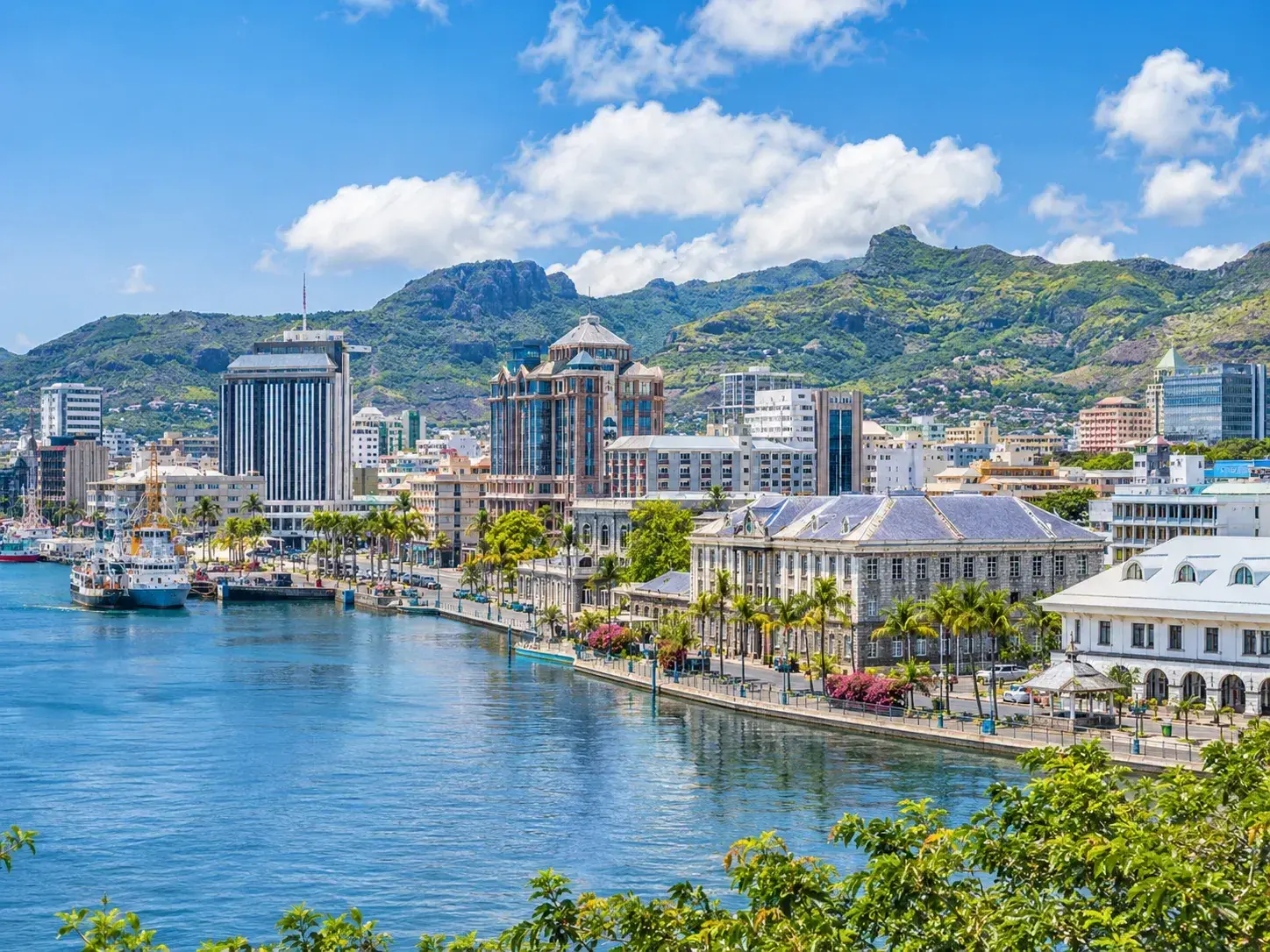
The first place to try it is the capital’s central market, which Mauritians call the Bazaar Port Louis. It is above all the market where locals do their shopping: the stalls are piled high with tropical fruit and vegetables, and the traders call out their prices beneath the roof of the hall to catch the passer-by. The street-food kiosks are inside the market itself. Here one takes a dholl puri or some samosas, moves on to a sweet pastry, and finishes with a glass of alouda, the island’s creamy milk drink, refreshing after the chilli.
The market is best explored section by section, without hurrying. Just outside, stalls sell clothes and bags, and the upper floor is given over to local crafts. The Caudan Waterfront is a short walk away, and Chinatown begins next door, with its biscuit makers, its Chinese cakes and its baskets of steamed dumplings. In a single morning, then, the capital offers two registers of street food, that of the bazaar and that of the Chinese quarter, a few streets apart.
Flacq, Tamarin and the roadside
In the east, Centre de Flacq hosts the island’s largest open-air market. Locals buy their fresh produce here, and street food is cooked to order between the stalls of fruit and vegetables, souvenirs and clothes. Two days matter more than the others: on Wednesdays and Sundays, every stall is open and the street food is in full swing.
Sunday is also the day of the public beaches, where Mauritian families come to share a meal, music and laughter. The vendors follow them. Tany, who has been selling fruit for twelve years and keeps her stall on the beach at Mont Choisy, has her busiest day there. On the west coast, a Mauritian woman, Lydia, sends food lovers to Tamarin Bay on Sundays, for a dholl puri, or for boulettes and boiled noodles. Sizzling stalls and colourful vans parked by the roadside are part of island life.
Boulettes deserve a moment. These are small steamed dumplings, filled with prawn, lamb, squash, chicken, fish, tofu or squid, and served in a hot broth with vegetables and noodles. They are found all over the island, and make a light supper as readily as an afternoon snack.
 AI-generated image
Street food’s fixtures
Street food has its festivals too. The Moka Street Food Festival, free and held every year, brings together more than twenty vendors, with a children’s corner and live music. The Gourmet Experience, another annual family festival, celebrates the island’s culinary diversity with tastings, street-food stands, drinks and music. In Mapou, the open-air shopping centre of Quartier des Serres holds a monthly market in a garden setting, where street-food vendors rub shoulders with souvenir stalls. And in May, the Chinese quarter of Port Louis hosts its annual food and culture festival, two days organised by the Chinese Chamber of Commerce of Mauritius.
The hotels have ended up bringing the street onto their own grounds. Several Attitude hotels set up a Mauritian street-food cart in their gardens, the Taba-J. At Friday Attitude, in Trou d’Eau Douce, it serves gâteaux piments, rotis, boulettes and fried aubergines at teatime, from 4pm to 6pm. It is a gentle way into the subject. Dholl puri, however, is best tasted where Mauritians eat it: at the counter, standing up, amid the noise of a market, with a glass of alouda to finish.
To book
Things to do from this article
- Book on GetYourGuide →
Day tour by car · Le Morne
Romantic sunset escape, bubbles and local flavours - Book on GetYourGuide →
City tour · Port-Louis
Port Louis: street food and city tour - Book on GetYourGuide →
City tour · Port-Louis
Port Louis: a walk through history and food - Book on GetYourGuide →
City tour · Port-Louis
Port Louis: street food city tour - Book on GetYourGuide →
City tour · Port-Louis
Port Louis: heritage walking tour with street food tastings - Book on GetYourGuide →
City tour · Port-Louis
Port Louis: city tour with street food tasting
The addresses
Places mentioned
- Friday AttitudeHotel · Trou d’Eau Douce★★★Book on Booking.com →
Read next
- AI-generated image
Lychees, pineapples and jamalacs: the markets of Mauritius
- AI-generated image
Sugar cane, the plant that made the island
- AI-generated image
Nutmeg, clove and vanilla: the spice island
Where to stay
Stay in Mauritius
Places to stay that are still available, with current prices, compared across the main booking platforms.