
Biryani, a dish for high days
Rice, meat, potatoes and spices measured by eye: Mauritian biryani resembles no other. It tells of the island’s Indian heritage, from the wood-fired pot to the Indian restaurants of its hotels.
August 3, 2026
 AI-generated image
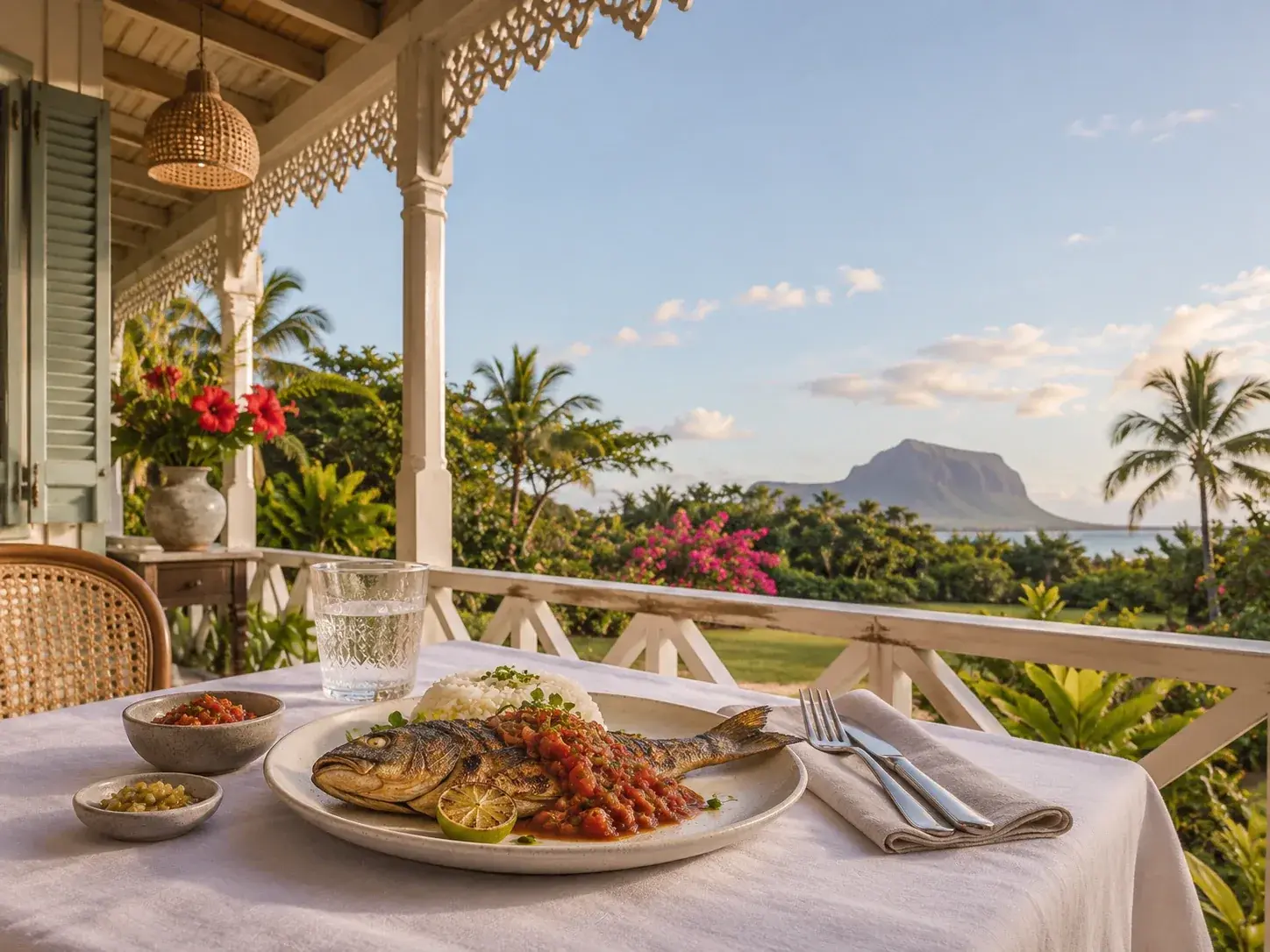
In Mauritius, biryani is the dish of great occasions. In many families it is what gets cooked for a celebration, and the scent of its spices is enough to announce that something is being celebrated. It is a dish of rice mixed with spices and meat, born in the Indian subcontinent. But on the island, Mauritian biryani has taken on a taste of its own, with lighter spices, unlike those one may have tried elsewhere.
The legacy of the subcontinent
Mauritian cooking borrows a great deal from Indian cooking, and the island’s history explains why. After the abolition of slavery, more than 462,000 indentured labourers landed at Port Louis, through the Aapravasi Ghat depot, between 1835 and the First World War. Of these, 97.5 per cent came from India, recruited for the sugar plantations, and many were Hindu or Muslim. Two thirds stayed on the island, and around 70 per cent of today’s Mauritians are descended from them.
The Mauritian calendar bears the mark of this heritage, and so does the table. Hinduism is the island’s first religion, and Divali, the festival of lights, is prepared for by decorating homes with lamps, drawing rangolis and cooking traditional sweets. At Holi, pastries filled with dried fruit and nuts are shared. At Ougadi, the new year celebrated in March or April, people taste the festive flavours of neem, mango and tamarind. And Eid al-Fitr brings families together to break the Ramadan fast.
Mansoorah Issany’s biryani
A renowned cook, Mansoorah Issany, has allowed the making of her biryani to be followed from the market to the fire. Wicker basket on her arm, she starts with the vegetables: potatoes, one of the mainstays of Mauritian biryani, ripe tomatoes to be served on the side, and handfuls of shallots, chosen from one trader after another. At the grocer’s, she fills a large spoon with spices: a cinnamon stick, star anise, cardamom, a handful of cloves, a few fennel seeds.
Nothing is weighed. As in all good home cooking, the ingredients are measured by eye and by touch. Her mother taught her by whispering “enough, my child” whenever she overdid the spices or the chilli. The spices of Mauritian biryani are usually the same from one kitchen to the next; it is their proportions that change everything. They must remain discreet, so as not to mask the saffron and the caramelised onion. The fresh spices used in Mauritius are, she says, lighter than those of Iran or India. And anyone who seeks out a biryani in ten places on the island will find ten styles, ten tastes, ten aromas.
The deg, the fire and the bandari
The spices are first ground to a paste, crushed between a slab and a roller, both of stone, which release their fragrance. Everything is then built up in layers in a deg, the wide, shallow biryani pot: saffron-scented chicken, potatoes, yoghurt, crisp shallots and white rice. Then the biryani cooks over a wood fire.
Mansoorah Issany did not learn all this from her mother alone. Her father was a maître d’hôtel in Port Louis, and as a child she would get up at three or four in the morning to watch the cooks at work. Biryani specialists were in those days hired from India. A bandari is the name for an Indian chef steeped in this cooking. He leads a team in which everyone has a part: one prepares the spices, another the potatoes, a third the marinade for the chicken, another the wood fire. The bandari directs the preparation and the cooking, and above all watches over the fire, for everything depends on the strength of the flame, on patience and on care. The biryani is finally eaten with all its small accompaniments.
 AI-generated image
The island’s Indian tables
Away from the home, many of the large hotels have their own Indian restaurant. At Trou aux Biches Beachcomber, Mahiya serves northern Indian cuisine at dinner: butter chicken, naans and biryanis, facing the sunset over the north-west coast. At Dinarobin Beachcomber, at Le Morne, Rangoli offers contemporary Indian cuisine by chef Rajiv Dhama, six evenings a week. LUX* Belle Mare has entrusted its own to Amari by Vineet, and the Four Seasons at Anahita, in Beau Champ, cooks with the tandoor at Angara.
On the west coast, the Hilton’s Kesari, in Flic en Flac, serves fragrant curries and tandoor specialities, indoors or under the stars. In the north, Tarisa, at Mont Choisy, devotes an eighty-seat room to Indian food, the Tandoor, à la carte or as a buffet. At Bel Ombre, Zafarani seats forty guests at dinner, six days out of seven. These restaurants do not replace the biryani of a family celebration, cooked over a wood fire in its deg. But they are a reminder, every evening, of how much the cooking of India has shaped that of Mauritius.
The addresses
Places mentioned
- LUX* Belle MareHotel · Belle Mare★★★★★Book on Booking.com →
Read next
- AI-generated image
Lychees, pineapples and jamalacs: the markets of Mauritius
- AI-generated image
Sugar cane, the plant that made the island
- AI-generated image
Nutmeg, clove and vanilla: the spice island
Where to stay
Stay in Mauritius
Places to stay that are still available, with current prices, compared across the main booking platforms.