The Isle de France, Mauritius’s French century
From 1715 to 1810 Mauritius was called the Isle de France. A trading company, then the king, then an almost autonomous colony made it a naval port, an acclimatisation garden and a society founded on slavery.
July 19, 2026
 AI-generated image
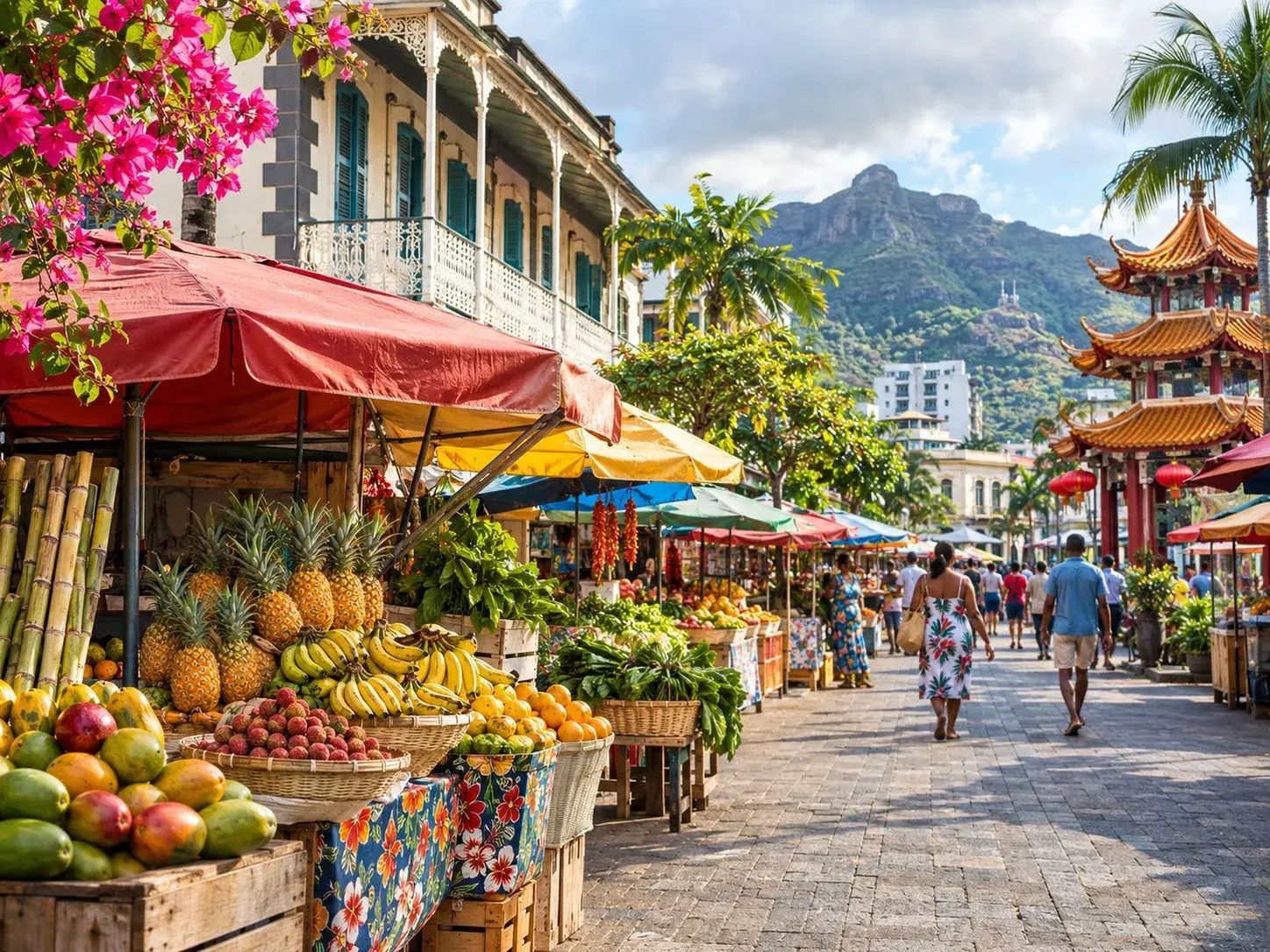
Five years after the Dutch left, the island changed both flag and name. In September 1715 Guillaume Dufresne d’Arsel, on his way to India, landed to make it a French colony and renamed it Isle de France. A monument in the Robert Edward Hart Garden, in Port Louis, recalls this landing of 20 September 1715. Taking possession, however, is not the same as settling: it was not until 1721 that the French attempted a lasting settlement.
The Company years
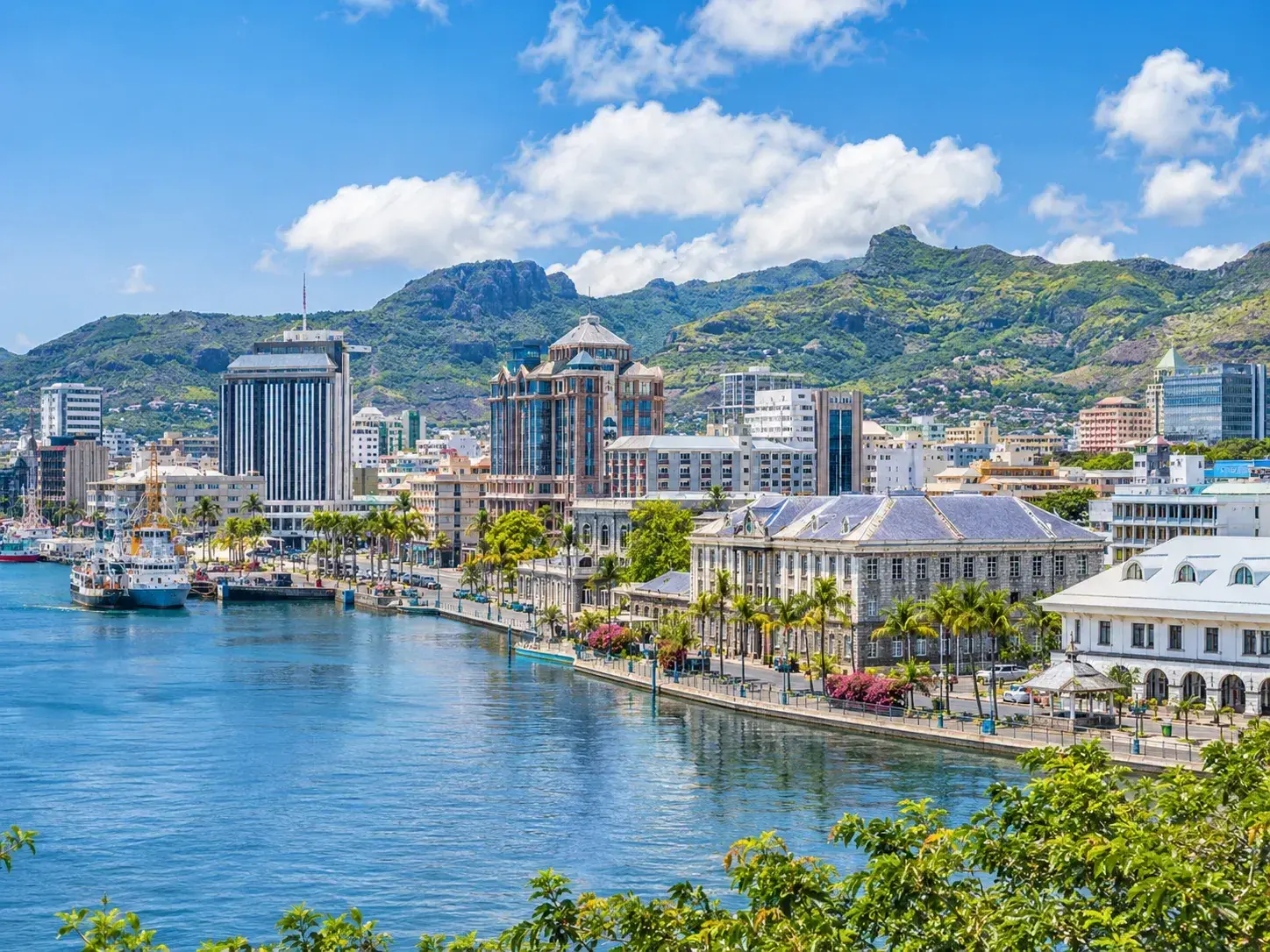
For half a century the island was not governed directly by the king. It was administered by the French East India Company, which remained until 1767. The first seat of government was set up in 1722 at Vieux Grand Port, on the very site of the old Dutch fort, before moving to Port Louis, chosen from 1732 for its natural harbour and its strategic position in the Indian Ocean.
The turning point has a name: Bertrand-François Mahé de La Bourdonnais, who arrived on 4 June 1735. Under his governorship Port Louis became a naval base and a shipbuilding centre, and what had been no more than a modest trading post became a solid, prosperous and populous colony. The figures say it better than any eulogy: the island had almost a thousand inhabitants in 1735, and nearly twenty thousand in 1767.
The Company also felt its way. In 1739 it took over the Mon Plaisir estate at Pamplemousses, which La Bourdonnais had created to grow food crops, and planted it almost entirely with mulberry trees in the hope of launching a silk industry. The venture failed. The mulberries gave way to bois noir, whose charcoal was used to make gunpowder at the neighbouring powder mill.
A society founded on slavery
This rapid development rested on forced labour. It was with slaves brought from Madagascar and Africa that the French developed the island. Of the twenty thousand inhabitants of 1767, fifteen thousand were enslaved. By 1797 the island was approaching sixty thousand inhabitants, fifty thousand of them slaves. At the National History Museum in Mahébourg, a sedan chair and a palanquin are reminders that, before the roads of the early nineteenth century, it was slaves who carried people from one part of the island to another.
The king, the botanists and a novel
In 1767 the royal government took over from the Company, and officers appointed by the Crown now ran the island. The most famous was an intendant, Pierre Poivre. Before his appointment he had already stayed on the island twice and travelled as far as the Moluccas, then held by the Dutch East India Company, from which he had smuggled out thousands of spice plants and fruit trees. In 1770 he bought Mon Plaisir to turn it into a botanical garden, with an acclimatisation nursery for nutmeg and clove. The garden was sold to the French administration in 1773, and the botanist Nicolas Céré, born in Pamplemousses, directed it from 1775 until his death in 1810.
Letters, too, passed through the island. Jacques-Henri Bernardin de Saint-Pierre arrived in 1768 as an engineer captain, grew alarmed at the extent of the land clearance and tried to persuade the governor to preserve the primary forests. Back in Paris in 1771, he published his Voyage à l’Isle de France in 1773, then, in 1788, Paul et Virginie, inspired by the wreck of the Saint-Géran on the island’s east coast in 1744. The bronze bell of the Saint-Géran is on display at the Mahébourg museum, along with La Bourdonnais’s bed, ceramics of the Company and a map by the Abbé de La Caille dated 1753.
 AI-generated image
Revolution, Empire and corsairs
The Revolution reached as far as the Indian Ocean. In 1790 Port Louis acquired the island’s first municipality, with Thomas Enouf as its first mayor. The town changed its name twice: Port de La Montagne in 1794, Port Nord-Ouest from 1795 to 1803. For a brief period the inhabitants even gave themselves a government virtually independent of France. The municipality was abolished in 1803, when General Decaen took over the government of the island and renamed the capital Port Napoléon. He would be the last French governor; his bowl is on display at Mahébourg. In 1806 the military post at Vieux Grand Port was moved to a new town, Mahébourg.
During the Napoleonic Wars the Isle de France became the base from which the French navy and corsairs successfully attacked British merchant shipping. The pistol and portrait of Robert Surcouf, the most famous of these corsairs, are in the Mahébourg museum. These raids persuaded London to send a strong expedition. Repulsed at Grand Port in August 1810, it prevailed in December, landing in force in the north of the island and securing the French surrender.
What France left behind
The act of capitulation guaranteed the inhabitants respect for their language, customs, laws and traditions, and the Treaty of Paris of 1814 ceded the island permanently to Great Britain, which gave it back the name of Mauritius. The French century did not fade away for all that. It left a capital, Port Louis; a garden, at Pamplemousses; a language, French, heard everywhere alongside English and Creole; and place names scattered across the map. It also left a society born of slavery, whose abolition, a quarter of a century after the conquest, would reshape the island’s entire population.
The addresses
Places mentioned
- Robert Edward Hart GardenGarden · Port-Louis
Read next
- AI-generated image
Aapravasi Ghat and Le Morne: two places that explain the island
- AI-generated image
Since 1992, the Republic of Mauritius
- AI-generated image
12 March 1968, independence day
Where to stay
Stay in Mauritius
Places to stay that are still available, with current prices, compared across the main booking platforms.