Grand Baie and the north, the coast that never sleeps
A horseshoe bay, some fifty tables stretching to Pereybère and, offshore, five islands that are sailed around more often than set foot on. The north of Mauritius is lived at sea by day and ashore by night.
July 1, 2026
 AI-generated image
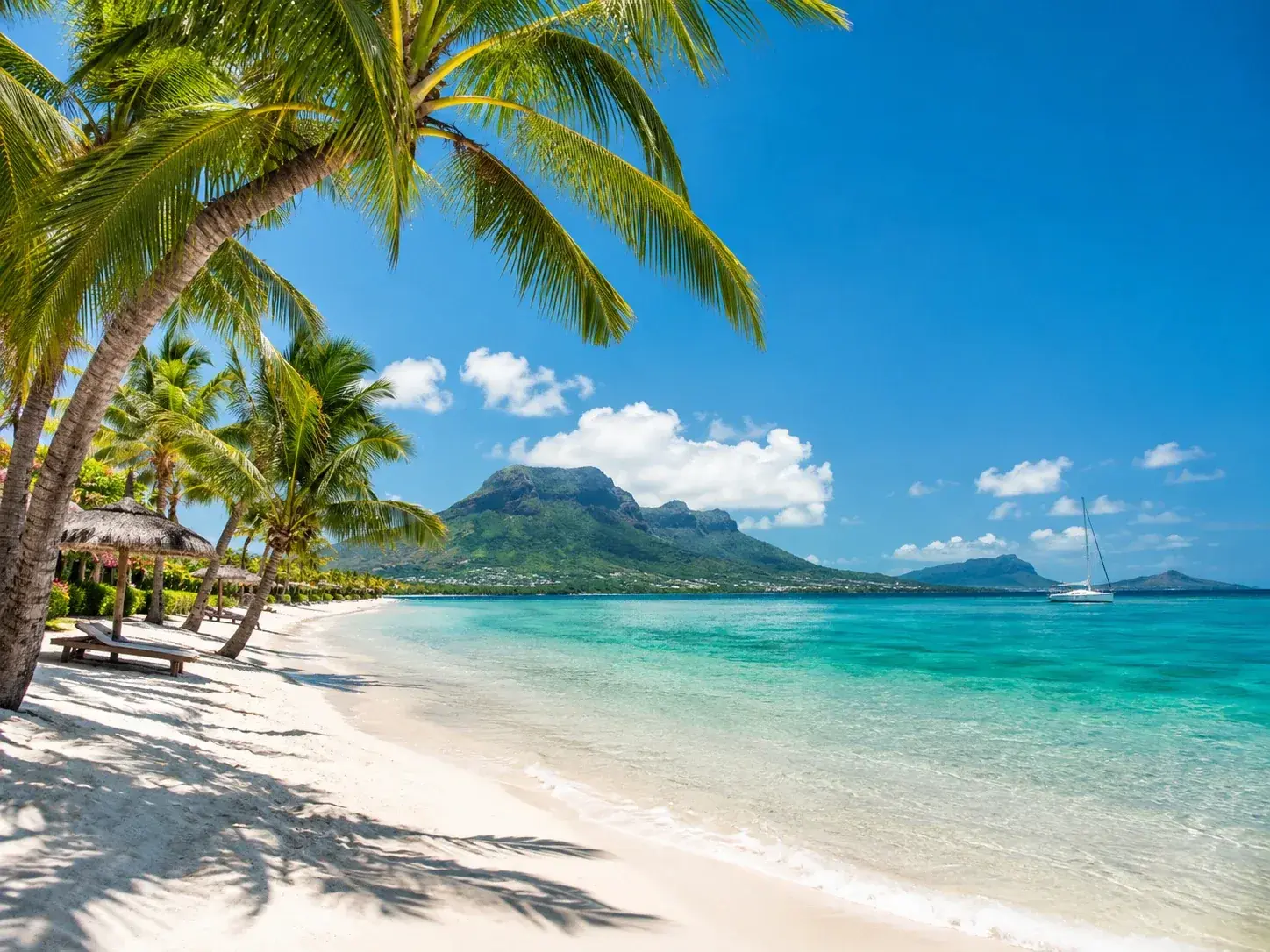
Grand Baie curls around a sheltered lagoon, in a horseshoe-shaped bay that opens to the north-west. It is the liveliest town on the island, and makes no apology for it: some fifty cafés and restaurants line the bay and the coast road that runs on towards Pereybère, the nightclubs open mainly on Fridays and Saturdays, and the week fills up with jam sessions, live bands and séga. The north is the part of Mauritius people come to so as never to be bored, and yet where, a few villages further on, you can hear nothing but the lagoon.
The town and its beaches
Grand Baie’s public beach tells, on its own, the story of the pressure on this shore. It was assembled piece by piece: a first section opened to all in 1991, a second near the coast guard post in 2010, lot 3 in 2017, and a final section next to Sunset Boulevard in 2021. Laid end to end, they amount to 1.6 hectares and 710 metres of shoreline, in the heart of a town where every square metre of seafront is fought over.
Further north, Pereybère runs to just 108 metres of sand, and yet it is the base on which rescue along this shore depends: the beach houses one of the Beach Authority’s four offices on the island, and on crowded public holidays an ambulance is stationed there on standby to cover La Cuvette, Bain Boeuf, Anse la Raie, Mare la Raie and Butte à l’Herbe. Bain Boeuf, its neighbour, unrolls 727 metres of shoreline. At the tip, Cap Malheureux has only 39, the shortest public shoreline in the north. Those in search of space should head east to Melville, nearly two kilometres of public shoreline in three sections, one of which takes in the islet of Matapan.
At Cap Malheureux, one of the most photographed sights on the island is Notre-Dame Auxiliatrice, a church of great simplicity whose bright red roof stands out against the turquoise of the water and the silhouette of Coin de Mire. It remains open to visitors, and its holy-water stoup is carved from the shell of a giant clam.
 AI-generated image
The offshore islands
The north has five islands, and only one or two of them are ever really set foot on. Coin de Mire, which English speakers also call Gunner’s Quoin, rises some eight kilometres off the coast. It is a nature reserve where landing is forbidden: people come to see its rust-coloured cliffs from the water, with red-tailed tropicbirds and wedge-tailed shearwaters gliding above them, and to snorkel around its reefs, where a turtle or a pod of dolphins sometimes passes.
Gabriel Island, by contrast, can be visited, and its reputation rests on its tongue of white sand. Right beside it, Flat Island served as a quarantine station from the middle of the nineteenth century until the 1930s, for victims of cholera, smallpox and malaria; what remains are overgrown structures, a cemetery still legible on its south coast and a white lighthouse that still guides fishermen. Round Island, a nature reserve since 1957, is one of the oldest island restoration projects in the world, and Serpent Island, home not to snakes but to a large colony of seabirds, remains the most isolated of the five. Neither of these two is open to the public.
From Grand Baie, Cap Malheureux or Calodyne, catamarans and speedboats set off for the day to three of these islands, and in the evening other boats head out into the bay for the sunset.
Where to stay
Accommodation ranges from the lively town to the fishing village. In Grand Baie itself, the Royal Palm Beachcomber Luxury has sixty-nine suites facing the Indian Ocean and belongs to the Leading Hotels of the World. La Maison 20 Degrés Sud, thirty-six rooms, no two alike, in a former colonial house, has been the only Mauritian property in the Relais & Châteaux collection since 2013; each evening, eight of its guests dine aboard the Lady Lisbeth, a boat dating from 1927. LUX* Grand Baie plays the contemporary card, with suites designed by Kelly Hoppen and a rooftop infinity pool, while the Mauricia Beachcomber, a neighbour of the Grand Baie Yacht Club, is an address for sailors, and the Veranda Grand Baie was designed to be accessible by wheelchair.
In Pereybère, the Hibiscus has housed a diving centre since 2007, and the Pereybere Hotel & Spa, which began as a family guesthouse, rents out apartments with kitchens. The Coin de Mire Attitude looks out at the islet that gives it its name, with Bain Boeuf beach across the road. At Anse la Raie, the adults-only Lagoon Attitude opens onto a stretch of coast that has remained unspoilt. At Calodyne, the Zilwa Attitude and its 214 rooms have a private islet, Gran Zil, where lunch is a barbecue. Grand Gaube, finally, keeps the look of a fishing village: LUX* Grand Gaube occupies a peninsula there, and the adults-only Veranda Paul et Virginie serves its dinners at the end of a jetty.
 AI-generated image
Inland
Turn your back on the sea and the century changes. At Mapou, the Château de Labourdonnais grew out of a land grant made in 1774 to two young orphan girls; the house, begun in 1856 by Christian Wiehe and completed in 1859, can be visited at the heart of a 500-hectare estate, with its collection orchards, the chimney of the old sugar mill and a rum tasting.
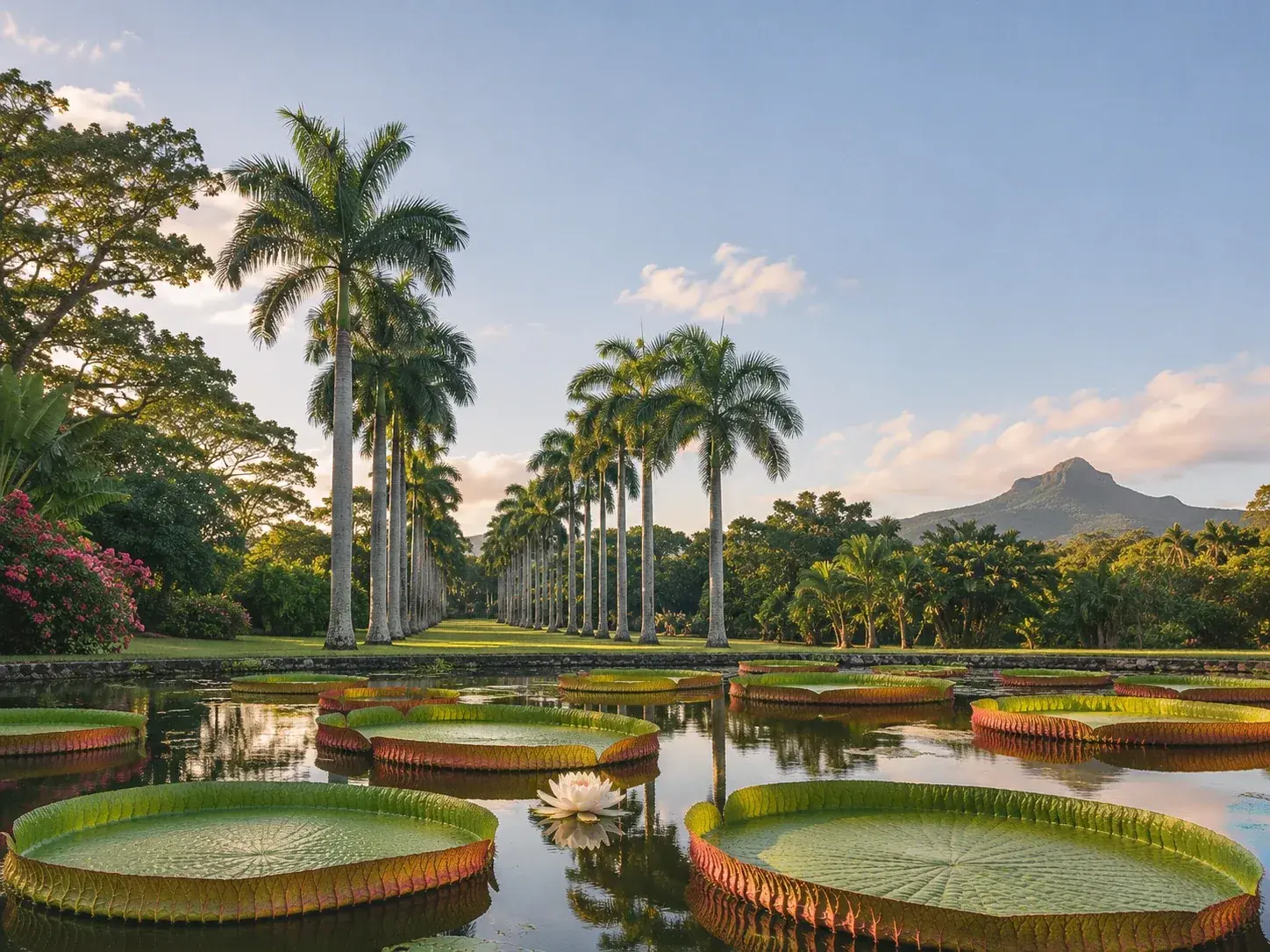
At Pamplemousses, the Sir Seewoosagur Ramgoolam Botanic Garden spreads 823 species over thirty-three hectares, among them 80 species of palm and 60 endemic species. In the eighteenth century it served as a tropical experimental base for the Jardin des Plantes in Paris, and it opens every day from 8.30am to 5.30pm. Close by, at Beau Plan, L’Aventure du Sucre occupies a former sugar mill and traces the history of a crop introduced by the Dutch in 1639, then built into an industry from 1743 under Governor Mahé de Labourdonnais.
When evening comes, it is back to Grand Baie. Le Capitaine, on the Royal Road, serves seafood and Creole cooking from 11am to 11pm, seven days a week, without closing in the afternoon.
To book
Things to do from this article
- Book on GetYourGuide →
Diving and snorkelling · Grand Baie
Coin de Mire: two-hour private snorkelling trip - Book on GetYourGuide →
Catamaran cruise · Cap Malheureux
Full-day catamaran cruise to the northern islands, with lunch - Book on GetYourGuide →
Catamaran cruise · Grand Baie
Sunset catamaran cruise in the north, with drinks and snacks - Book on GetYourGuide →
Boat trip · Grand Baie
Grand Baie: sunset cruise with dinner for private groups - Book on GetYourGuide →
Catamaran cruise · Grand Baie
Grand Baie: sunset catamaran cruise with cocktail - Book on GetYourGuide →
Catamaran cruise · Grand Baie
Grand Baie: catamaran cruise to three islands, with lunch on the island
The addresses
Places mentioned
- Royal Palm Beachcomber LuxuryHotel · Grand Baie★★★★★Book on Booking.com →
- La Maison 20 Degrés SudHotel · Grand Baie★★★★★Book on Booking.com →
- Pereybere Hotel & SpaHotel · Pereybère★★★Book on Booking.com →
- Coin de Mire AttitudeHotel · Cap Malheureux★★★Book on Booking.com →
- Lagoon AttitudeHotel · Anse la Raie★★★★Book on Booking.com →
- Zilwa AttitudeHotel · Calodyne★★★★Book on Booking.com →
- LUX* Grand GaubeHotel · Grand Gaube★★★★★Book on Booking.com →
- Sir Seewoosagur Ramgoolam Botanic GardenGarden · Pamplemousses
- Le CapitaineRestaurant · Grand Baie
Read next
- AI-generated image
Chamarel and its heights, the land of seven colours
- AI-generated image
Trou aux Biches and Mont Choisy, beneath the casuarinas of the north-west
- AI-generated image
The central plateau, the island at altitude
Where to stay
Stay in Grand Baie and the north
Places to stay that are still available, with current prices, compared across the main booking platforms.