
Sir Seewoosagur Ramgoolam Botanic Garden
Pamplemousses · Pamplemousses
from MUR 300 per personDurationAbout half a day for the thirty-three hectares, the garden publishing no suggested duration
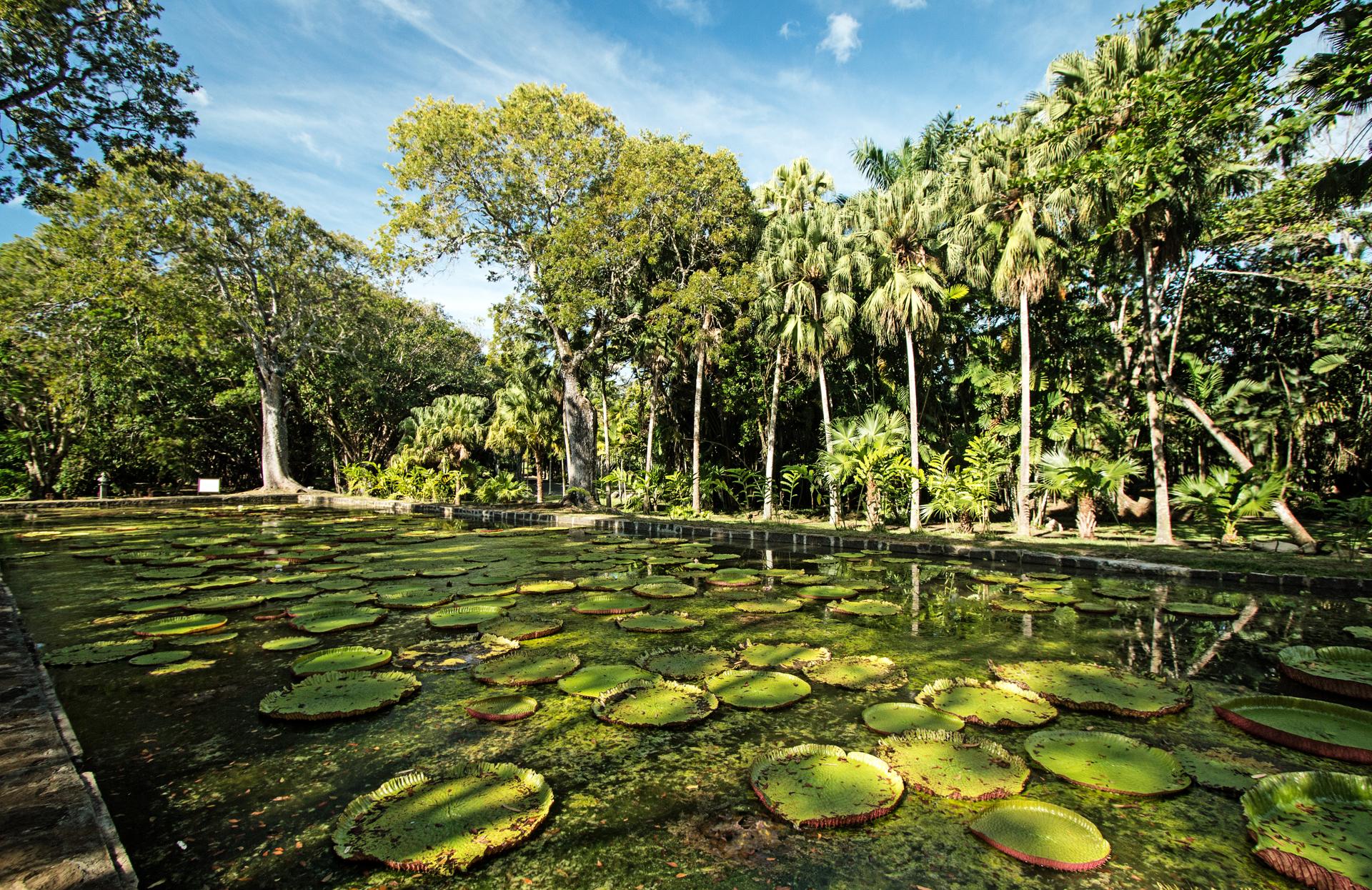
The Sir Seewoosagur Ramgoolam Botanic Garden lies in Pamplemousses, some ten kilometres north-east of Port Louis. Long known as the Royal Botanic Garden, it has borne its present name since 18 September 1988. Over thirty-three hectares it is a place to stroll but, even more, a conservatory of plants. Its Trust, set up in May 1999, has as its aims conservation, education, recreation, culture and history, and gives priority to scientific research carried out with local and foreign institutions.
What sets it apart
Its collections total 823 species: 445 exotic species, 80 species of palm, 150 medicinal species, 60 endemic species, 27 species of spice, 30 religious species and 31 species of fern. The Château Mon Plaisir, built in 1823, is the garden’s headquarters. In the eighteenth century the garden won international renown as a tropical experimentation base for the Jardin des Plantes in Paris. A rehabilitation programme began in January 2024.
The mood
The main entrance gate, a gift from François Lienard de la Mivoie, won first prize at the 1862 International Exhibition at the Crystal Palace, in the United Kingdom; it has stood on its present site since 1868. The Pont des Soupirs dates from the French period. The garden also brings together a palm collection, medicinal plant and spice corners, monuments and a samadhi, avenues, ponds including the Grand Bassin, a shade house and quarantine glasshouses. A children’s garden and an orchid garden are announced. The village owes its name to a citrus fruit, the pamplemousse, which the Dutch introduced from Java, and the garden’s modest beginnings are linked to François Mahé de Labourdonnais.
Highlights
- Thirty-three hectares, some ten kilometres north-east of Port Louis
- 823 species in seven collections, including 80 species of palm and 60 endemic species
- The Château Mon Plaisir, built in 1823
- The main gate, on its site since 1868, first prize at the 1862 International Exhibition at the Crystal Palace
- The Pont des Soupirs, from the French period
- Open every day, public holidays included, from 8.30 am to 5.30 pm
- A tropical experimentation base for the Jardin des Plantes in Paris in the eighteenth century
Good to know
- Admission is 300 rupees for a foreign visitor aged 5 and over without a residence permit. Residence permit holders pay 25 rupees, as do Mauritians from 5 to 59.
- Admission is free on Sundays and public holidays, but for Mauritians only.
- The garden closes during official visits and announces it by press notice: take a look before making the journey.
- A rehabilitation programme has been under way since January 2024: some parts of the garden may be under works.
- Any activity in the garden, photography or filming included, requires the director’s permission, to be requested at least fifteen days ahead. The fee is 2,500 rupees a day for up to ten people, then 200 rupees a day for each additional person.
- Schools may ask the director for exemption from admission fees, at least fifteen days ahead, for a 100-rupee processing fee.
Getting there
The garden is open Monday to Sunday, public holidays included, from 8.30 am to 5.30 pm. Admission costs 300 rupees for a non-Mauritian visitor aged 5 and over without a residence permit, and 25 rupees for a residence permit holder. It is free for under-5s. Mauritian citizens pay 25 rupees from 5 to 59, and enter free before 5, from 60, and with a disability.
Where to stay
Stay around this place
Places to stay that are still available, with current prices, compared across the main booking platforms.
In the journal