Port Louis in a day, from bazaar to citadel
A market that calls out its prices, one of the oldest Chinatowns in Africa, free museums and a fort that looks out over the whole city. The capital can be explored on foot, from morning to sunset.
September 17, 2026
 AI-generated image
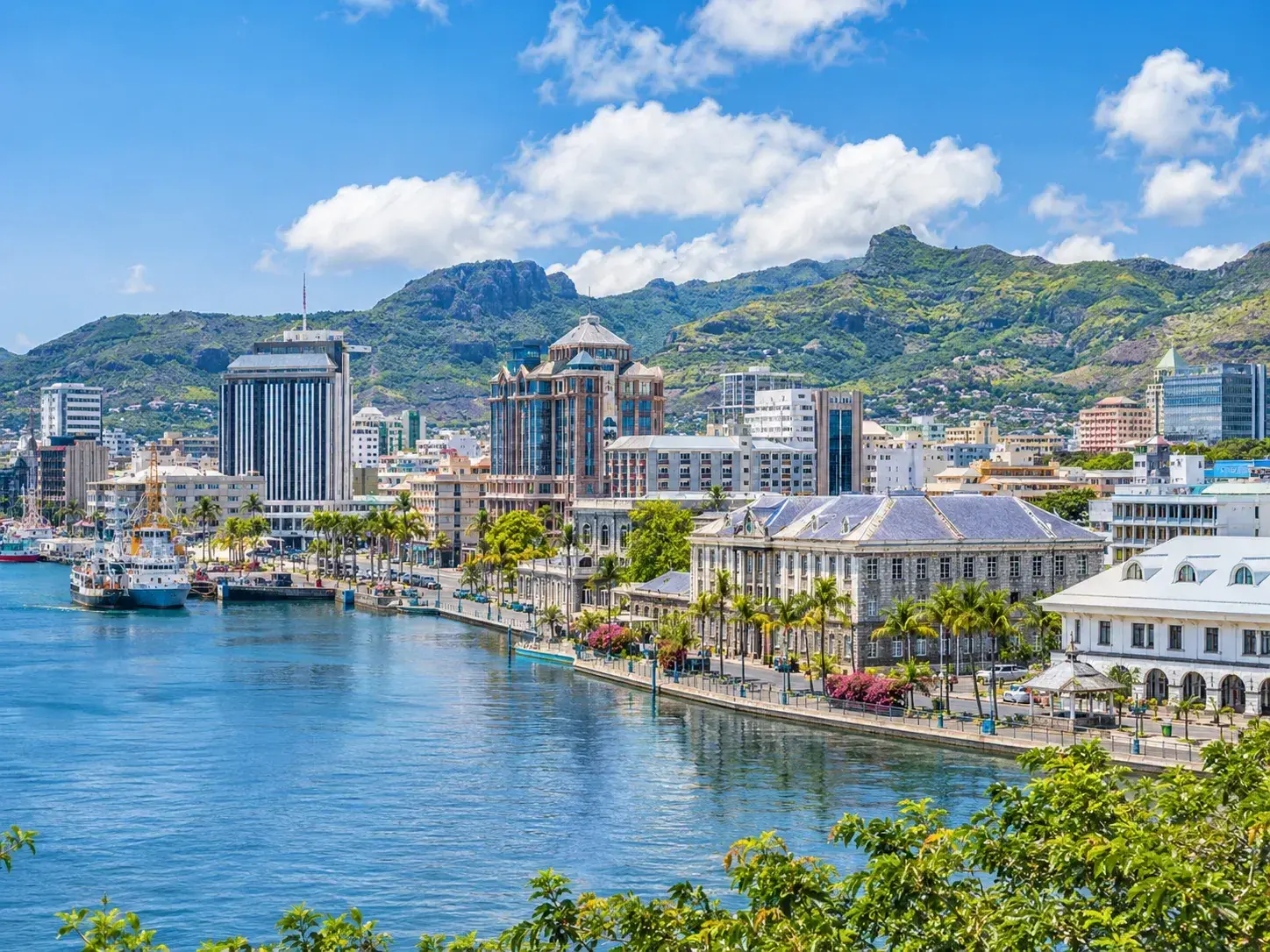
Port Louis, the capital, is the economic heart of Mauritius: a city of offices, shops and markets, set in the north-west of the island between the harbour and the mountains. It is also a city that lends itself very well to a day on foot, provided you start early, when the market wakes up, and finish high above it, on Citadel hill, as the sun goes down.
Morning, at the bazaar and in Chinatown
The central market, which Mauritians call the Bazar Port Louis, is first and foremost where the city does its shopping. Under the market hall, the stalls are heaped with tropical fruit and vegetables, and the traders call out their prices to catch the passer-by. Each section has its own character, and the whole place deserves to be walked through. At the kiosks you eat a samosa or a dholl puri standing up, and finish with a glass of alouda, the island’s milky drink. Just outside, stalls sell clothes and bags; the upper floor is given over to local crafts.
Chinatown begins next to the market. In the 1940s, many Chinese immigrants arrived in Mauritius, opened shops and settled around the Royal Road; the quarter they formed is among the oldest Chinatowns in Africa. You wander its lanes, between biscuit makers, Chinese pastry shops and businesses handed down from one generation to the next. The quarter is also an open-air gallery: Port Louis has more than a hundred murals, among them a giant panda bursting through a wall on Rue Emmanuel Anquetil and manga characters on Rue Venpin. In May, the Chinatown Food and Culture Festival brings its streets to life.
On the waterfront close by, the Aapravasi Ghat, a former immigration depot and a World Heritage Site, recalls the route by which the indentured labourers, most of them from India, arrived after the abolition of slavery. The city also has places of worship that speak of its mixed heritage: the Jummah Mosque, St Louis Cathedral and the Sockalingum Meenatchee Ammen temple.
 AI-generated image
Three museums for a morning
The morning continues at the Natural History Museum, the oldest museum in Mauritius, which grew out of the Desjardins Museum, opened to the public on 14 October 1842. It occupies the ground floor of the Mauritius Institute, built between 1880 and 1884 and listed as national heritage. Its galleries tell five centuries of Mauritian nature, from marine life to geology, and this is where the famous dodo skeleton is kept. Admission is free; the museum is closed on Sundays and opens at 11am on Wednesdays.
It faces the Jardin de la Compagnie, named after the French East India Company, which held the island from 1721 to 1764. The garden, bordered by the Pouce stream, offers a pause in the shade in the middle of the city.
On the harbour, the Postal Museum occupies the former General Post Office, a Victorian building put up between 1865 and 1870 and declared a national monument in 1958. It tells the story of the Mauritian mail from the Dutch until 1968, and dwells on the arrival of stamps in 1847. The most famous of them, the Post Office stamps, are on display at the Blue Penny Museum on the Caudan Waterfront, devoted to the art and history of Mauritius and open from Monday to Saturday: they are lit for only ten minutes in every hour, to protect them from the light, and the visit is arranged around that moment. One room there is devoted to Paul et Virginie, the novel by Bernardin de Saint-Pierre.
Lunch in the capital
Cantonese cooking has its long-established addresses in the capital. At 58 Royal Road, the Restaurant Lai Min, opened in 1946 and still in the same family, serves Cantonese and Hakka food from Tuesday to Sunday. On Rue Léoville L’Homme, The City Orient, open since 2004, works with chefs from Guangdong and seats just over a hundred. In a lighter register, Le Courtyard, on the corner of Rue Chevreau and Rue Saint-Louis, puts lunch first in an inner courtyard away from the noise, and Wapalapam La Place, on Rue Sir William Newton, opens a few steps from the market, from Monday to Saturday, 11am to 10pm.
Afternoon, from Les Salines to the Citadel
At Les Salines, the Kwan Tee Pagoda, built by the Chinese community in 1842 and listed as national heritage, faces the sea with its back to the mountains, painted a vivid red picked out in yellow and green. It is dedicated to Kwan Tee, god of wealth, war and righteousness. Close by, on the Harbour Waterfront, Odysseo presents 300 species from the Indian Ocean and 3,500 specimens along an entirely covered route, open every day from 9am to 5pm: a good answer to the hottest hours and to rainy days alike.
In the centre of the city, the Champ de Mars is a thoroughbred racecourse inaugurated in 1812, the second-oldest racecourse in the southern hemisphere, and it was on its lawn that the independence of Mauritius was proclaimed in 1968. The racing season runs from late March to early December, mostly at weekends.
The day ends on high ground. The Citadel, also called Fort Adelaide in honour of the wife of King William IV, was built by the British from 1830 to 1840 to defend the capital. Its walls now house shops and shows, and people climb up for the full panorama over the city, the harbour and the mountains, and for the sunset.
In the evening, you come back down to the Caudan Waterfront, its walkway beneath coloured umbrellas, its cafés, its art centre and its cinema, looking out along the way for the remains of the first meteorological and astronomical observatory in the Indian Ocean. In December, the Porlwi by Light festival lights up the city with its installations.
To book
Things to do from this article
- Book on GetYourGuide →
Day tour by car · Port-Louis
A swim near wild dolphins, Port Louis and the botanical garden - Book on GetYourGuide →
City tour · Curepipe
Domaine des Aubineaux, with lunch, cooking class and transfer - Book on GetYourGuide →
City tour · Grand Baie
Grand Baie: walking tour of coastal food and culture - Book on GetYourGuide →
City tour · Grand Baie
Grand Baie: guided food walking tour - Book on GetYourGuide →
City tour · Port-Louis
A day at the horse races with a local guide - Book on GetYourGuide →
City tour · Tamarin
Lakaz Chef: local cooking class
The addresses
Places mentioned
- Restaurant Lai MinRestaurant · Port-Louis
- The City OrientRestaurant · Port-Louis
- Le CourtyardRestaurant · Port-Louis
- Wapalapam La PlaceRestaurant · Port-Louis
Read next
 AI-generated image
Chamarel and its heights, the land of seven colours
- AI-generated image
Trou aux Biches and Mont Choisy, beneath the casuarinas of the north-west
- AI-generated image
The central plateau, the island at altitude
Where to stay
Stay in Port Louis
Places to stay that are still available, with current prices, compared across the main booking platforms.