Pieter Both, the stone head of Moka
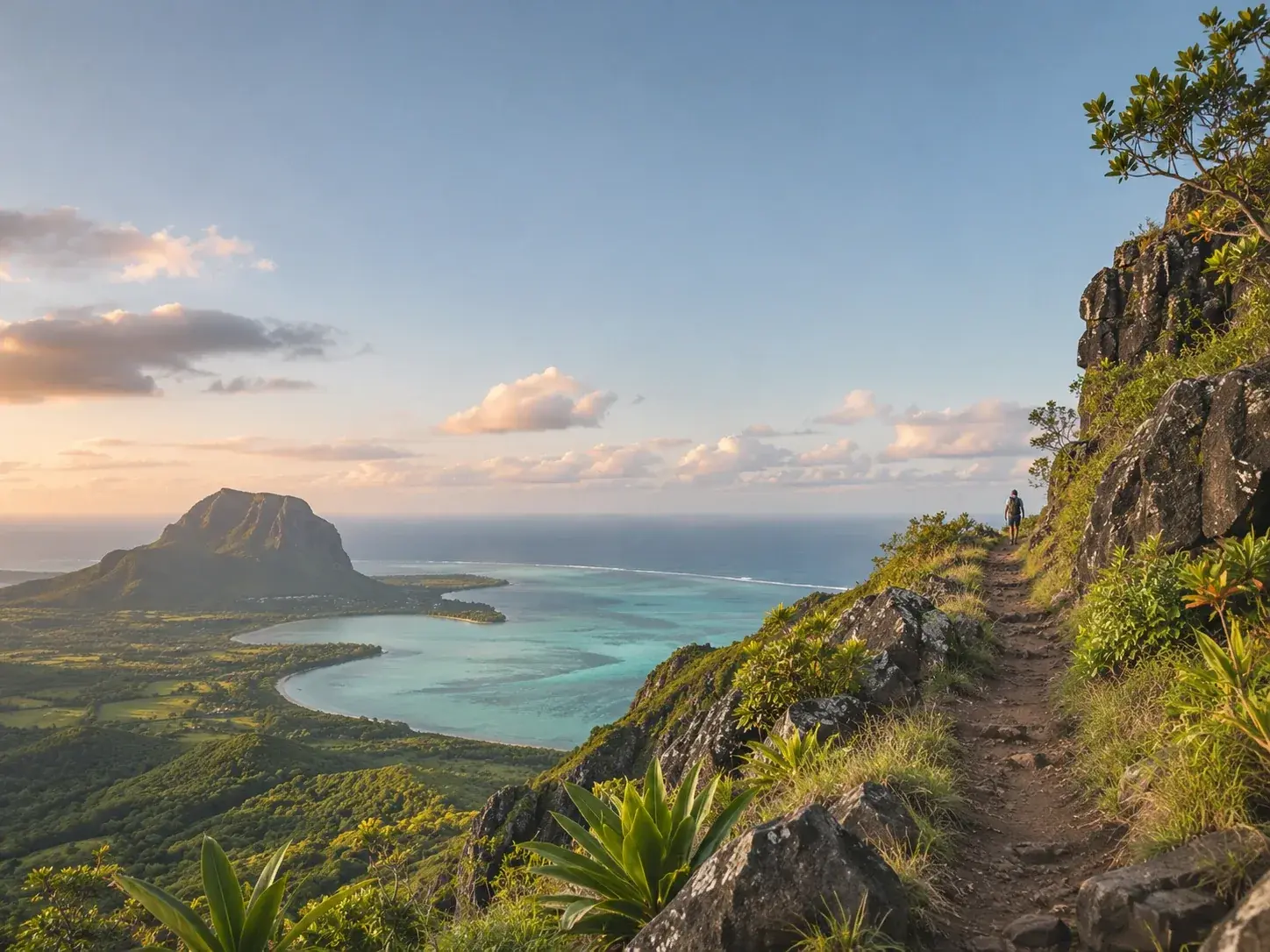
The island’s second-highest peak, the Pieter Both can be recognised from afar by the enormous boulder that crowns its summit, which many liken to a human head. It can be seen from almost everywhere; it is climbed only with a guide and the right equipment.
July 17, 2026
 AI-generated image
There are mountains one climbs, and others one first learns to recognise. The Pieter Both belongs to both kinds, but for most travellers it long remains one of the second. In the Moka Range, its summit carries a gigantic rock formation, which many say resembles a human head. It is this that makes the mountain recognisable from a great distance.
With the Piton de la Petite Rivière Noire, which rises above it, and Le Pouce, which comes after it, it forms the trio of the island’s highest peaks: it is the second-highest in Mauritius.
A name from the Dutch East Indies
The mountain is named after Pieter Both, the first governor-general of the Dutch East Indies. The name is a reminder that the island’s first European century was Dutch. The Dutch reached Mauritius in 1598, settled there only in 1638, when they built Fort Frederik Hendrik at Vieux Grand Port, on the south-east coast, and left the island for good in 1710.
That century left other traces than names on the map. The rusa deer, met today in the island’s forests, was introduced by the Dutch on 8 November 1639: the first herd came from Batavia, aboard the ship Cappel, commanded by Governor Adrien Van der Stel. The village of Pamplemousses itself owes its name to the pamplemousse, or pomelo, a citrus the Dutch introduced from Java and which has grown in the area ever since. A mountain, a deer, a fruit: the Dutch legacy of Mauritius often lies in such details of the landscape, passed through without a second thought.
 AI-generated image
A silhouette seen from everywhere
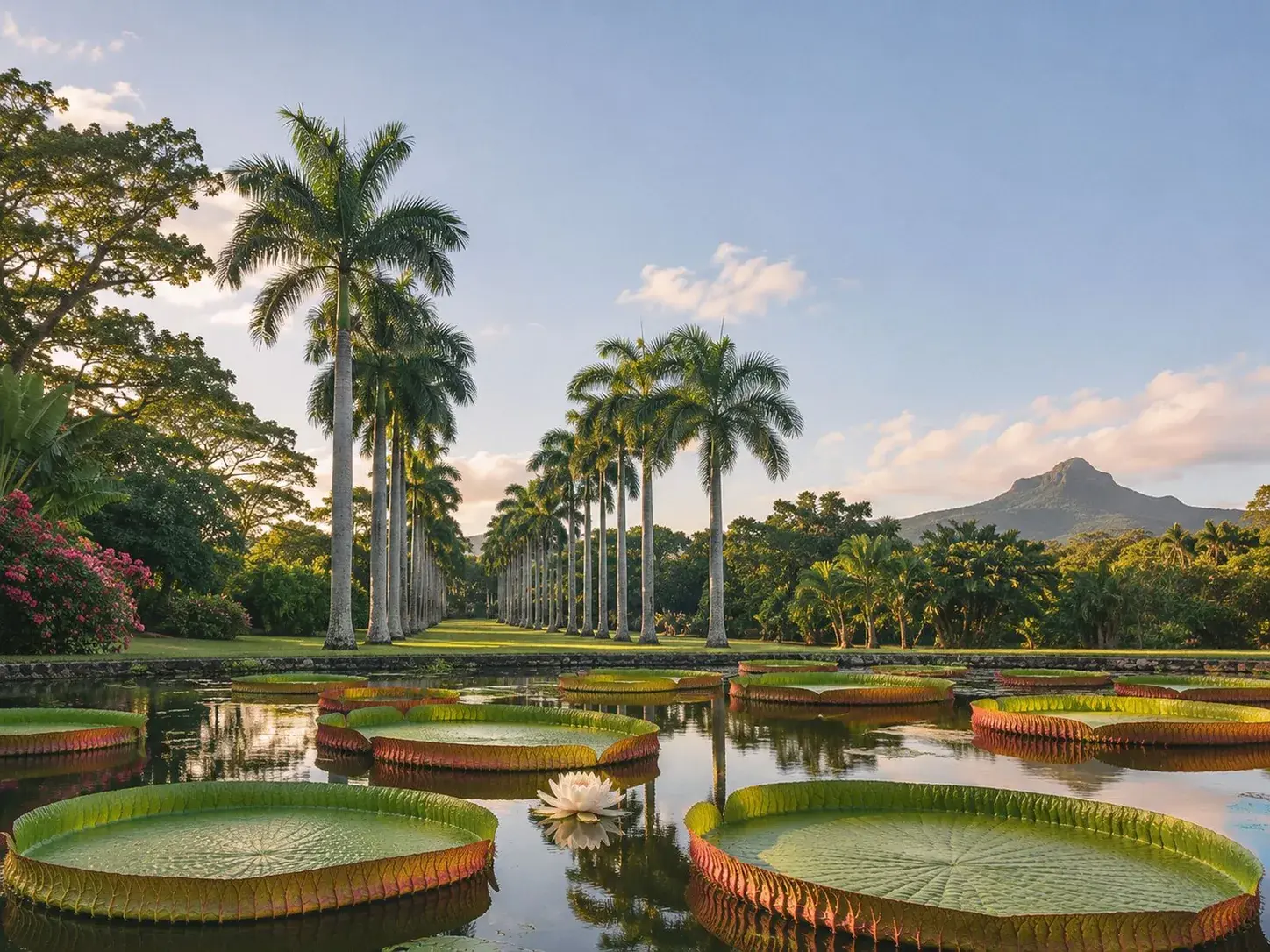
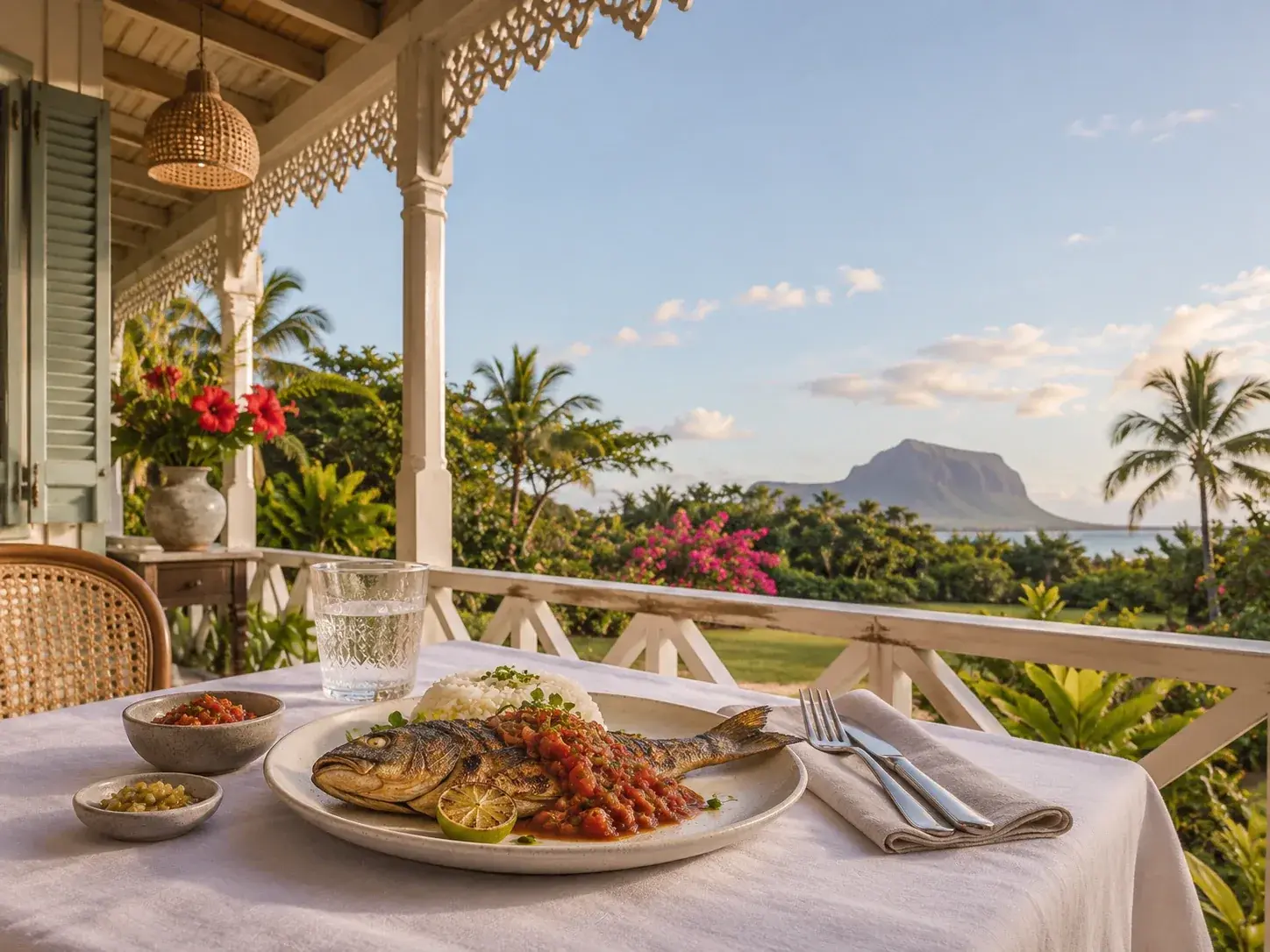
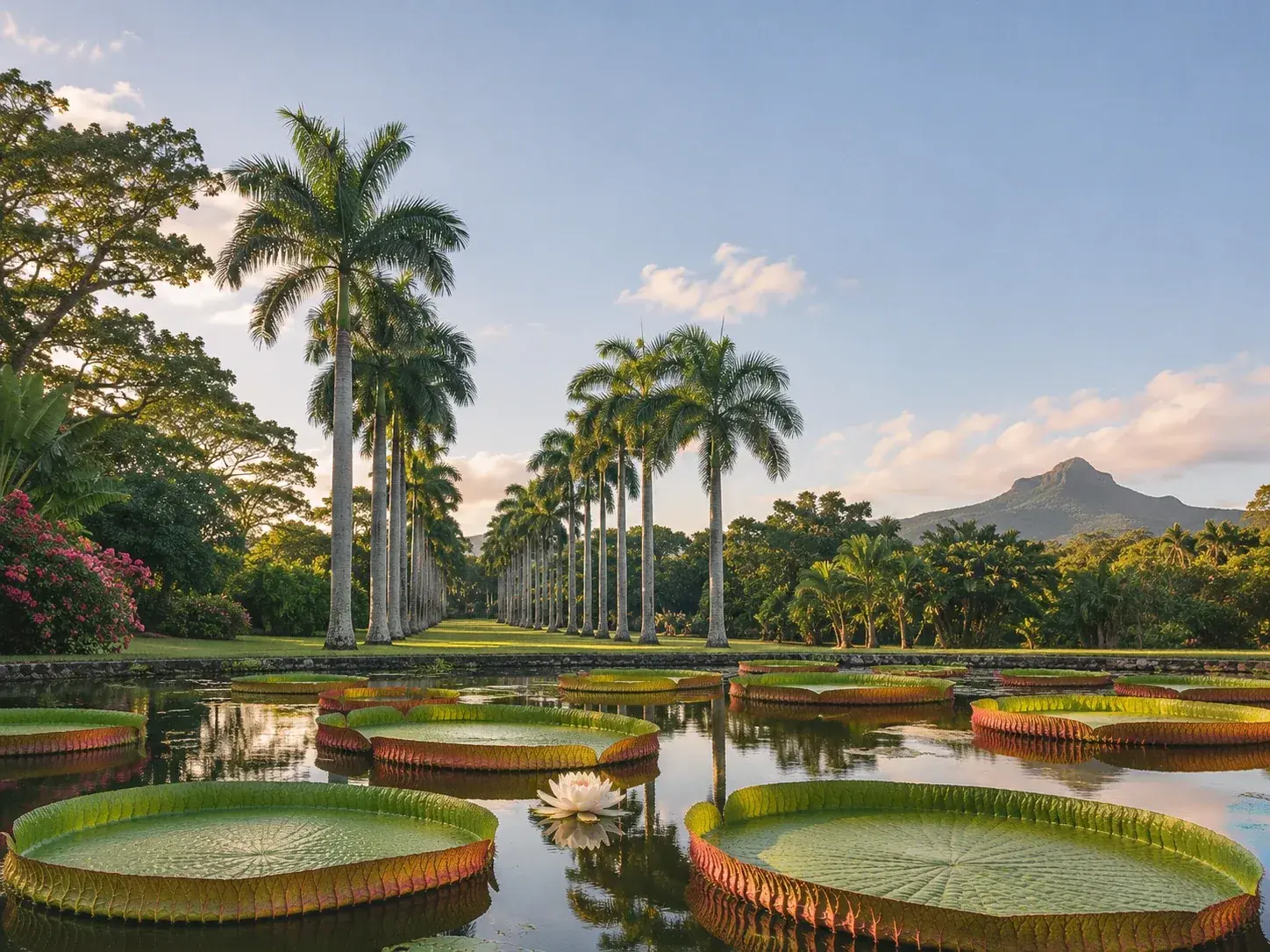
The Pieter Both can be seen from places very far apart, and this is one of the best ways to get to know it before taking it on. At Pamplemousses, the Château de Mon Plaisir, built in 1823 and the headquarters of the botanical garden, offers a fine view of the Moka Range and the peak of the Pieter Both. At Beau Plan, the dining room of the restaurant at L’Aventure du Sucre looks out both over the Beau Plan lake and towards the mountain.
More surprisingly, it reappears from the other end of the island. At Chamarel, in the south-west, the panorama from Sublime Point, in the Ebony Forest reserve, takes in Le Morne Brabant, the Tourelle du Tamarin, the Montagne du Rempart, the Corps de Garde, the Trois Mamelles, Le Pouce, the Pieter Both, Piton Canot and the Piton de la Rivière Noire. Seeing the stone head rise from that line of ridges, across the full width of the island, gives the measure of the mountain better than any figure.
The range that carries it is also a racing ground. Trail runners circle the Pieter Both, and the Moka Trail explores the same terrain.
Climbing, but never alone
The climb starts from the village of La Laura, in the district of Moka. Here the rule admits no exception: the ascent is attempted only with the proper equipment and a professional local guide. The route includes tricky passages. The guide keeps the walker on the right path, helps them over the most difficult sections, and offers an in-depth reading of the landscape they are crossing.
This marks a clear difference from Le Pouce, its neighbour in the Moka Range, which is climbed by a waymarked trail in three to four hours there and back. The Pieter Both asks for more: organisation before setting off, humility on the way. It is not undertaken on a whim, and it is not undertaken alone.
Those who reach the summit are rewarded with a panoramic view over the island, and in particular a sweeping view of the capital, Port Louis.
 AI-generated image
Look before you climb
For the traveller, the best preparation may lie in the order of things. First learn the silhouette: from the paths of Pamplemousses, from the table at Beau Plan, from the ridge at Chamarel. Then choose your guide, and your day. Finally climb, and find again from above, looking the other way, the places from which you once looked up at it.
There is something singular about Mauritius here: an island small enough for its peaks to answer one another from end to end, mountainous enough for each to keep its own character. The Pieter Both has its own, a head of stone that watched over the Moka Range long before it was given the name of a Dutch governor, and which, by dint of searching for it, one ends up recognising from many points on the island.
The addresses
Places mentioned
Read next
 AI-generated image
The dodo, a bird we hardly know
- AI-generated image
Black River Gorges, the last refuge
- AI-generated image
Kestrel, pink pigeon, parakeet: three birds back from the brink
Where to stay
Stay around Moka
Places to stay that are still available, with current prices, compared across the main booking platforms.