
Black River Gorges, the last refuge
Sixty-seven square kilometres of mountain, sixty kilometres of trails, and every one of the endemic birds of Mauritius. The island’s first national park protects what remains of its original forest, and fights to keep it.
November 2, 2026
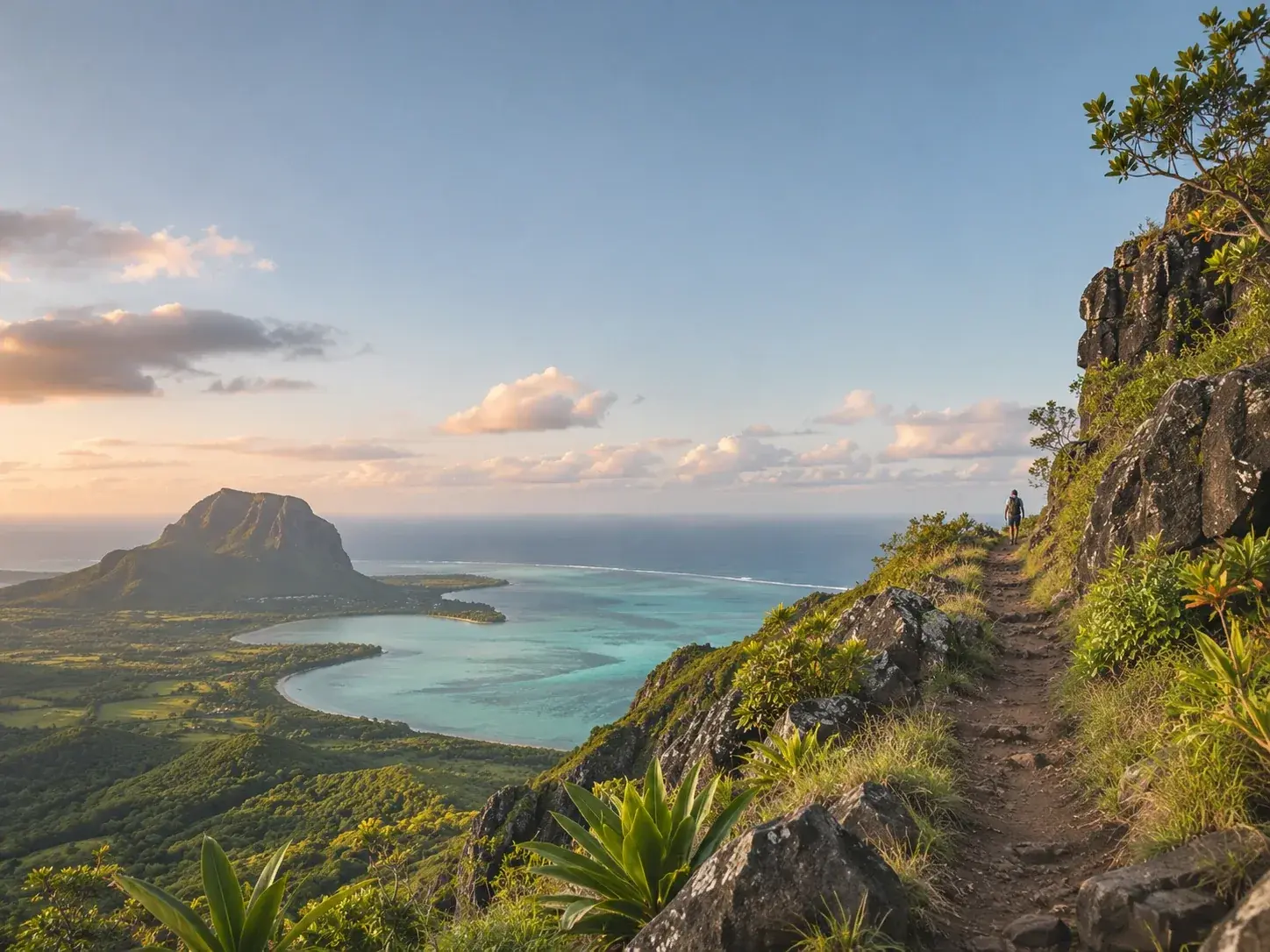 AI-generated image
Black River Gorges National Park occupies the hilly south-west of Mauritius. It is the country’s first terrestrial national park, and it is also the only place on the island where the greater part of what existed before people arrived still survives, gathered together. Visitors come here to walk. They leave having understood what the island once was, and what it costs to preserve it.
The park in figures
The park was proclaimed on 15 June 1994. It covers 67.54 square kilometres and is managed by the National Parks and Conservation Service.
Three habitats share its terrain: humid upland forest, dry lowland forest and marshy heathland. The last of these, a surprise on a tropical island, is one of the most distinctive habitats in the country.
Visitors will find two information centres, one at Pétrin and the other at Black River, picnic areas and sixty kilometres of trails. Four field stations, less conspicuous, support the research and conservation work carried out by the National Parks and Conservation Service and the Mauritian Wildlife Foundation.
Every endemic bird on the island
The list of the park’s endemic species is enough to stop a reader short, for it can be summed up in a single sentence: every one of the island’s endemic birds is found here.
There are eight of them. The Mauritius kestrel, the pink pigeon, the echo parakeet, the Mauritius cuckooshrike, the Mauritius bulbul, the Mauritius olive white-eye, the Mauritius grey white-eye and the Mauritius fody. To these is added one endemic mammal, the Mauritius fruit bat, a large fruit-eating bat.
The park is recognised by BirdLife International as an Important Bird Area.
It is worth taking the measure of what this means. Eight species of bird found nowhere else in the world are contained within a perimeter of sixty-seven square kilometres, roughly one twenty-seventh of the island’s area. This is not abundance; it is a last refuge. The walker who glimpses a pink pigeon or hears a parakeet above a trail is not passing one bird among many: they are passing an entire species, which has no other address.
A refuge, not an untouched sanctuary
There is nothing romantic, however, about the state of things. Much of the humid forest the park protects is degraded. Two invasive plants are gaining ground, Chinese guava and privet. Two invasive animals live here too, the rusa deer and the wild boar.
Some areas have been fenced off and cleared of invasive species, to protect the native fauna and flora. This is the heart of what is at stake here: conservation is not a matter of letting nature take its course, but of holding it back. A Mauritian forest left to itself becomes a guava forest.
The visitor walking through this park therefore crosses two landscapes laid one over the other: the one that remains, and the one growing over it. Learning to recognise a Chinese guava says more about the state of the island than any panorama.
Before setting off
A day in the park begins at one of its two information centres, at Pétrin or at Black River. That is where to ask, before setting out, about opening times, closing times and the condition of the trails. The precaution is far from superfluous. In the forest, getting the time wrong is no small mistake: it means finding a gate closed, or worse, setting off on a route too late.
Sixty kilometres of trails cannot be covered in a single visit, and there is no reason to try. The park is better suited to a well-chosen walk, at a pace that leaves time to look up, followed by a pause at one of its picnic areas. The three habitats are quite unlike one another, and a route through humid upland forest offers neither the same trees nor the same encounters as a stretch of dry forest or marshy heathland.
What to take away
A park proclaimed in 1994, 67.54 square kilometres, three habitats, sixty kilometres of trails, two information centres. Every one of the endemic birds of Mauritius, and its fruit bat. And, finally, an unending struggle against what people have introduced.
The Black River Gorges are not a postcard backdrop set apart from the beaches. They are what remains of Mauritius before Mauritius, held on to by sheer effort across one twenty-seventh of its territory, and open to anyone willing to walk there with care.
To book
Things to do from this article
The addresses
Places mentioned
Read next
 AI-generated image
The dodo, a bird we hardly know
- AI-generated image
Kestrel, pink pigeon, parakeet: three birds back from the brink
 AI-generated image
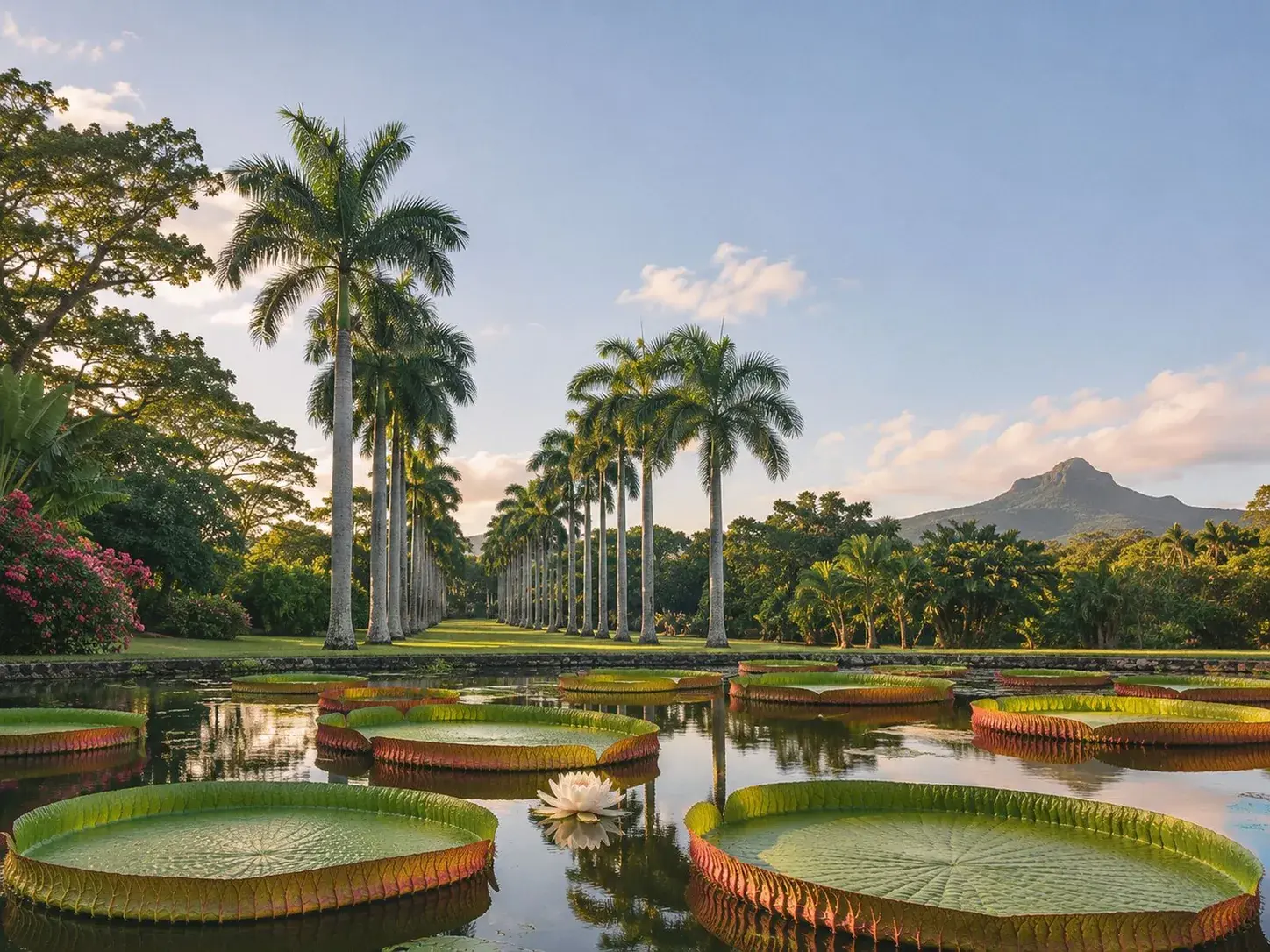
Pamplemousses and Curepipe, two gardens to read the island by
Where to stay
Stay around the gorges
Places to stay that are still available, with current prices, compared across the main booking platforms.