Le Morne and the south-west, at the foot of the mountain
A mountain at the end of a peninsula, a lagoon the trade winds keep for kitesurfers’ sails and, offshore, a waterfall that is no waterfall at all. The south-west of Mauritius packs a great many landscapes into very few kilometres.
August 9, 2026
 AI-generated image
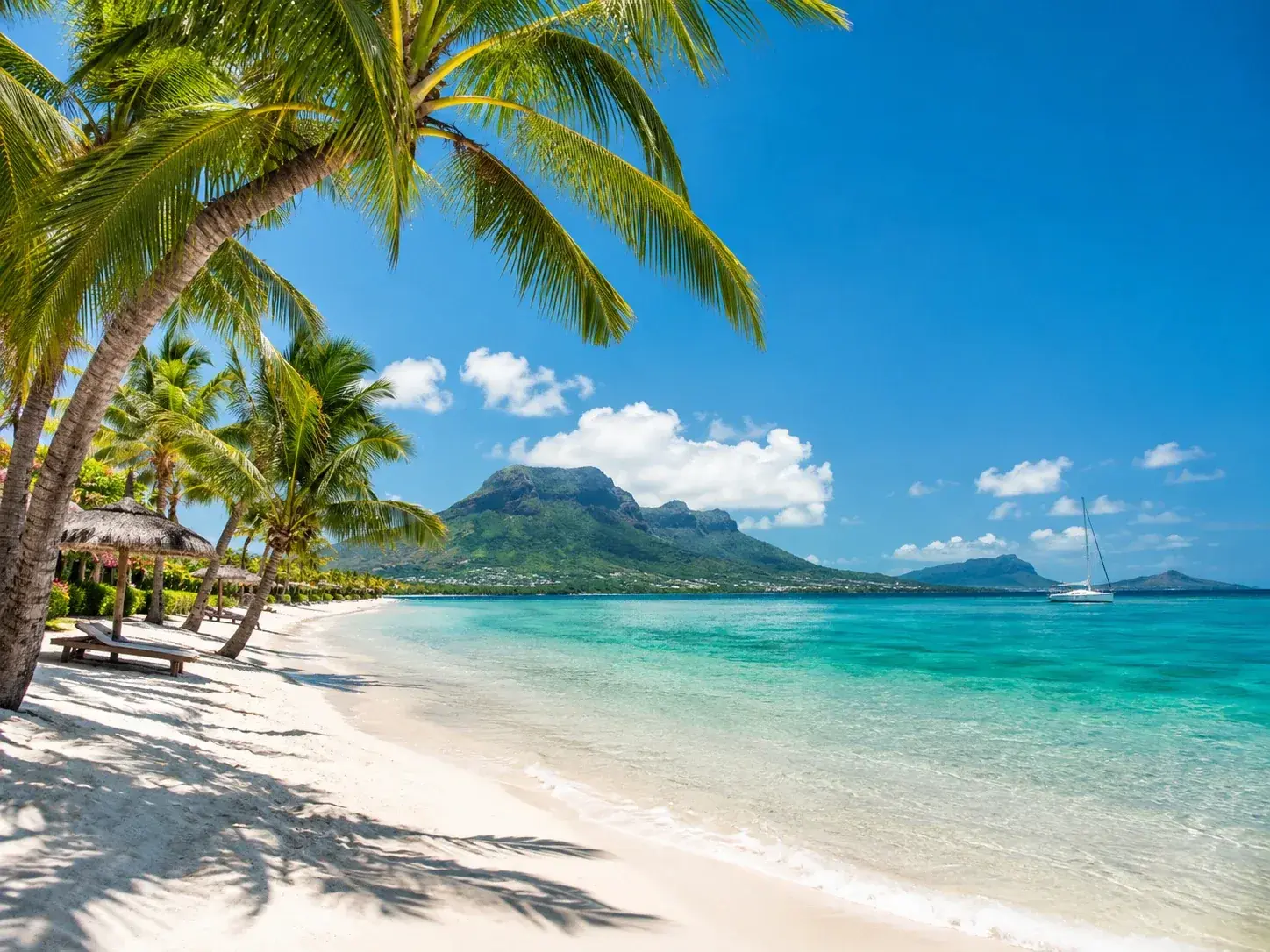
At the end of the west coast, the land narrows into a peninsula closed off by a single mountain, Le Morne Brabant, more than five hundred metres high. It can be seen from almost everywhere along the coast, and once at its foot, you have eyes for nothing else. The cultural landscape of Le Morne is a World Heritage Site; what people come here for today, though, is also a lagoon, a wind and the light at the end of the day.
Three and a half kilometres of public sand
Le Morne’s public beach is vast: four sections, 22.3 hectares and 3,480 metres of shoreline. The longest, La Pointe Cassis, in Le Morne village, open to all since 2014, unrolls 1,940 metres, the longest shoreline of any single section of public beach in the whole of the west. The Pointe Sud Ouest section, nearly eleven hectares and a kilometre of shoreline, has been public since 1991. White sand, clear water, coconut palms and the mountain as a backdrop: the setting for a day that almost always ends with the sunset.
Further east, between Le Morne and Baie du Cap, La Prairie offers another view of the mountain. Its three public sections cover 11.7 hectares and nearly 1.3 kilometres of shoreline, and its shallow waters lend themselves to snorkelling. The redevelopment under way provides for a car park of around fifty spaces, surfaced with permeable blocks filled with crushed coral, and more than two hundred ornamental plants, cabbage palms and bottle palms among them.
 AI-generated image
The wind and the lagoon
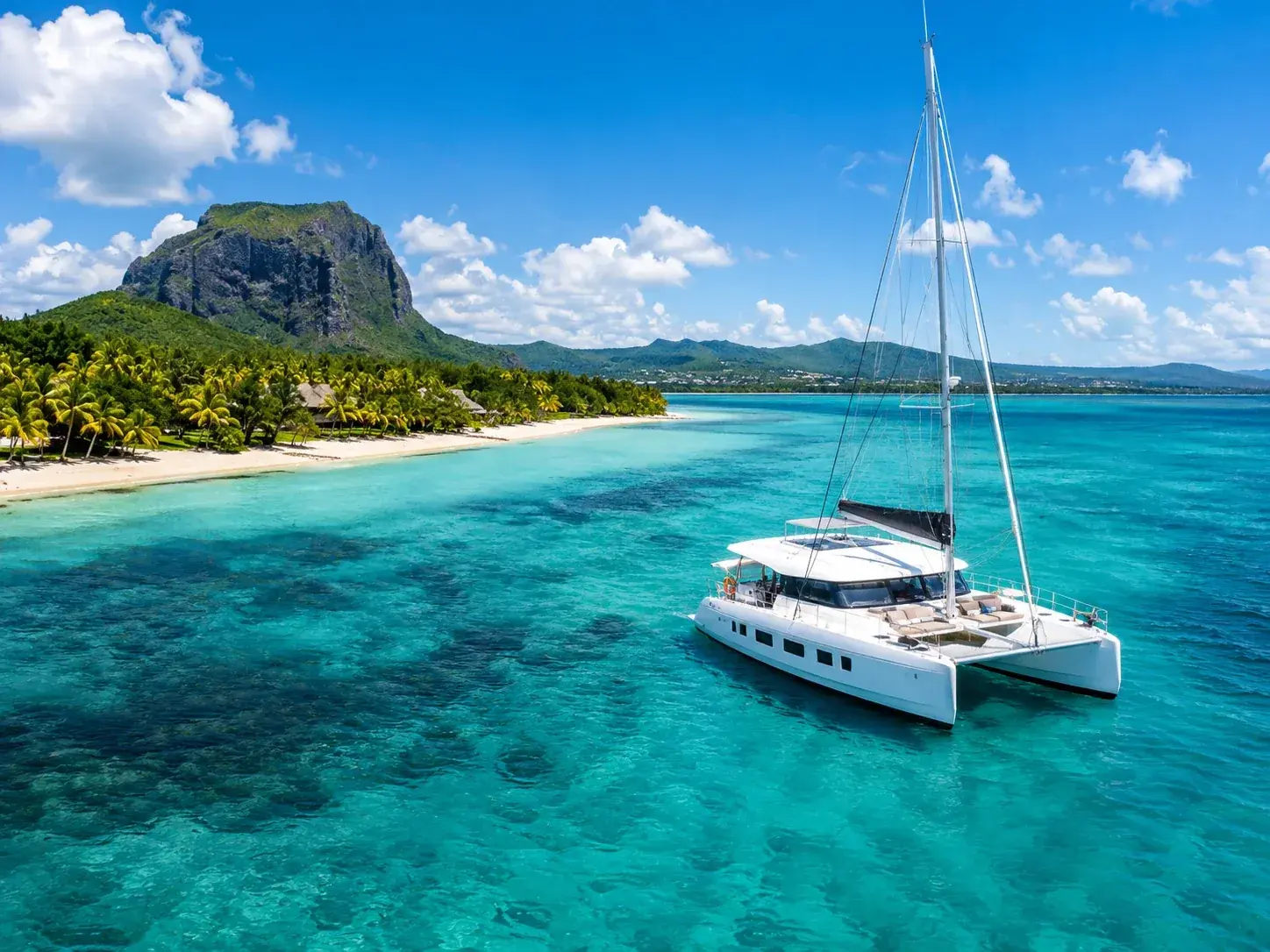
The south of the island is known for its strong, steady trade winds, especially from April to November, and they have made the peninsula one of the great kitesurfing grounds of the world. The One Eye spot, at Pointe du Morne, is, with Cap Dal at Tamarin, one of the two most famous on the island: people learn in the lagoon, then progress to a barrelling wave. There is no shortage of kitesurfing and surf schools.
Offshore, the underwater slope produces a phenomenon that can only really be seen from the air. Mauritius sits on a submarine plateau no more than one hundred and fifty metres deep, which then drops abruptly to more than four thousand metres. Off the peninsula, currents push sand and silt over this edge, and seen from above, the lagoon seems to pour into the abyss: this is the famous underwater waterfall, which is in fact a cascade of sand. From the summit of Le Morne its shape can be made out; to see it clearly you have to fly over it, by helicopter or seaplane, the seaplane sometimes taking off from La Prairie beach.
Île aux Bénitiers and the dolphins
In the lagoon near Le Morne, Île aux Bénitiers measures barely two kilometres by five hundred metres. Uninhabited, it invites you to do almost nothing: a picnic on the beach, some birdwatching, a stroll through its small coconut grove. With mask and snorkel, you can swim out to Crystal Rock, a rock shaped like a giant clam. The island is reached by fishing boat from La Gaulette or Case Noyale, or by catamaran and speedboat on day trips, often with a barbecue at midday. On the way, dolphins are no rarity: sometimes more than a hundred can be seen heading for the deep water off the peninsula.
 AI-generated image
Climb, stay, dine
The ascent of Le Morne Brabant is made with a guide and takes about four hours. Some outings set off before dawn to reach the summit at sunrise, others follow a scenic route that stops short of the top. The mountain is also home to two extremely rare plants, the mandrinette, Hibiscus fragilis, and the boucle d’oreille, Trochetia boutoniana, the national flower of Mauritius. At the foot of the mountain, one-hour horse rides take in the view over the ocean.
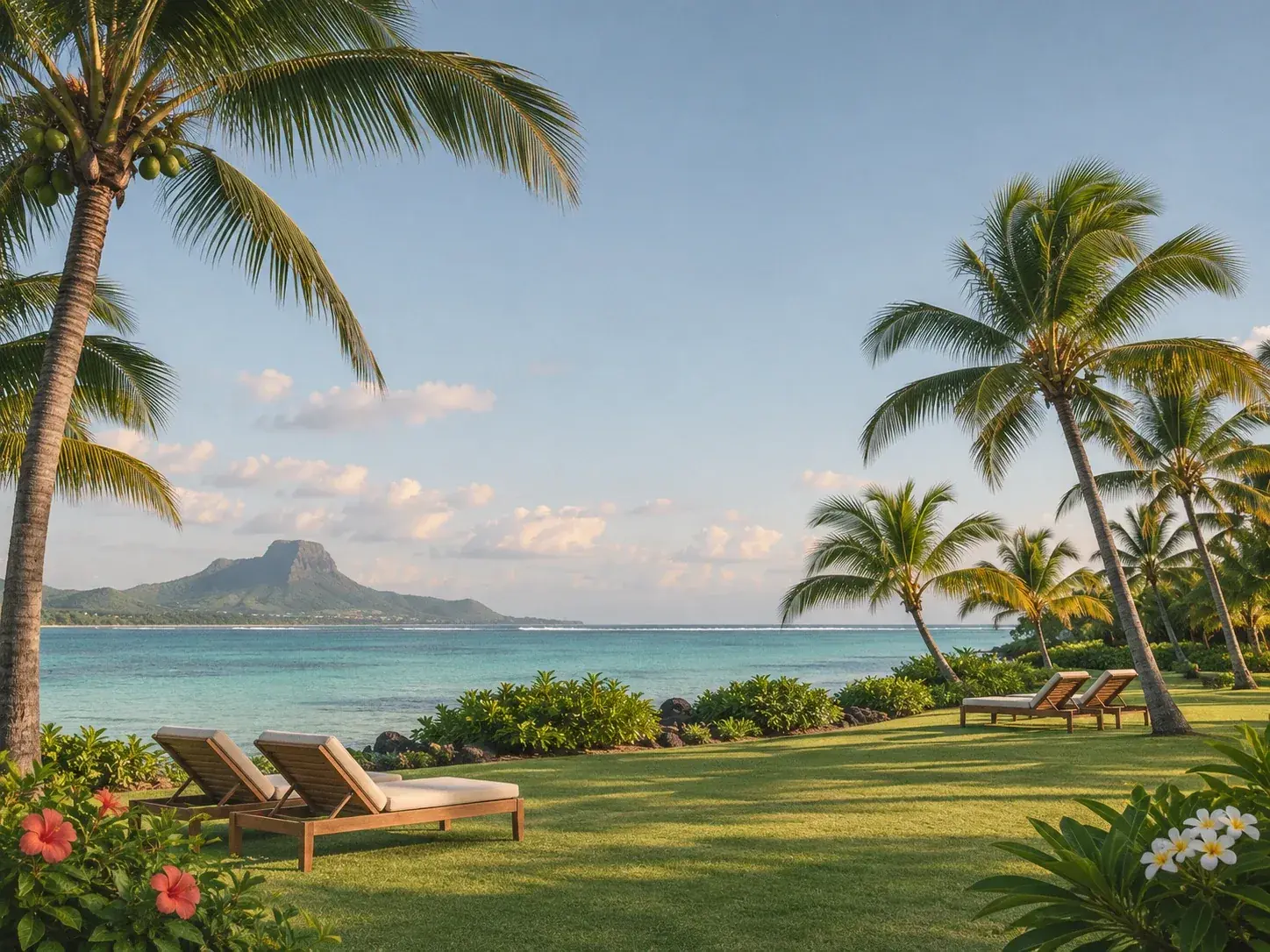
The peninsula brings together a handful of grand hotels. The Dinarobin Beachcomber, opened in 2001, offers only suites and villas, in a twenty-hectare garden of coconut palms and frangipani. The St. Regis Le Morne, all suites, gives each one the brand’s butler service, and its spa covers two thousand square metres. LUX* Le Morne lines up five pools, a treehouse and an eight-seat sushi bar, facing a kitesurfing lagoon. The Riu group runs two all-inclusive properties here, the Riu Palace, all suites and for adults only, and the Riu Turquoise, designed for families. The peninsula also has its own eighteen-hole golf course, between the lagoon and the mountain.
Away from the hotels, Wapalapam Island Eatery, in the L’Harmonie shopping centre at the foot of Le Morne, serves from breakfast to dinner, 8am to 10pm, every day, public holidays included. It is a convenient stop before or after the climb, when the mountain has taken on its evening colour.
To book
Things to do from this article
- Book on GetYourGuide →
Horse riding · Le Morne
One-hour horse ride at Le Morne, with ocean views - Book on GetYourGuide →
Boat trip · Le Morne
Private boat: Île aux Bénitiers, a swim near dolphins and lobster - Book on GetYourGuide →
Entry ticket · Chamarel
Entrance ticket for the Seven Coloured Earth geopark, Chamarel - Book on GetYourGuide →
Entry ticket · Chamarel
Chamarel: entry ticket to the Seven Coloured Earth Geopark - Book on GetYourGuide →
Day tour by car · Chamarel
Chamarel: tour of the four parks - Book on GetYourGuide →
Private tour · Chamarel
Chamarel: private guided day tour of the south-west
The addresses
Places mentioned
- LUX* Le MorneHotel · Le Morne★★★★★Book on Booking.com →
- Riu TurquoiseHotel · Le MorneBook on Booking.com →
Read next
- AI-generated image
Chamarel and its heights, the land of seven colours
- AI-generated image
Trou aux Biches and Mont Choisy, beneath the casuarinas of the north-west
- AI-generated image
The central plateau, the island at altitude
Where to stay
Stay at Le Morne
Places to stay that are still available, with current prices, compared across the main booking platforms.