
Flic en Flac and the west, the sunset coast
A long beach lined with casuarinas, dolphins off Tamarin and salt pans still at work. The west of Mauritius sets its clock by the setting sun.
July 27, 2026
 AI-generated image
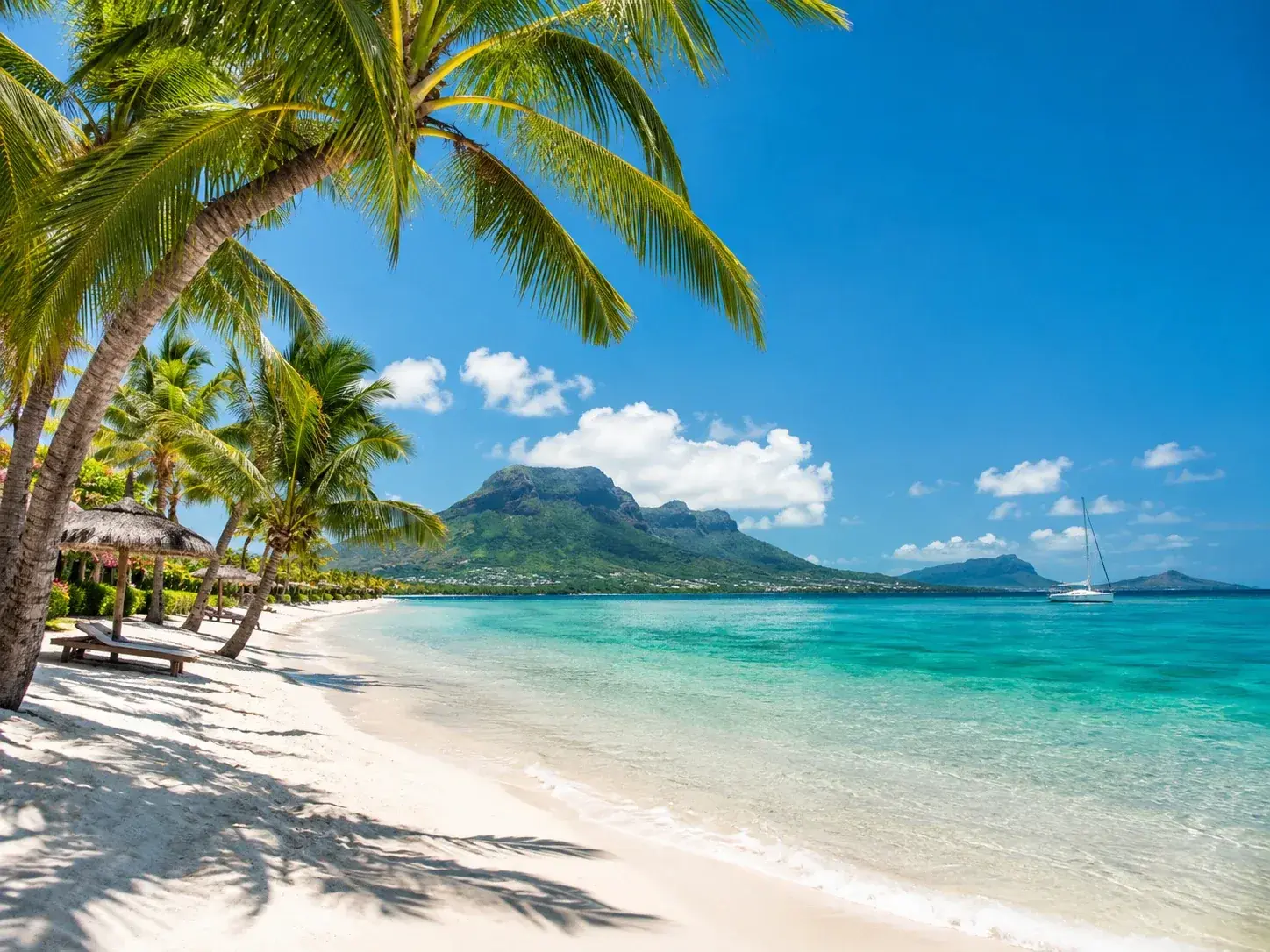
The west of Mauritius is the evening coast. This is where the sun sinks into the ocean, where the beach bars come alive at nightfall and where the boats return from the deep waters in which the dolphins roam. Between Albion in the north and Tamarin Bay in the south, the Black River district lines up a succession of beaches, villages and grand hotels, beneath mountains that close off the horizon inland.
The great beach of Flic en Flac
Flic en Flac is one of the longest beaches on the island, some eight kilometres of sand in the shade of casuarinas, with street food stalls a few steps from the shore. Its public domain, made up of five sections, tells of more than eighty years of development: the section facing the Manisa hotel has belonged to everyone since 1940, the Wolmar section since 1984, the section by the Ocean restaurant since 1998, the former site of the water sports centre since 2015 and the landing stage since 2021. Together they cover 18.7 hectares and 3.1 kilometres of shoreline. The beach has a Beach Authority office, three toilet blocks and two car parks, and it is one of the four beaches where sea access for people with reduced mobility is being prepared.
The lagoon, warm and protected by the reef, is best explored with mask and snorkel. Further out, two renowned dive sites lie within reach by boat: Snake Reef and the Cathedral, an underwater cliff strewn with huge boulders, hollowed into caves and arches down to nearly thirty metres, whose great cavern is lit by the light falling from the surface.
To the north, Albion is a quiet village, with a golden sand beach and calm water. Its public beach, 205 metres of shoreline, has its own team of lifeguards. On the rocky coast nearby stands the Pointe aux Caves lighthouse, known as the Albion lighthouse: thirty metres tall, banded in red, a nineteenth-century structure still in service, which can be reached on foot or by bicycle along the shore.
 AI-generated image
Dolphins, whales and boat trips
The west coast is the dolphins’ favourite ground. Bottlenose and spinner dolphins are seen here, often in groups of around twenty, sometimes more than a hundred heading out to sea off the Le Morne peninsula. Watching them is governed by regulations dating from 2012: you go out with a licensed operator, the boat approaches from the side, on a parallel course and without making a wake, you do not feed them, you do not touch them, and no more than three swimmers, a designated lifeguard included, may be in the water at the same time.
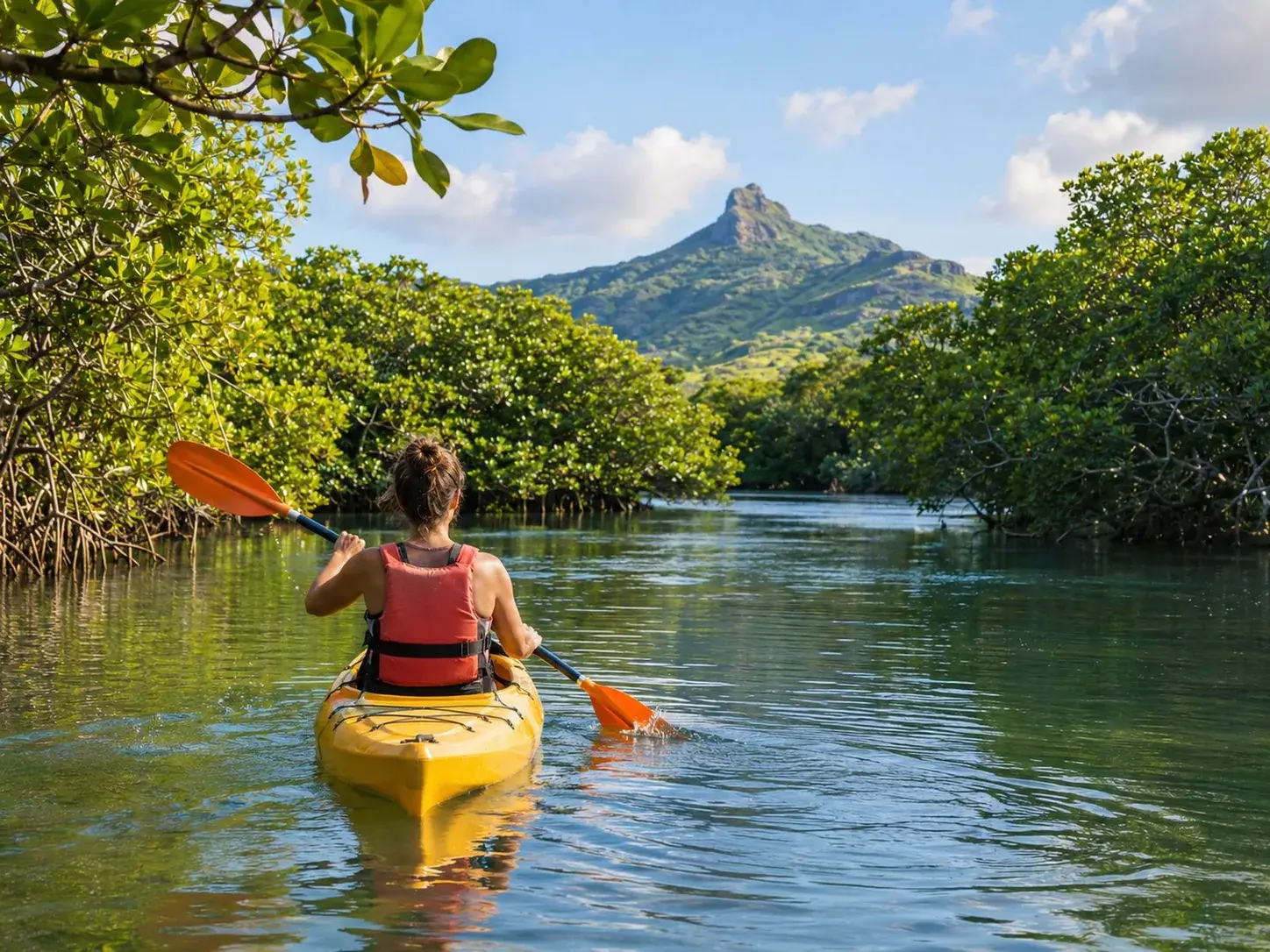
Whales pass by too. Sperm whales can be seen all year round, and humpback whales migrate along the island from July to November. Trips leave from Flic en Flac, Tamarin, La Preneuse and Black River, often combined with a stop at Île aux Bénitiers. At Tamarin you can also paddle up the river by kayak or on a stand-up paddleboard, at sunrise or at sunset.
Tamarin, between salt and mountain
At the foot of La Tourelle mountain, at the entrance to the village, the Tamarin salt pans are the last working salt marshes on the island. The salt makers use techniques that have stayed the same for some two hundred years; you have to come early in the morning to see them at work, and a small shop sells the harvest. La Tourelle itself rises to 563 metres: a demanding climb of three and a half kilometres, waymarked with painted signs and fitted with ropes, best done with a guide, which crosses private land.
A little further south, La Preneuse keeps a well-preserved Martello tower and cannons lined up on the sand. Fishing boats bob at anchor, boat trips set off from here, and in the evening people watch the sun go down, with Le Morne Brabant in the distance. Tamarin beach, open to all since 1940, is among the oldest public beaches on the island. The Tamarina golf course, eighteen holes designed by Rodney Wright, follows the gorge of the Rivière du Rempart beneath the mountains.
 AI-generated image
Hotels and restaurants of the west
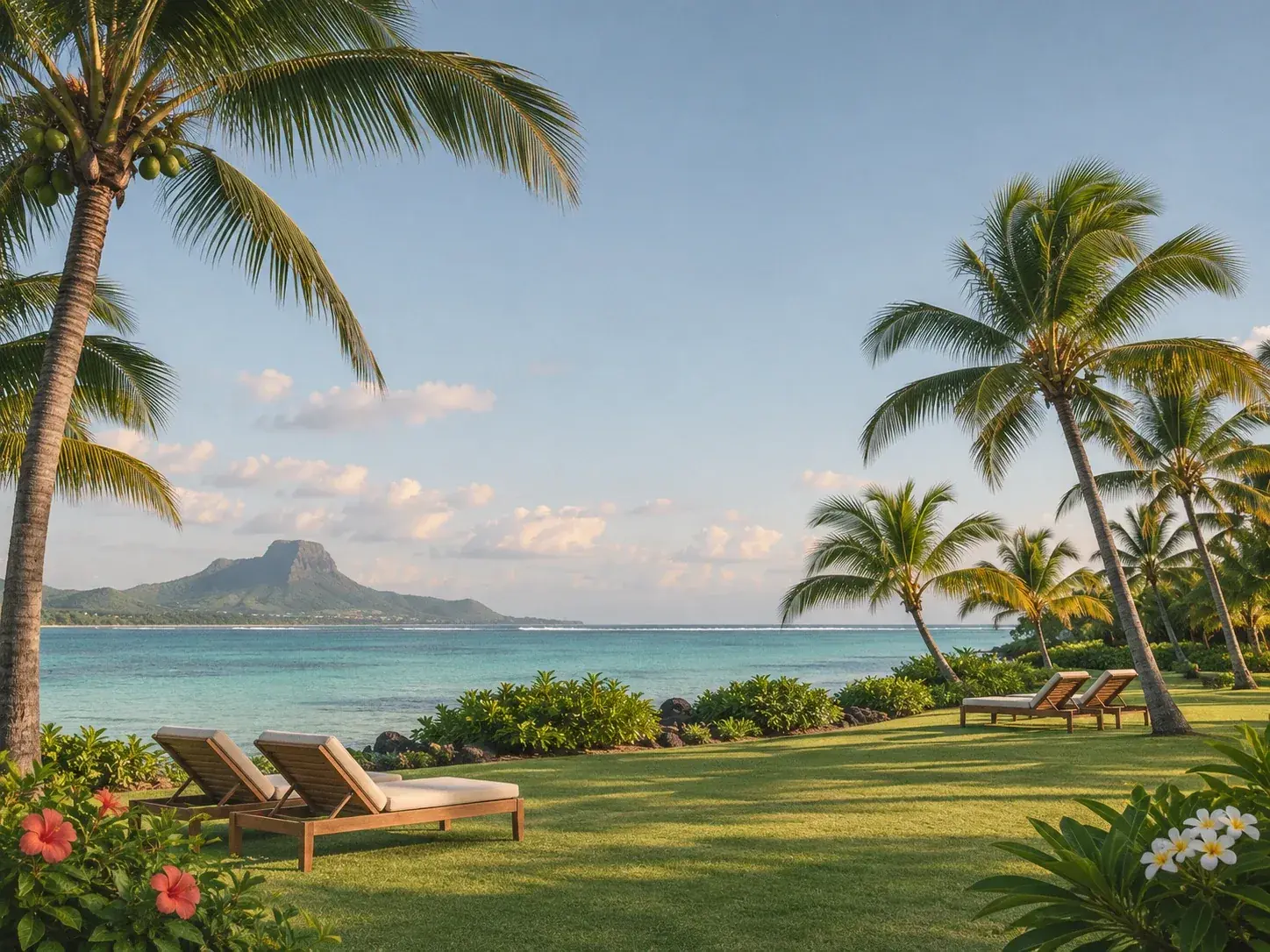
At Wolmar, south of Flic en Flac, several five-star properties follow one another: the Sofitel Mauritius L’Impérial, renovated in 2025, the Hilton Mauritius and its four restaurants, and the Maradiva, sixty-four single-storey villas with heated pools on eleven hectares. Sugar Beach, colonial in style and laid out around a manor house, occupies a kilometre and a half of beach; its guests have access to the restaurants of La Pirogue, and those of La Pirogue to its own. La Pirogue’s 248 bungalows, set in a coconut grove, have thatched roofs inspired by the fishermen’s pirogues. The Sands Suites faces Tamarin Bay and Le Morne. In the heart of Flic en Flac, the Aanari and its fifty rooms owe their reputation to Mei Yan, a Cantonese restaurant run by two chefs from China.
Further north, the Club Med La Plantation d’Albion offers a sailing school and a flying trapeze. At Tamarin, the Tamarina Golf & Spa has fifty rooms and gives its guests playing rights on the course, and the Veranda Tamarin has its own surf school.
At Médine, near Flic en Flac, Domaine Anna has been serving since 2002 beneath kiosks set above ponds, lit by torches in the evening; bookings are taken by telephone, and the restaurant closes on Mondays. At the Sofitel, Ming Court serves Chinese and Japanese cooking, lacquered duck and braised abalone, from Monday to Saturday in the evening.
Finally, at Cascavelle, Casela Nature Parks, open since 1979, spreads over 350 hectares a park of more than 1,800 animals, giraffes, rhinoceroses and lions, with ziplines, a Nepalese bridge and a 760-metre summer luge facing the coast. The park is known across the island for its activities aimed at children and adults alike.
To book
Things to do from this article
- Book on GetYourGuide →
Catamaran cruise · La Preneuse
Sunset catamaran cruise with drinks and snacks, La Preneuse - Book on GetYourGuide →
Boat trip · Flic-en-Flac
Excursion to Île aux Bénitiers and Crystal Rock - Book on GetYourGuide →
Kayak and paddleboard · Tamarin
Kayak excursion to watch dolphins in Tamarin Bay - Book on GetYourGuide →
Kayak and paddleboard · Tamarin
Guided kayak excursion in search of dolphins, Tamarin - Book on GetYourGuide →
Kayak and paddleboard · Tamarin
Guided sundowner kayak excursion, Tamarin - Book on GetYourGuide →
Kayak and paddleboard · Tamarin
Guided stand-up paddleboard excursion on the Tamarin River
The addresses
Places mentioned
- Club Med La Plantation d’AlbionHotel · Albion★★★★★Book on Booking.com →
- Domaine AnnaRestaurant · Flic en Flac
Read next
- AI-generated image
Chamarel and its heights, the land of seven colours
- AI-generated image
Trou aux Biches and Mont Choisy, beneath the casuarinas of the north-west
- AI-generated image
The central plateau, the island at altitude
Where to stay
Stay in Flic en Flac and the west
Places to stay that are still available, with current prices, compared across the main booking platforms.