
Bras d’Eau, the forest on the other coast
On the north-east coast, Bras d’Eau National Park protects, over 497 hectares, giant ebonies, rare orchids and the coq des bois. An easy loop, a lake for migratory birds, the beach close by, and further south the mountain forests of the east.
September 20, 2026
 AI-generated image
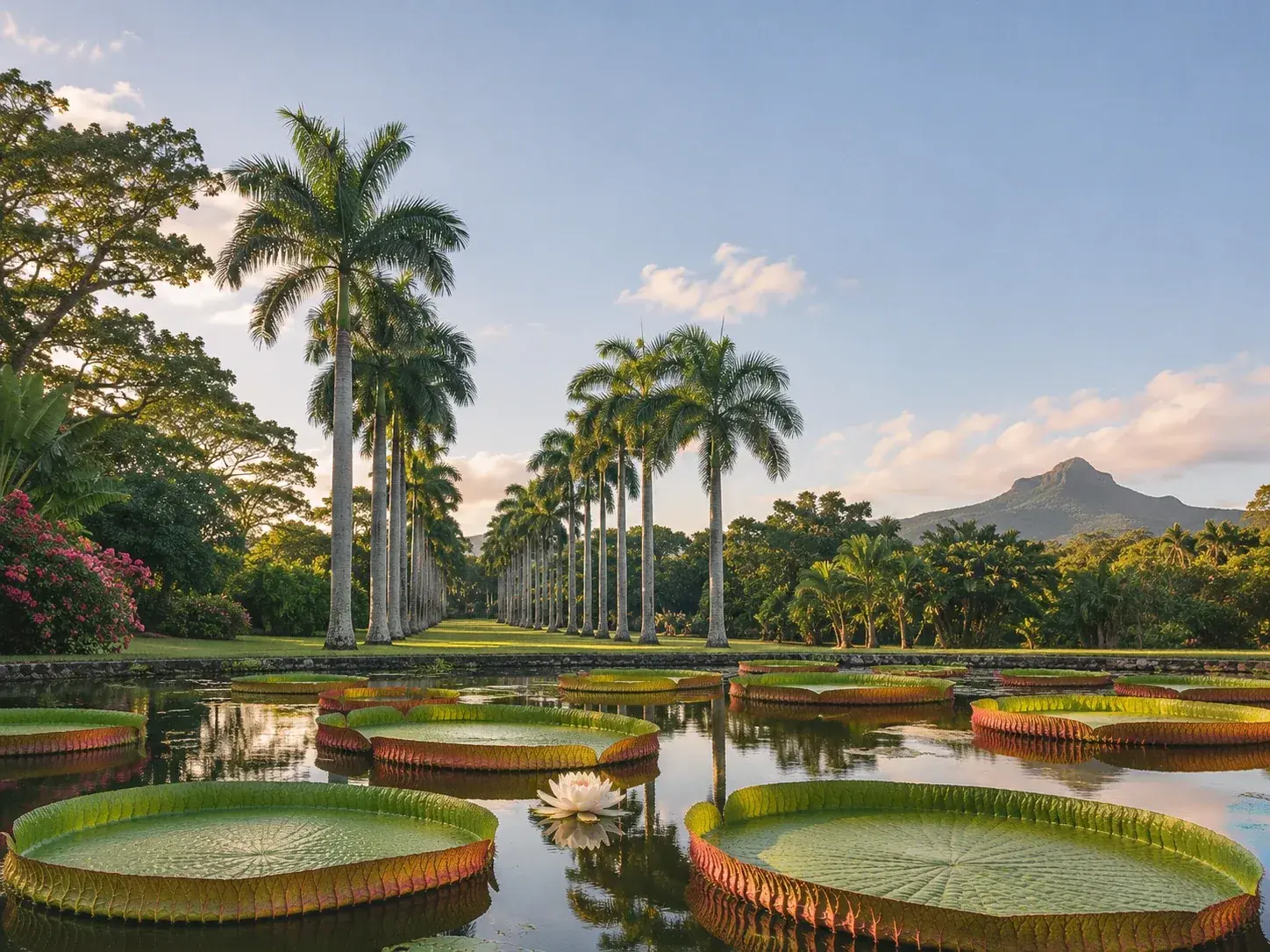
The main island has two national parks, and often only one of them is known. Black River Gorges, in the south-west, draws the crowds. Bras d’Eau, on the north-east coast in the district of Flacq, is usually quieter. It is no less precious for that: it is one of the last places in Mauritius where a native forest worthy of the name holds on.
A young park on an old lava flow
Bras d’Eau was proclaimed a national park in 2011. From 2002 to 2010 its land formed the Bras d’Eau and Poste La Fayette reserves. The park covers 497 hectares, managed by the National Parks and Conservation Service, which runs a visitor centre there.
The landscape mixes beaches, stretches of water and native trees, set on the rocky remains of an ancient lava flow. Much of the land long carried plantations of non-native trees, and yet the original biodiversity held on: two species of giant Mauritian ebony, ironwood, and extremely rare ferns and orchids, which national park status now protects.
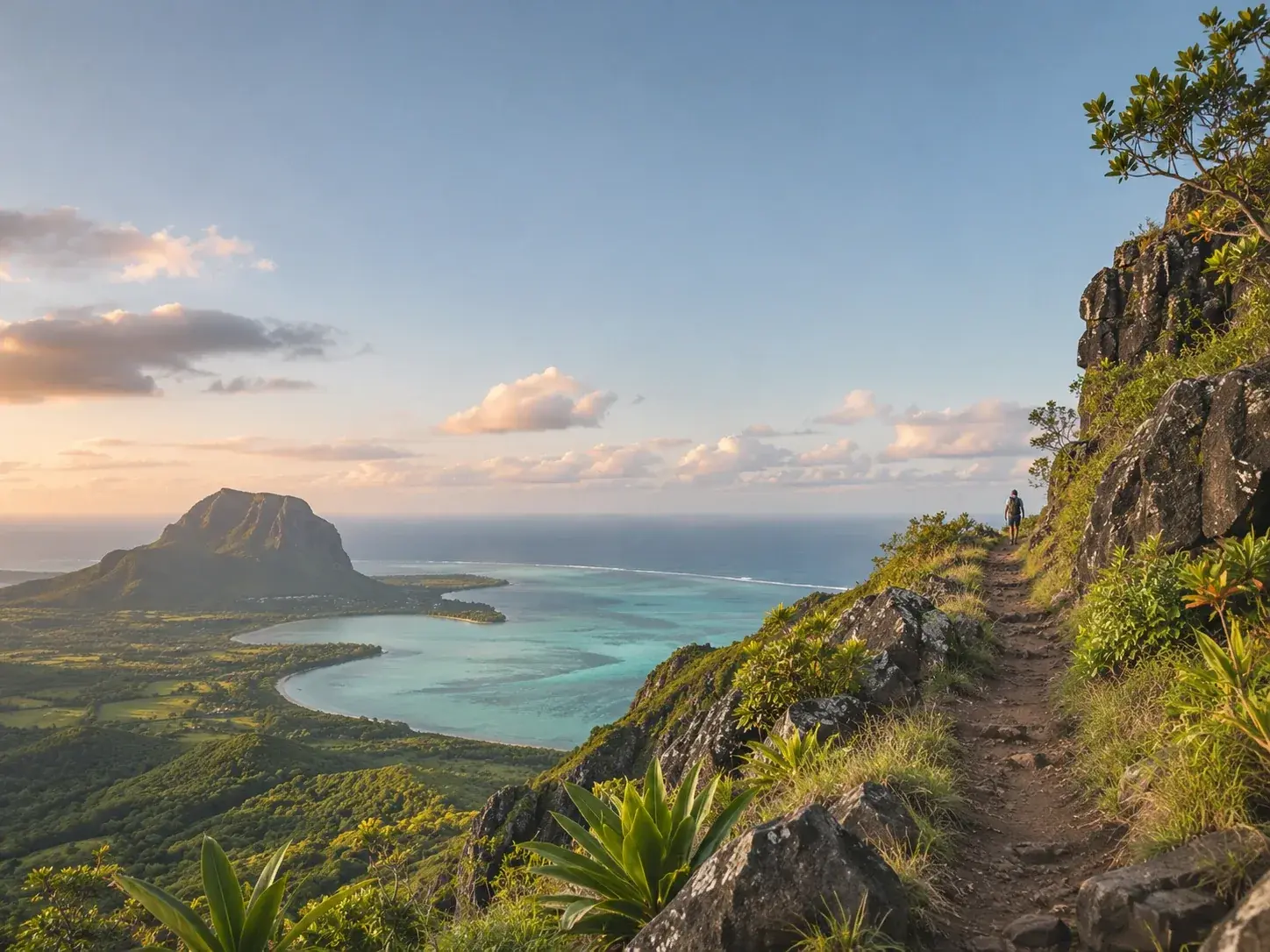
The measure of what remains is stark. Good-quality native forest covers less than 2 per cent of the island’s surface, and is found only on mountain ridges, on offshore islets and in the two national parks. To walk at Bras d’Eau is therefore to walk in one of the last fragments of the island as it once was.
 AI-generated image
The Coq du Bois loop
The visitor centre is the first stop: there you learn what you need to know about the trails, the park’s historic ruins and its wildlife. The gentle Coq du Bois loop suits walkers of every ability. It passes through an orchard of some two thousand mango trees and two hundred lychees, an unexpected presence in the middle of a protected forest.
The loop is named after a bird. The coq des bois, a small Mascarene flycatcher weighing around twelve grams, lives in Black River Gorges and at Bras d’Eau. The male has a metallic blue head, and the bird feeds on insects. It is rare; seeing one is a small victory.
Binoculars come into their own here. Along the walk you may see the sparrow, the serin, the white-eye and, with luck, the coq des bois. Mare Sarcelle lake, within the park, serves as a natural refuge for migratory birds. Picnic tables await a pause, and the sea is not far: the public beach at Bras d’Eau, open to all since 1991, runs along the shore for about 650 metres, and that of Poste Lafayette is next door.
Beneath the lava, the caves of Roches Noires
A little further north, near the village of Roches Noires in the district of Rivière du Rempart, the volcanic history of the coast can be read from below. The Roches Noires lava tubes form a small nature reserve. A path leads to the network of volcanic caves and to the main cavity, the Princess Margaret cave, where a wide staircase descends to an underground entrance: interconnected chambers, freshwater pools, rock formations. A small museum explains how and why these tunnels formed.
 AI-generated image
The mountain forests of the south-east
Further south, the east of Mauritius changes face and gains height. The Bambous Mountains hold the eastern population of the Mauritius kestrel, and introduced populations of pink pigeons and echo parakeets. Near Anse Jonchée, the upland humid forest of the Vallée de l’Est, forty hectares of state and private land, has been under restoration since 2004: 58,800 seedlings have been planted there, and twenty Aldabra giant tortoises were moved there in June and July 2025, for a first release into upland forest. This forest is not open to visitors.
Those who want to walk will find, at the village of Bananes in the district of Grand Port, the Domaine de Lagrave: more than 500 arpents of almost untouched forest, taking in Lagrave mountain and its entire flank, and three colour-coded trails: the 3-kilometre blue trail for beginners, the 6-kilometre red, and the 10-kilometre black for experienced walkers. Rivers, deer, monkeys and wild boar share the forest. And Ferney Valley, north of Mahébourg, opens its four trails at the foot of the Bambous Mountains.
Bras d’Eau lacks the grandeur of the south-western gorges. It has something else: a forest on a human scale, a few steps from a beach, where you come to understand that the island is more than its summits, and that its last forests are sometimes hidden where people come only for the sea.
The addresses
Places mentioned
Read next
- AI-generated image
The dodo, a bird we hardly know
- AI-generated image
Black River Gorges, the last refuge
- AI-generated image
Kestrel, pink pigeon, parakeet: three birds back from the brink
Where to stay
Stay on the east coast
Places to stay that are still available, with current prices, compared across the main booking platforms.