Belle Mare and the east coast, the morning shore
On the Flacq coast, the sun rises over kilometres of public sand, a lagoon enclosed by the reef and an island where nobody sleeps. This is the coast of long beaches and grand hotels.
July 14, 2026
 AI-generated image
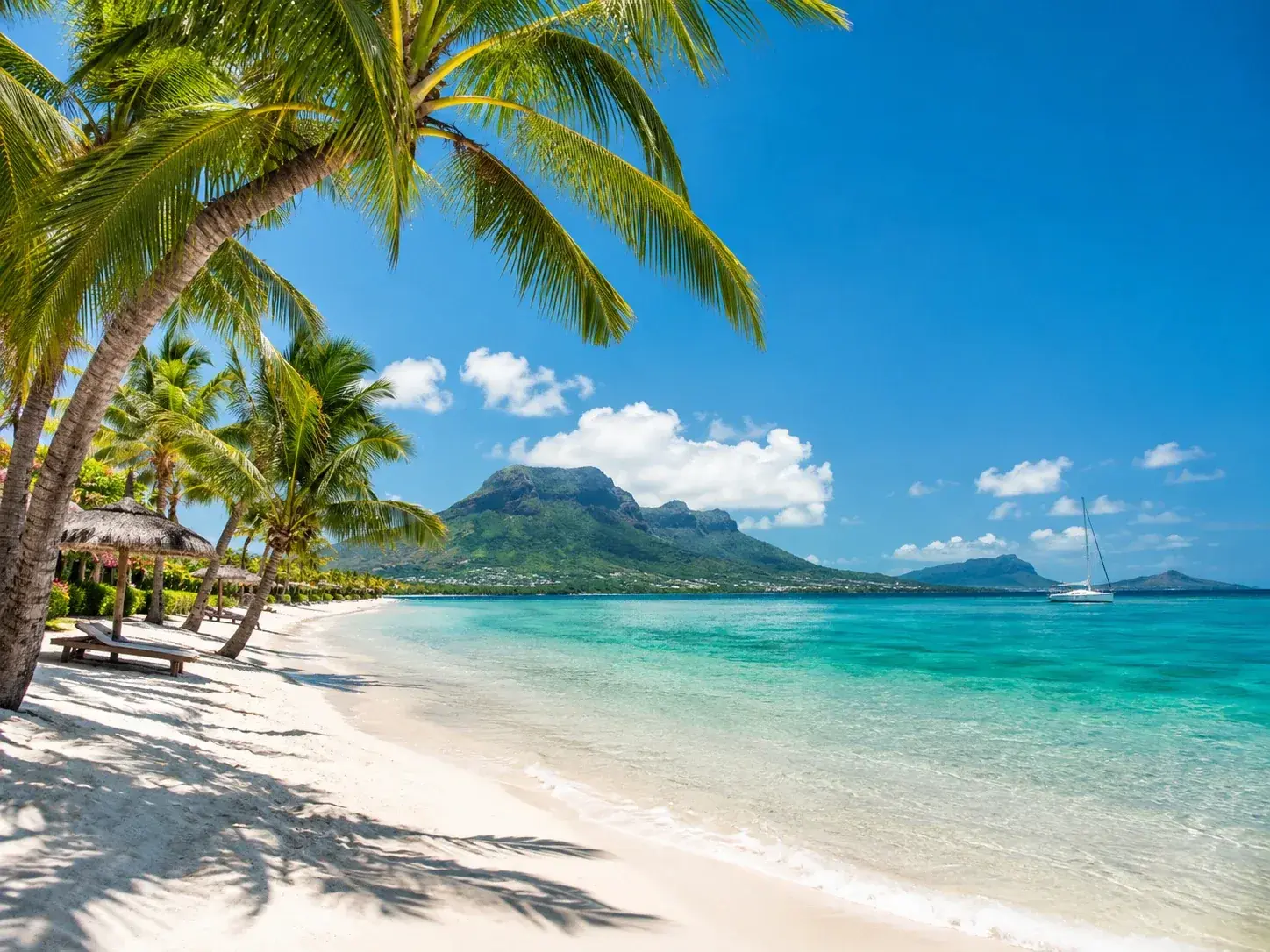
The east coast of Mauritius faces the sunrise, and that is the first thing one learns there: the days begin early, on the sand, when the fishermen of Trou d’Eau Douce are already heading out. A lagoon enclosed by the barrier reef runs the length of the Flacq district, and behind it stretch beaches measured in kilometres. A breeze cools this coast for most of the year, and the pace here is gentler than in the north.
Public sand, by the kilometre
Belle Mare is one of the longest beaches on the island, nearly ten kilometres of white sand and clear water, with casuarinas for shade. The part open to the public is itself considerable: four sections, 29 hectares and 2,420 metres of shoreline. The main beach alone accounts for 17.4 hectares and some 1,500 metres. One section, the one beside The Residence hotel, has been public since 1964, the other three since 1991. Belle Mare houses one of the Beach Authority’s four offices on the island, and sea access for people with reduced mobility is being prepared there.
Further south, Palmar lines up three sections and nearly 1.8 kilometres of shoreline; its main beach, 18.5 hectares, is the largest of all the public sections on the east coast. Trou d’Eau Douce has 1,110 metres, including the Four à Chaux section, named after one of the kilns in which coral was once burnt to make lime. To the north, Poste Lafayette was enlarged again in 2024, Bras d’Eau unrolls 650 metres, and Quatre Soeurs forms a long ribbon of 723 metres, some fifteen metres deep.
 AI-generated image
Île aux Cerfs, for the day
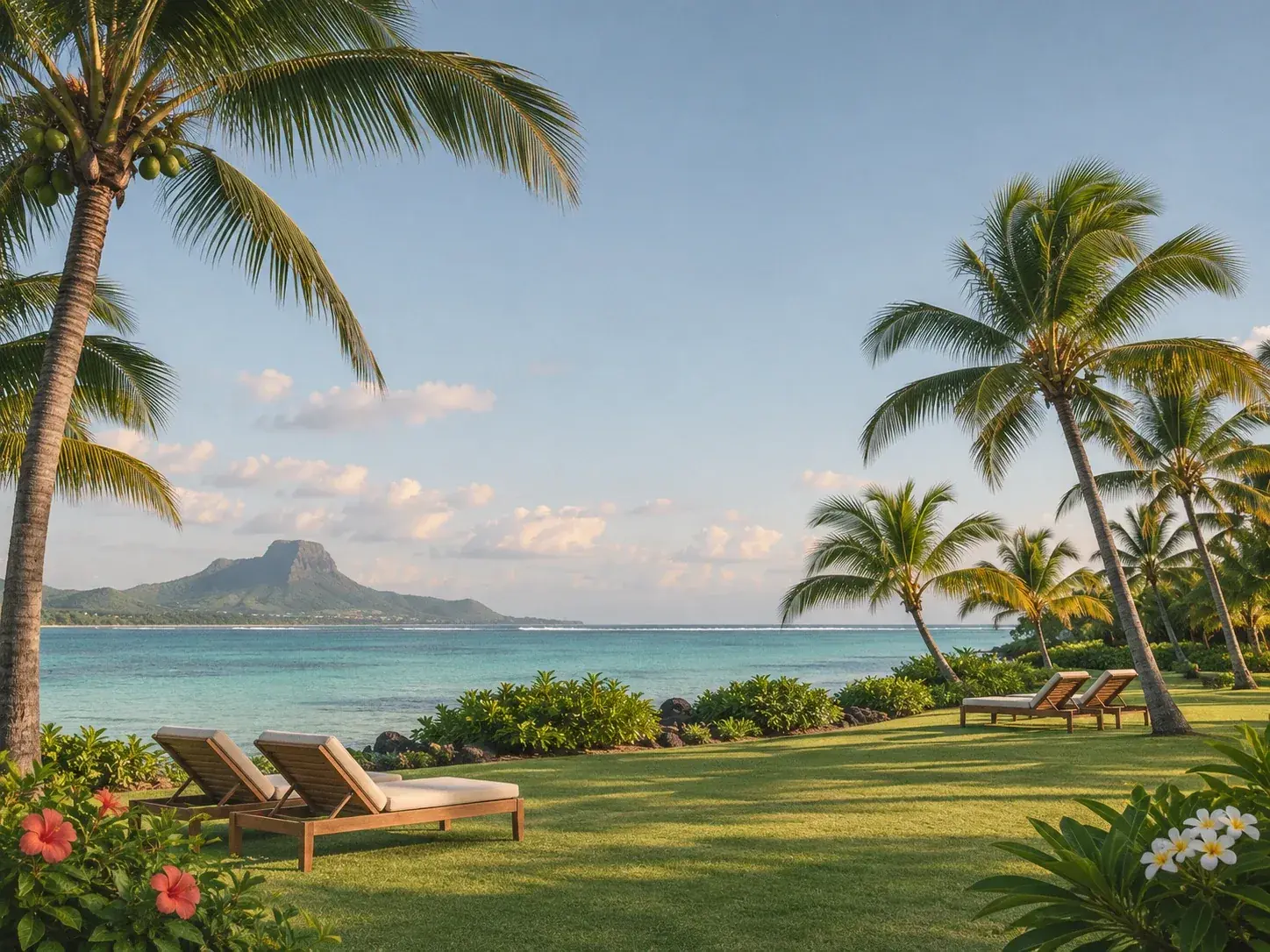
Off Trou d’Eau Douce, Île aux Cerfs covers 87 hectares. No one lives there and no hotel has been built on it: people come for the day. The shortest crossing leaves from the Pointe Maurice jetty, from which twenty-four-seat boats run to the Masala jetty every thirty minutes, from 9.30am to 6pm. Golfers have their own shuttle, every twenty minutes from 6.40am, to the championship course designed by Bernhard Langer, twice winner of the Masters.
The northern tip of the island gathers the beaches, the bars and the grills; follow the east coast beneath the casuarinas and the stretches of sand grow quieter. The lagoon, protected by the reef, hosts parasailing, waterskiing and wakeboarding. Lunch is taken with your feet in the sand, or at the golf clubhouse, facing the eighteenth green. From Trou d’Eau Douce and Grande Rivière Sud-Est, numerous catamaran and speedboat trips combine the island with other islets of the south-east and with the Grande Rivière Sud-Est waterfall.
The grand hotels of the coast
Grand hotels follow one another along this coast. At Poste de Flacq, One&Only Le Saint Géran occupies a private peninsula between the ocean and a lagoon, with a restaurant built over the water and its own helipad. Close by, the Constance Prince Maurice spreads over sixty hectares sheltered from the prevailing winds; its floating restaurant, Le Barachois, rests on five pontoons in the middle of a natural fish reserve, and its cellar holds more than twenty-five thousand bottles.
At Belle Mare, the Constance Belle Mare Plage occupies two kilometres of beach and a hundred and forty hectares of golf, two eighteen-hole championship courses. The Residence lines up 135 rooms and 28 suites, all on one level, in a colonial-inspired setting. LUX* Belle Mare runs a sea turtle conservation programme open to its guests, and serves from a food truck built into a 1933 Rolls Royce. At Trou d’Eau Douce, the Shangri-La Le Touessrok spreads six secluded beaches over four kilometres and runs boats to Îlot Mangénie, its private island. At Beau Champ, the Four Seasons at Anahita offers only villas with private pools and has its own beach on Île aux Cerfs.
This is also the coast of adults-only hotels: SALT of Palmar, fifty-nine rooms decorated by the artist Camille Walala, with neither buffet nor single-use plastic; Sunrise Attitude, facing Belle Mare beach, with no television; Solana Beach, in the colours of the sixties and seventies; and the Radisson Blu at Poste Lafayette, where a marked snorkelling trail starts in front of the hotel. Simpler, two three-star hotels, the Friday Attitude at Trou d’Eau Douce and the Laguna Beach at Grande Rivière Sud-Est, run a free shuttle to Île aux Cerfs.
 AI-generated image
Ashore, away from the hotels
At Trou d’Eau Douce, La Case Poisson, founded in 2014, buys fish and seafood from small-scale fishermen every morning and grills them in the open air, in full view of the diners. On Wednesdays or Sundays, when all the stalls are open, the market at Centre de Flacq, the largest open-air market on the island, mixes fresh produce, clothing and street food cooked to order.
In the north of the district, Bras d’Eau National Park, created in 2011, offers a walk that is usually calmer than in the Black River Gorges. Its Coq du Bois loop, within reach of any walker, crosses an orchard of some two thousand mango trees and two hundred lychee trees; the park is home to two species of giant ebony, to ironwood and to rare orchids, and the Mauritius fody or the coq des bois may be glimpsed there. The lake at Mare Sarcelle serves as a refuge for migratory birds, and Poste Lafayette beach is next door: a morning beneath the ebonies, an afternoon by the lagoon.
To book
Things to do from this article
- Book on GetYourGuide →
Boat trip · Trou d’Eau Douce
Island adventure on the south-east coast - Book on GetYourGuide →
Horse riding · Belle Mare
Horse ride on the beach, Belle Mare - Book on GetYourGuide →
Boat trip · Grande Rivière Sud-Est
Grande Rivière Sud-Est waterfall, Île aux Cerfs and barbecue, with pick-up - Book on GetYourGuide →
Catamaran cruise · Grande Rivière Sud-Est
Catamaran cruise around the five islands of the south-east - Book on GetYourGuide →
Catamaran cruise · Trou d’Eau Douce
Catamaran cruise to Île aux Cerfs and the Grande Rivière Sud-Est waterfall - Book on GetYourGuide →
Boat trip · Trou d’Eau Douce
Speedboat cruise to five islands: snorkelling, lunch and open bar
The addresses
Places mentioned
- One&Only Le Saint GéranHotel · Poste de Flacq★★★★★Book on Booking.com →
- Constance Prince MauriceHotel · Poste de Flacq★★★★★Book on Booking.com →
- Constance Belle Mare PlageHotel · Belle Mare★★★★★Book on Booking.com →
- LUX* Belle MareHotel · Belle Mare★★★★★Book on Booking.com →
- Shangri-La Le TouessrokHotel · Trou d’Eau Douce★★★★★Book on Booking.com →
- SALT of PalmarHotel · Palmar★★★★★Book on Booking.com →
- Sunrise AttitudeHotel · Belle Mare★★★★Book on Booking.com →
- Friday AttitudeHotel · Trou d’Eau Douce★★★Book on Booking.com →
- La Case PoissonRestaurant · Trou d’Eau Douce
- Bras d’Eau National ParkHike
Read next
- AI-generated image
Chamarel and its heights, the land of seven colours
- AI-generated image
Trou aux Biches and Mont Choisy, beneath the casuarinas of the north-west
- AI-generated image
The central plateau, the island at altitude
Where to stay
Stay on the east coast
Places to stay that are still available, with current prices, compared across the main booking platforms.