
Temples, churches, mosques and pagodas: an island of faiths
Nearly one Mauritian in two is Hindu, one in three Christian, almost one in five Muslim. What the 2022 census tells us about the island’s religions, and the places where they can be seen.
October 6, 2026
 AI-generated image
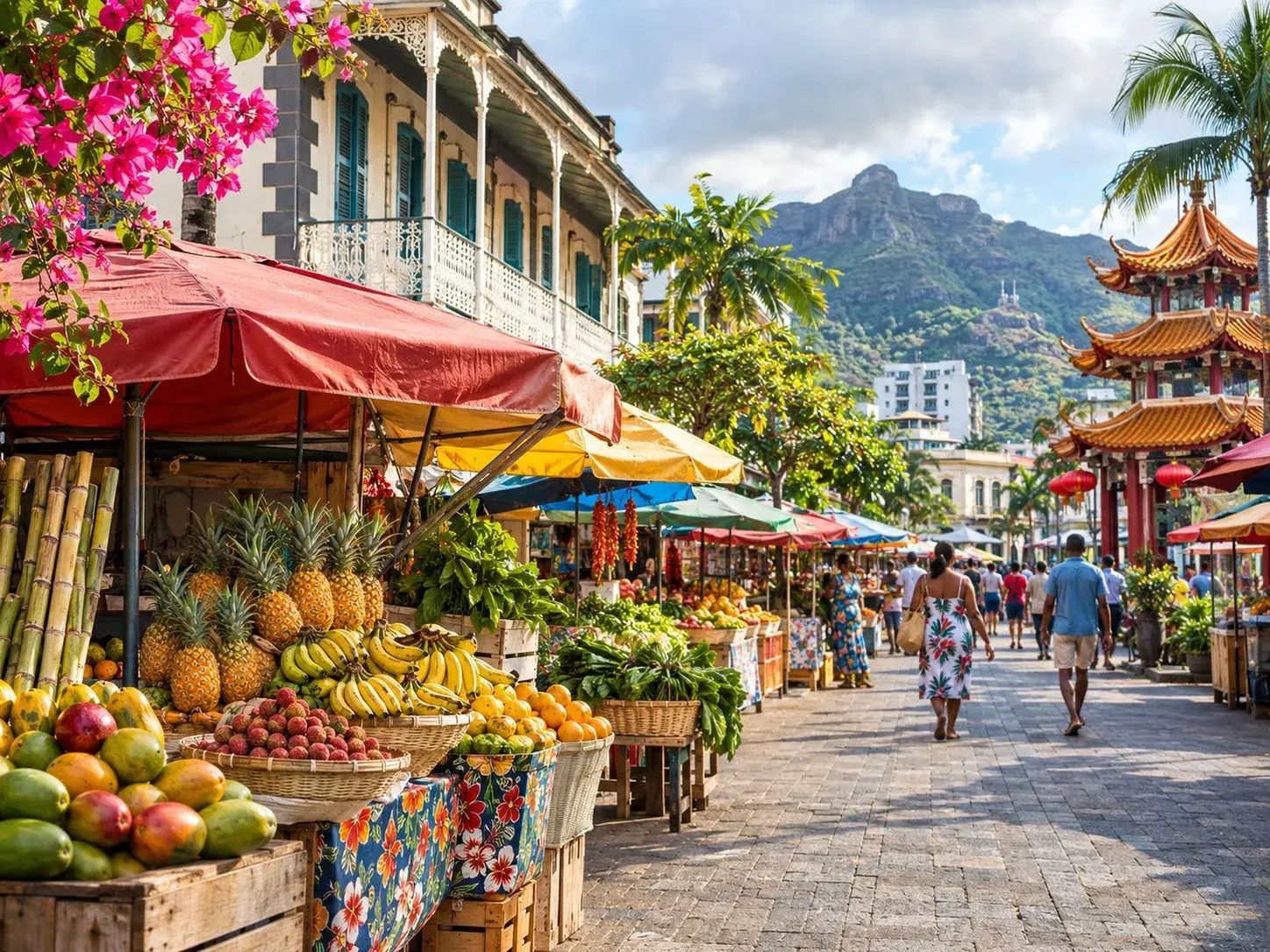
One has only to cross the island to see it: a temple with white columns and colourful sculptures, a red-roofed church facing the lagoon, a red and yellow pagoda with its back to the mountain, a sacred lake guarded by a statue of Shiva. Mauritius cannot be understood without its religions. The 2022 census makes it possible to measure them, and a handful of places to see them.
What the census says
In 2022, the Republic had 1,233,097 inhabitants. Each declared their religion as they understood it. The answers draw a clear picture.
Hinduism comes first, with 590,263 people, or 47.9 per cent of the population. Christianity follows with 398,212 people, 32.3 per cent, among them 307,515 Roman Catholics, a quarter of the country on their own. Islam counts 224,885 people, 18.2 per cent. Buddhism and the Chinese religions have 5,053 followers. Finally, 7,753 residents declare no religion, and 6,931 hold other beliefs or did not specify.
The small numbers tell a story too: 564 Baha’is, 116 Sikhs, 41 Jews. And within the major religions, the diversity is real. Hindus are divided between those who describe themselves simply as Hindu and the Tamil, Telugu, Marathi, Vedic and Arya groups. Christians, alongside the Catholics, include Pentecostals, members of the Assemblée de Dieu, Adventists, Protestants, Jehovah’s Witnesses and many other churches.
 AI-generated image
A geography of belief
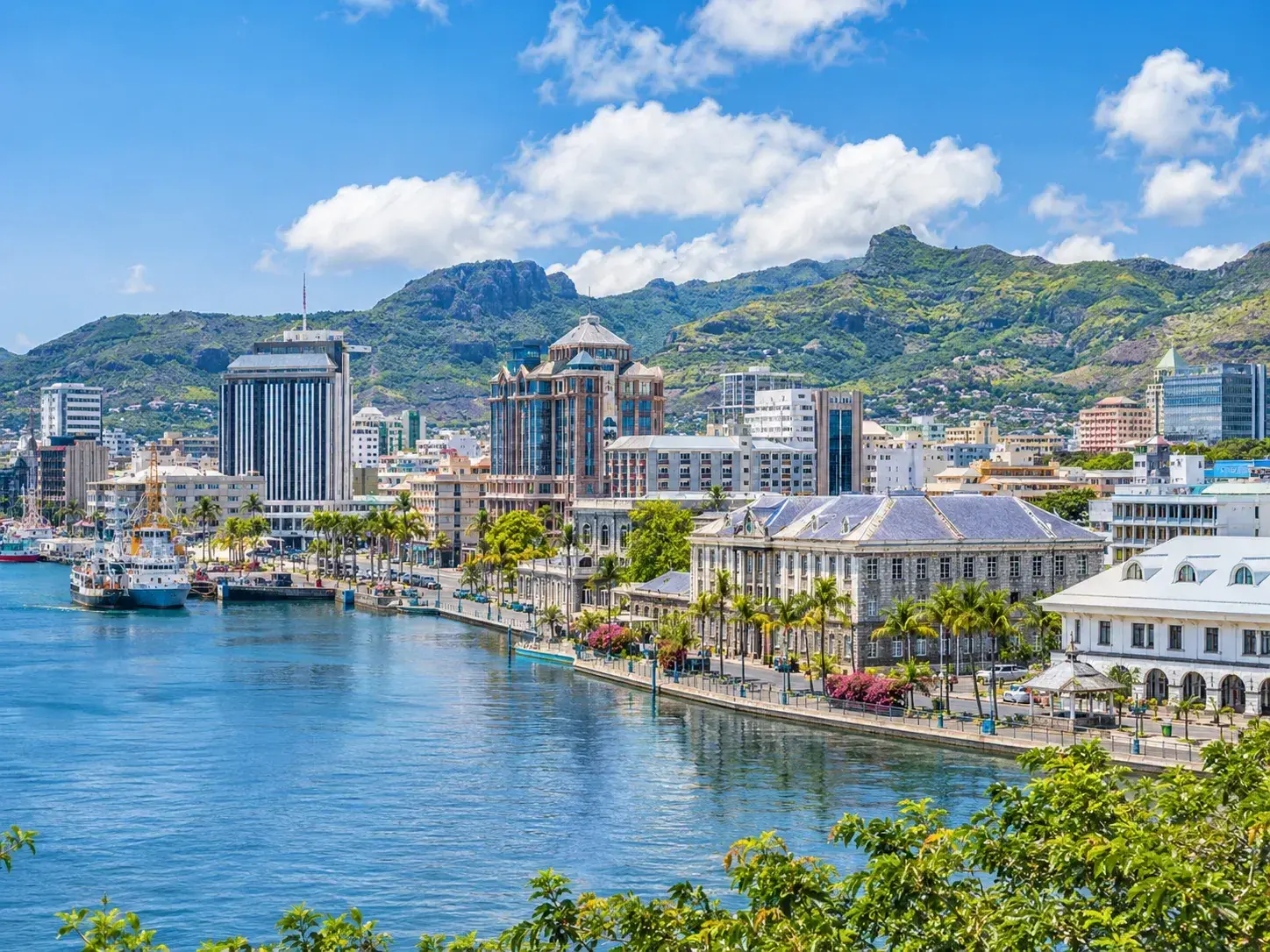
Religions are not spread at random. Hinduism is above all rural: more than seven Hindus in ten live in the countryside. Islam is above all urban: more than half of all Muslims live in towns, and Port Louis is the district where their share is highest, more than four residents in ten. Catholicism is present everywhere, but Rodrigues is its stronghold: 38,220 Catholics out of 43,604 inhabitants, nearly nine in ten.
This geography has a history. Under French administration, the number of slaves brought from Africa and Madagascar rose sharply. After the abolition of 1835, more than 462,000 indentured labourers arrived up to 1914, most of them from India, many of Hindu or Muslim tradition, but also from China, the Comoros, Madagascar, Mozambique and South-East Asia. Each wave brought its faith, and the island has kept them side by side.
Hindu places
Ganga Talao, or Grand Bassin, is a crater lake high in the mountains of Savanne, one of the great places of Mauritian Hinduism. A statue of Shiva thirty-three metres tall guards its entrance, and colourful shrines line the water. It is the goal of the Maha Shivaratree pilgrimage, which devotees from all over the island make on foot.
At Triolet, in the north, the Maheswarnath Mandir is the largest Hindu temple on the island. Founded in 1888 and dedicated to Shiva, it can be recognised by its white columns, its floral decoration and its colourful sculptures, and it gathers several smaller temples within a single enclosure.
Churches, shrines and a pagoda
On the northern tip of the island, the church of Notre-Dame Auxiliatrice at Cap Malheureux is one of the most photographed sights in Mauritius: a bright red roof against the lagoon and the silhouette of Coin de Mire. It is open to visitors, for Mass or simply for a look, and its holy-water stoup is carved from the shell of a giant clam.
At Sainte-Croix, the shrine of Blessed Jacques-Désiré Laval, a missionary who died in Mauritius in the nineteenth century, holds his tomb. Every year in September, pilgrims from all over the island, and of all faiths, converge on it. In Port Louis, the Marie Reine de la Paix monument stands on a hill from which one can see the city and, beyond it, the sea: Pope Francis celebrated Mass there in 2019.
At Les Salines, in Port Louis, the Kwan Tee Pagoda was built by the Chinese community in 1842. Listed as national heritage and painted red, yellow and green, it faces the sea and has its back to the mountains.
Mosques and the visitor
Mauritian Islam has its mosques all over the island, and the capital is its centre. The state supports their upkeep: in 2025, the Ministry of Arts and Culture held talks with Saudi Arabia about a donation of six million dollars for the needs of the Republic’s mosques.
These are active places of worship before they are sites to visit. One enters them with discretion, waits for a service to end rather than walking through it, and respects what those who pray there respect. That is the simple condition for seeing the island as it is: a country where religions live side by side, each in its own places, and all within the same calendar.
Read next
- AI-generated image
What Mauritius speaks
- AI-generated image
Père Laval, apostle of Mauritian unity
- AI-generated image
Fifteen public holidays that tell a country’s story
Where to stay
Stay in Mauritius
Places to stay that are still available, with current prices, compared across the main booking platforms.