
Sega tambour, from Rodrigues to the Chagos
Mauritian sega has two cousins, born like it of slavery, that beat to the rhythm of a large drum. The one from Rodrigues has been on the list of the heritage of humanity since 2017; the one from the Chagos has been on the Urgent Safeguarding List since 2019.
September 23, 2026
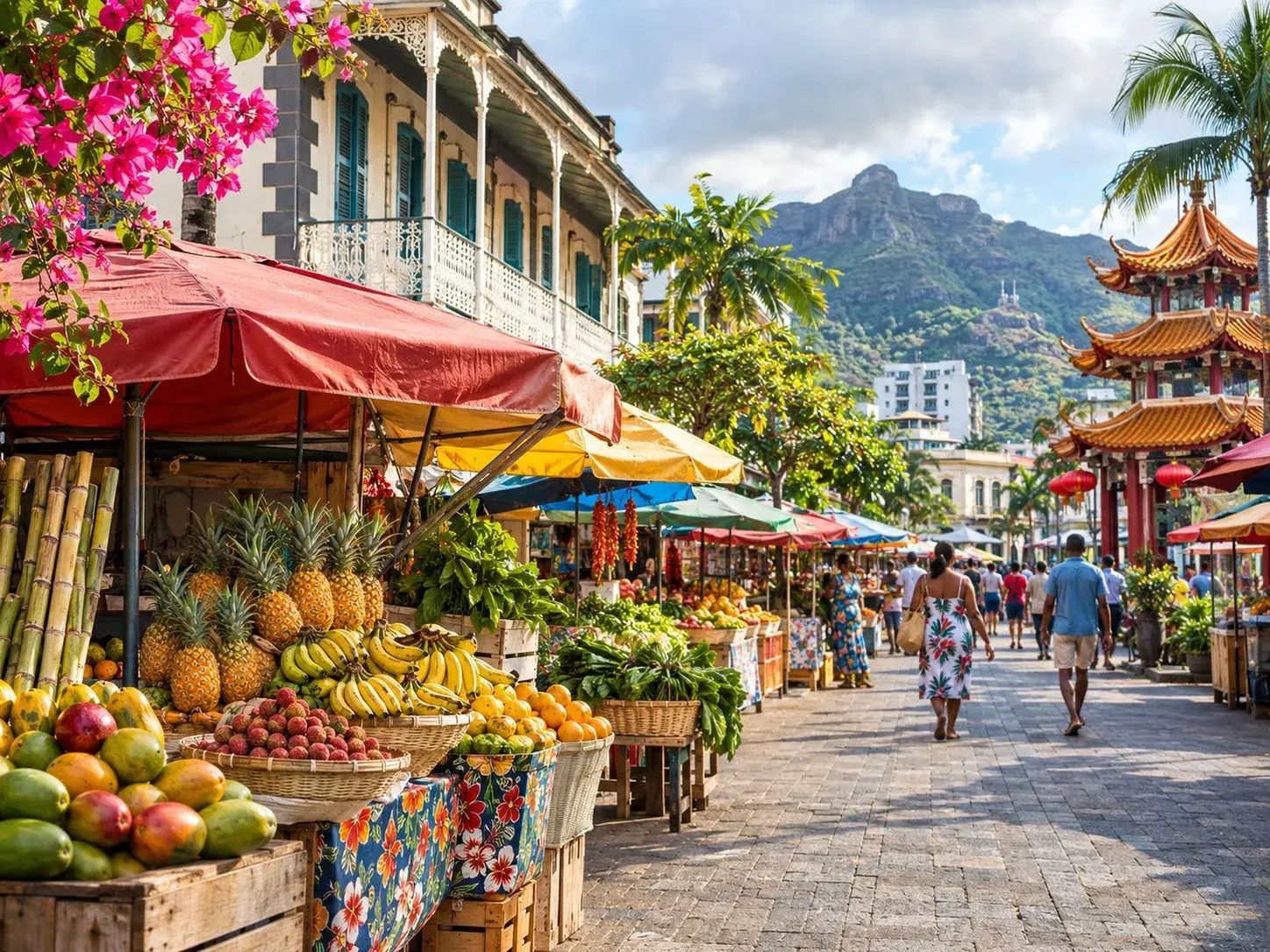 AI-generated image
Sega is not one music but several. Mauritius has its sega tipik, inscribed as Intangible Cultural Heritage of Humanity in 2014. But the Republic also has two forms of sega tambour, born like it in communities of enslaved people, each with its own history, its own island and its own inscription: that of Rodrigues, and that of the Chagos.
Rodrigues, island of the sega tambour
Rodrigues is an island of the Republic of Mauritius, some 580 kilometres north-east of the main island and an hour and a half away by air. It is a volcanic, hilly island with a slow pace of life, home to 43,604 residents at the 2022 census. Its sega tambour is a lively, rousing rhythmic performance that unites music, song and dance.
Percussion leads everything. The tambour, the main instrument, is beaten energetically. The triyang, a triangle, is struck from the side, and the bwat and the mayos complete the percussion. Sega tambour is played all over the island, in homes as in the street, on official occasions or among friends. Competitions and rehearsals take place in community centres, and it is also performed in tourist establishments, where it gives musicians a living.
A music of resistance
Its roots lie in communities of enslaved people, and it was born of defiance and resilience. It helps to settle conflicts, brings people together and strengthens bonds. The government regards it as a symbol of the history of the Rodriguan community. Since the 1970s, many groups have formed, and an association is now devoted to it.
It is open to all, regardless of age, gender or status. Knowledge passes from elders to the young through imitation and observation, and instrument making is learnt from experienced craftsmen. Its bearers are the Rodriguans themselves, and their diaspora in Mauritius and beyond.
In 2017, the sega tambour of Rodrigues was inscribed on the Representative List of the Intangible Cultural Heritage of Humanity, at the committee meeting held on Jeju Island. The committee commended the community-based approach of the nomination, which involved the practitioners at every stage, and the safeguarding measures, which provide for monitoring the effects of increased visibility and over-commercialisation. The element appears on the national inventory of intangible heritage, kept by the National Heritage Fund.
An island that celebrates its culture
In Rodrigues, Creole culture is celebrated openly. In 2025, the Minister of Arts and Culture and the Junior Minister attended the Festival Kreol in Rodrigues: an evening of storytelling, poetry and humour, sega tambour rhythms, a regatta festival and a grand closing concert. Every year, a Rodrigues Culture Day brings together artists, associations and officials around the island’s traditions, music and cuisine; in 2026, the Prime Minister presided over the official celebration.
The island also has a feature that the census makes striking. Of its 43,604 residents, 38,220 declared themselves Roman Catholic in 2022, nearly nine in ten, against a quarter across the Republic as a whole. Rodrigues is a Creole and Christian island, and its sega tambour is one of its voices.
The sega tambour of the Chagos
The other sega tambour comes from further away. The sega tambour of the Chagos is a form of Mauritian sega with its origins in the Chagos Archipelago. It too combines music, song and dance, and it too was born of slavery. Its main instrument is the tambour, a large circular instrument that is heated before being played and gives the basic rhythm. It is sung in Chagossian Creole, the Creole of these islands, and its lyrics speak of everyday life, its sorrows, its joys and its revolts. It is accompanied by traditional food and drink.
Its situation is fragile. The displacement of the community brought poverty and a loss of cohesion, and with them the loss of part of its memory. The elders who knew the landscapes of the archipelago are passing away, and the young are turning to other music. New lyrics have been written about the past and the homeland, so that the young lose neither their roots nor their pride. In 2019, UNESCO inscribed it on the List of Intangible Cultural Heritage in Need of Urgent Safeguarding.
Mauritius thus has three inscribed forms of sega, and two kinds of inscription. Sega tipik and the sega tambour of Rodrigues are recognised for what they bring; the sega tambour of the Chagos is recognised also for what it is at risk of losing.
Read next
- AI-generated image
What Mauritius speaks
- AI-generated image
Père Laval, apostle of Mauritian unity
- AI-generated image
Fifteen public holidays that tell a country’s story
Where to stay
Stay in Mauritius
Places to stay that are still available, with current prices, compared across the main booking platforms.