The Spring Festival, the island’s Chinese New Year
In January or February, the lion dance, firecrackers and red envelopes herald the lunar new year. In Port Louis, it is in Chinatown and around the Kwan Tee Pagoda that the festival takes on its full meaning.
August 15, 2026
 AI-generated image
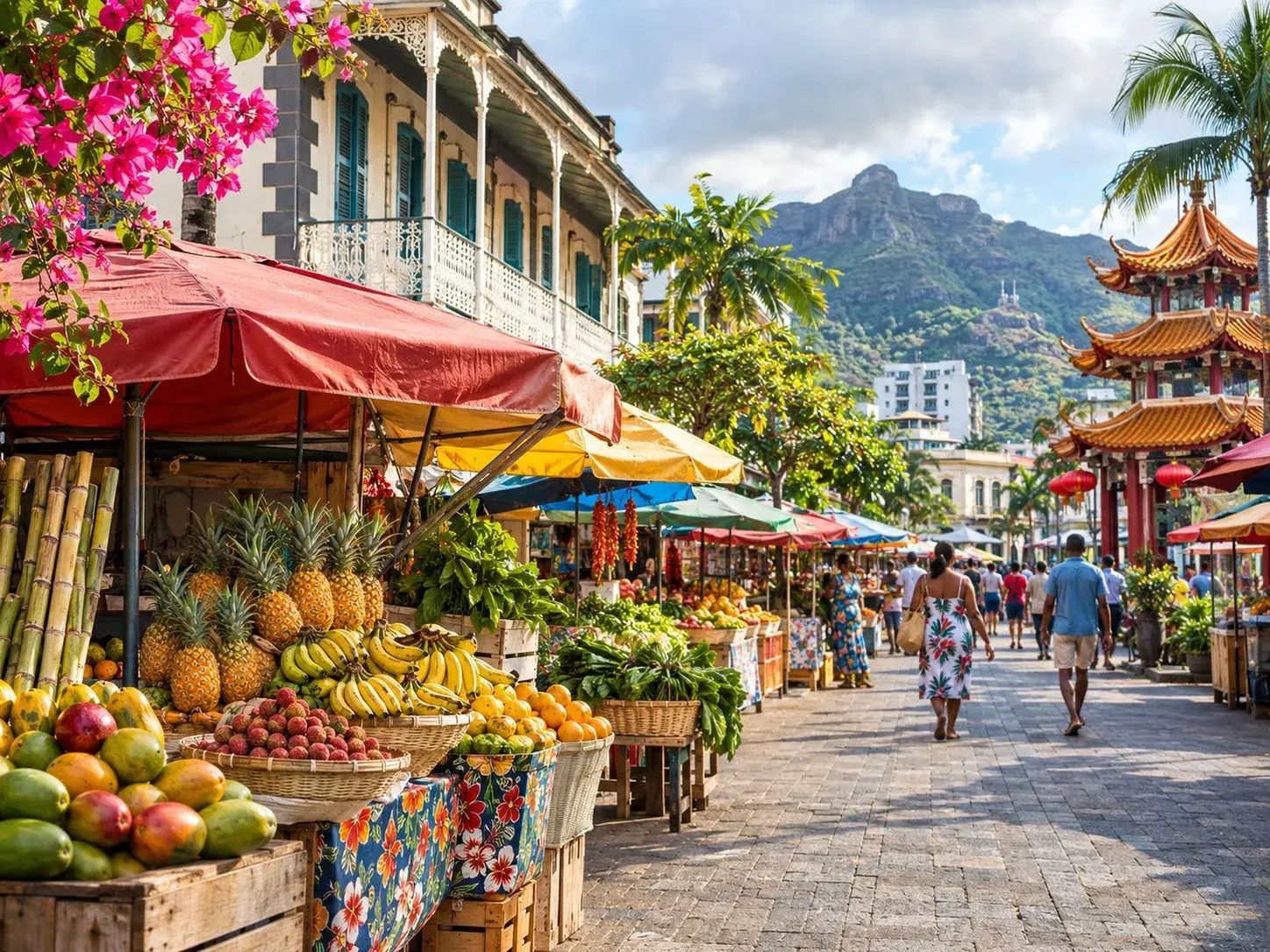
On the official list of Mauritian public holidays, it is called the Chinese Spring Festival. It is also known as Chinese New Year, or the lunar new year. Under one name or another, it is one of the festivals that Mauritius celebrates across the whole island every year, with its lion dances, its firecrackers and its red envelopes for good luck.
Spring in the middle of summer
Chinese New Year follows the lunar calendar. It generally falls in January or February, on a date that changes every year. In 2026, the Spring Festival was set for Tuesday 17 February, two days after Maha Shivaratree.
The name should not mislead. It comes from the Chinese calendar, not from the island’s climate: in Mauritius, the Spring Festival falls at the height of the southern summer, in the hottest and rainiest months of the year. Visitors who come to it in the European winter thus find in Port Louis a spring festival celebrated in the heat of February.
 AI-generated image
The Chinatown of Port Louis
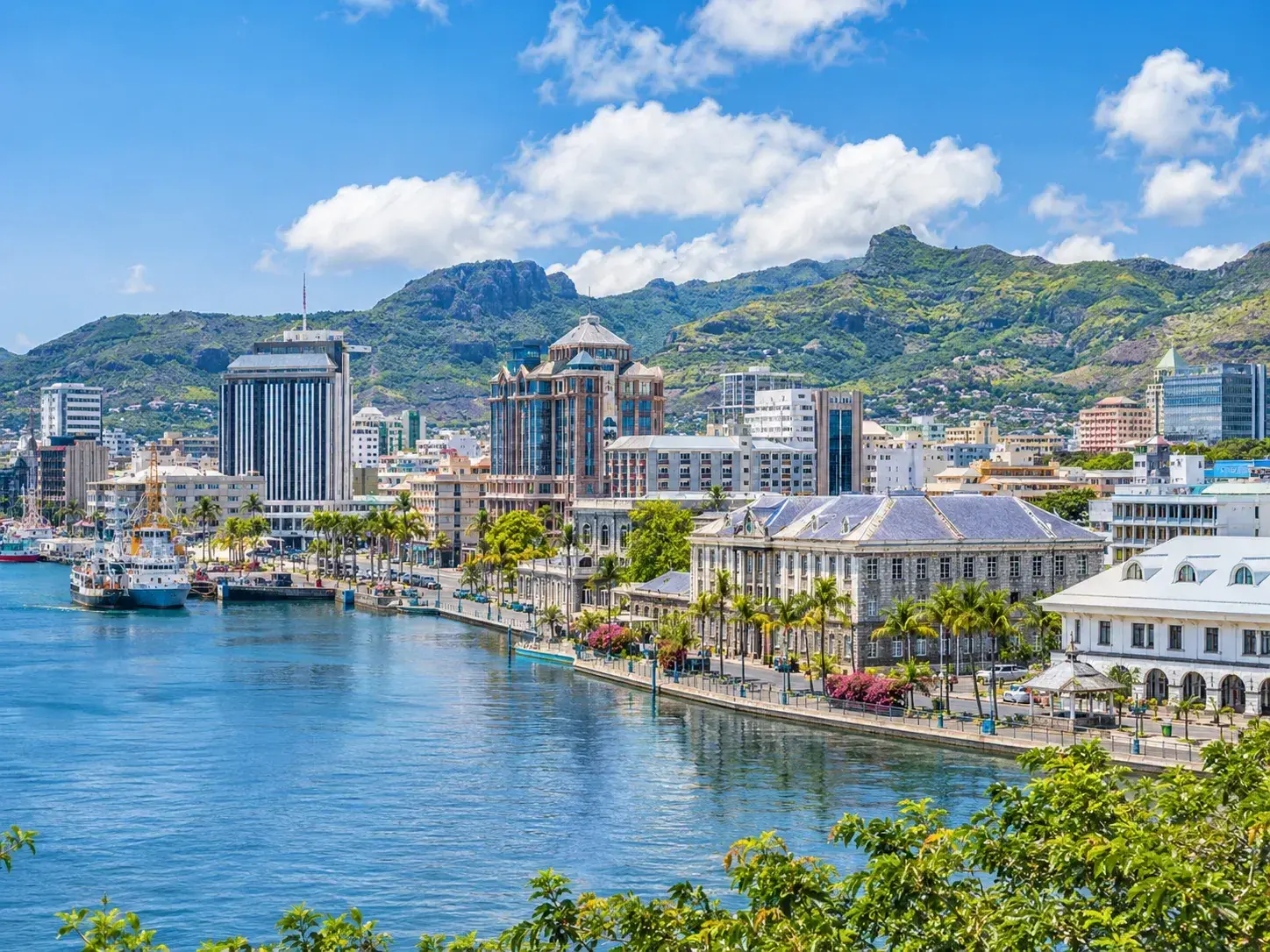
The biggest celebration is generally held in the capital’s Chinese quarter, the Chinatown where Chinese shops follow one another amid distinctive architecture. The quarter spreads around Royal Road, in the centre of Port Louis, next to the central market, and it ranks among the oldest Chinatowns in Africa.
One wanders through its lanes at random, between shops and restaurants handed down from generation to generation: biscuit makers, Chinese cakes, baskets of steamed dumplings. The quarter is also known for its street art, from the panda that seems to burst through a wall on Emmanuel Anquetil Street to the manga-inspired murals of Venpin Street. Nor is the Spring Festival its only occasion: in May, the Chinatown Food and Culture Festival enlivens the quarter in its turn.
Kwan Tee, the pagoda of 1842
At Les Salines, also in Port Louis, the Kwan Tee Pagoda recalls how far back the Chinese presence in the city goes. The Chinese community built it in 1842. Listed as national heritage, it is dedicated to Kwan Tee, god of wealth, war and righteousness.
The building follows the principles of spiritual orientation: it faces the sea and has its back to the mountains. It is painted a vivid red set off with yellow and green. Coconut palms sway in front of the façade; at the back, fruit trees shade the garden. Offerings may be left before the altars. Amid the bustle of the capital, stepping inside is like entering an interlude of calm.
 AI-generated image
A festival the state supports
The Spring Festival also has its official side. On 30 January 2026, the Ministry of Arts and Culture gave a national banquet for Chinese New Year, with the Chinese Speaking Union, the Federation of Chinese Societies and the United Chinese Associations. The Deputy Prime Minister, members of the National Assembly, the diplomatic corps and representatives of the Chinese community were gathered there. In the same season, a gala show given by dancers and musicians from Sichuan, organised with the Chinese embassy, celebrated cultural exchange between the two countries.
The occasion is not a new one. In 2025, the national Spring Festival held its gala on 18 January at the J&J Auditorium in Phoenix, and its banquet the following day at the SVICC conference centre. Chinese culture has its public institutions: the Chinese Speaking Union, governed by an act of 2011, and the Mauritius Chinese Cultural Centre Trust Fund both come under the ministry.
The Chinese calendar does not end with the new year. On 25 May 2025, the dragon boat race organised at the Caudan Waterfront by the Dragon and Lion Dance Federation brought together nine teams. Kwong Hwa won in 3 minutes 43 seconds, and among the competitors was a team from Rodrigues, Chung San.
A community modest in numbers
The 2022 census helps to situate the community behind the festival. That year, 9,393 residents gave a Chinese language as the language of their ancestors, whether Hakka, Cantonese, Mandarin or Chinese without further detail, and 2,528 named both Creole and Chinese. In terms of religion, 5,053 people identified with Buddhism or a Chinese religion.
These figures are modest for a country of more than 1.2 million people. They make the place of the Spring Festival in the Mauritian year all the more striking: a public holiday for everyone, a national celebration, and an entire quarter of the capital in festive mood.
Read next
- AI-generated image
What Mauritius speaks
- AI-generated image
Père Laval, apostle of Mauritian unity
- AI-generated image
Fifteen public holidays that tell a country’s story
Where to stay
Stay in Mauritius
Places to stay that are still available, with current prices, compared across the main booking platforms.