
Sir Seewoosagur Ramgoolam, the island’s gateway
Born of a military airfield and renamed in 1987, the international airport of Mauritius saw close to four million passengers pass through in 2019. What to know about the place where every stay begins and ends.
September 1, 2026
 AI-generated image
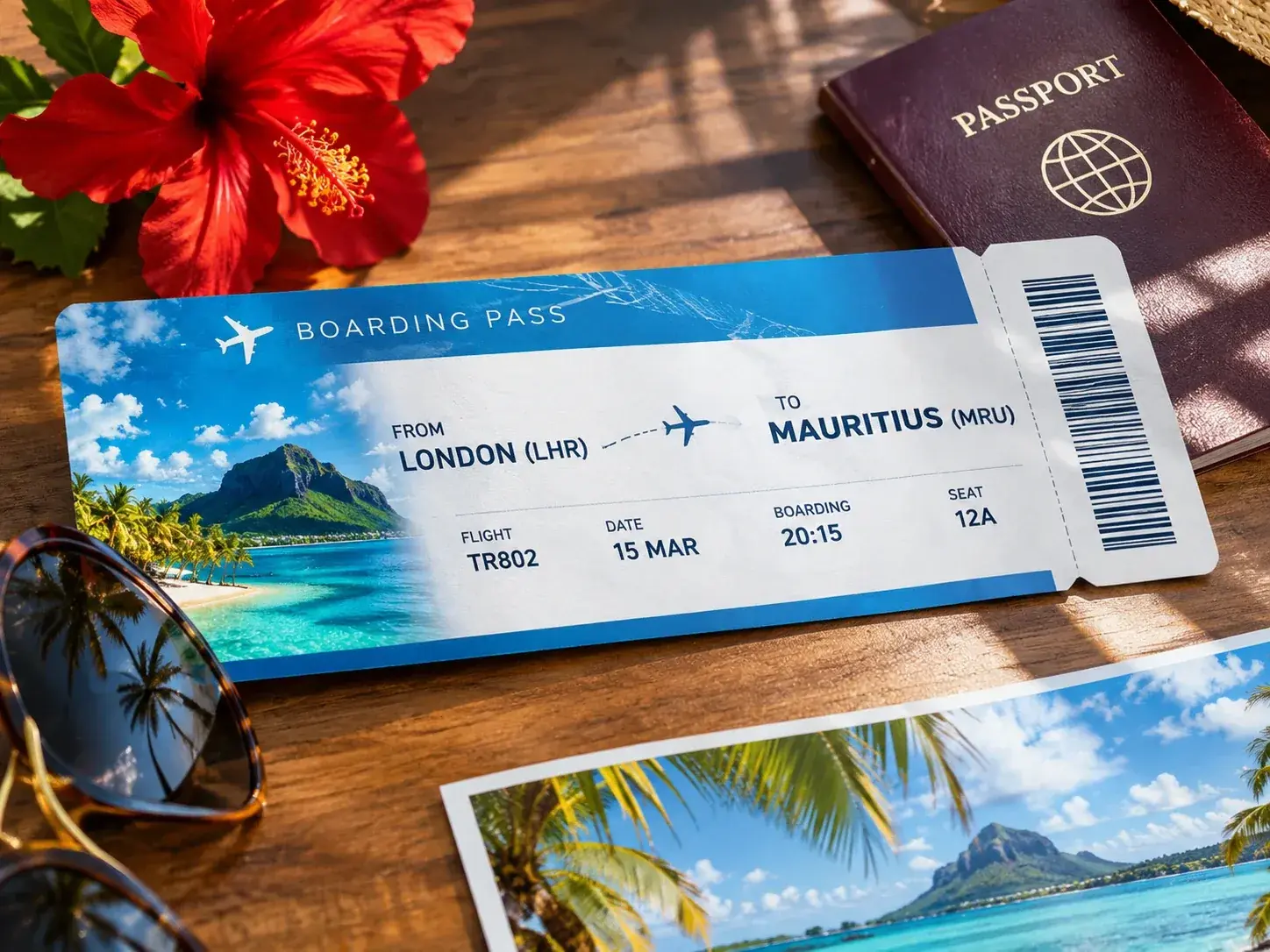
Every journey to Mauritius begins and ends in the same place. Sir Seewoosagur Ramgoolam International Airport lies at Plaine Magnien, in the south-east of the island, 26 nautical miles south-east of Port Louis and 11 miles from Curepipe. It is commonly known as SSR airport, after the initials of the man whose name it has borne since 1987.
A runway born of war
The story of the site is that of a military airfield turned gateway. The first building dates from 1945. During the Second World War, the island’s strategic position meant that the airfield, then known as Plaisance airport, was used extensively by the Royal Air Force. It was later enlarged to take wide-bodied aircraft, with a new building fitted with jet bridges, before taking the name of Sir Seewoosagur Ramgoolam in 1987. Airports of Mauritius, a company that began operating in April 1999, is its owner and licensed operator, while the passenger terminal is run by another company, Airport Terminal Operations.
The figures give a sense of scale. The main runway measures 3,040 by 75 metres, backed up by a 2,279-metre emergency runway. The terminal covers 57,000 square metres, with 32 check-in counters, 8 jet bridges and 6 baggage carousels. In 2019, the airport handled 3,884,056 passengers, of whom 3,686,624 were on international flights and 197,175 on domestic routes. Twenty years earlier, in 1999, there had been 1,568,979.
 AI-generated image
Arrival
On arrival, the order never varies: immigration and health formalities first, baggage reclaim second. Oversized items, pushchairs or bulky cases, come out on a dedicated belt, next to carousel number 1. If luggage has gone astray or been damaged, it is before leaving the hall that you go to the baggage services counter, near carousel 6.
A cash machine stands in the reclaim hall itself. Further on, on level 0, the hall for tour operators and hotels brings together six bureaux de change, the inbound agencies and the hotel representatives, while a row of twelve desks houses the car rental firms.
Those coming to collect a traveller by car have, since 17 August 2026, had a car park with number-plate recognition. The plate is read on entry; you take your ticket and keep it, pay before leaving, by phone by scanning a QR code or at a machine that accepts notes and coins, and then have fifteen minutes to drive out: the barrier lifts of its own accord when the plate is read. To drop a passenger off at international departures, follow the departures road, which climbs to level 1; there is no parking in the drop-off area.
Departure
International flights leave from level 1, flights to Rodrigues from level 0. In 2026, check-in counters generally open three hours before departure and close one hour before. Security screening follows international rules: liquids, aerosols and gels in containers of 100 millilitres or less, packed in a resealable transparent bag of one litre, only one per passenger. Prescription medicines, food and milk for children under two, and breast milk are allowed. A body scanner has been brought into service; during the initial phase, only a few passengers picked at random are sent through it.
Two steps must be taken before immigration, not after. Changing money, first, since there is no counter beyond. The VAT refund, second, whose first stage takes place at the customs counter in check-in hall B; the second comes after the checks, at the Chamber of Commerce counter, opposite gate 19.
The wait on the other side has its compensations. The terminal lounge is open to all passengers, whatever their airline or class. Sockets for charging laptops and phones are provided in the waiting areas, and a piano, near gate 19, awaits travellers who would like to play for others. The terminal is entirely non-smoking; smoking areas are set aside before the entrance to the check-in halls.
When a cyclone threatens
The airport stays open during Class I and Class II cyclone warnings, but flights may be brought forward, delayed or rescheduled if a Class III is in prospect. It closes within three hours of a Class III warning being issued: passengers may not stay on, and shops and restaurants close their doors. As traffic is prohibited three hours after this warning, it is best to call your airline before taking the road. Once the warning has been lifted, the airport generally resumes operations within three hours.
To follow the day’s flights, a short number, 8965, can be dialled from a Mauritian phone.
Read next
- AI-generated image
When to go to Mauritius: an island of two seasons
- AI-generated image
Cyclones: reading the four warning classes
- AI-generated image
Two ways to travel, two budgets
Where to stay
Stay in Mauritius
Places to stay that are still available, with current prices, compared across the main booking platforms.