
East or west: choosing your coast by the wind
In Mauritius, the coast matters as much as the month. The west stays dry while the east takes the winter rain, and the trade wind that delights kitesurfers is not the one a swimmer is looking for.
October 27, 2026
 AI-generated image
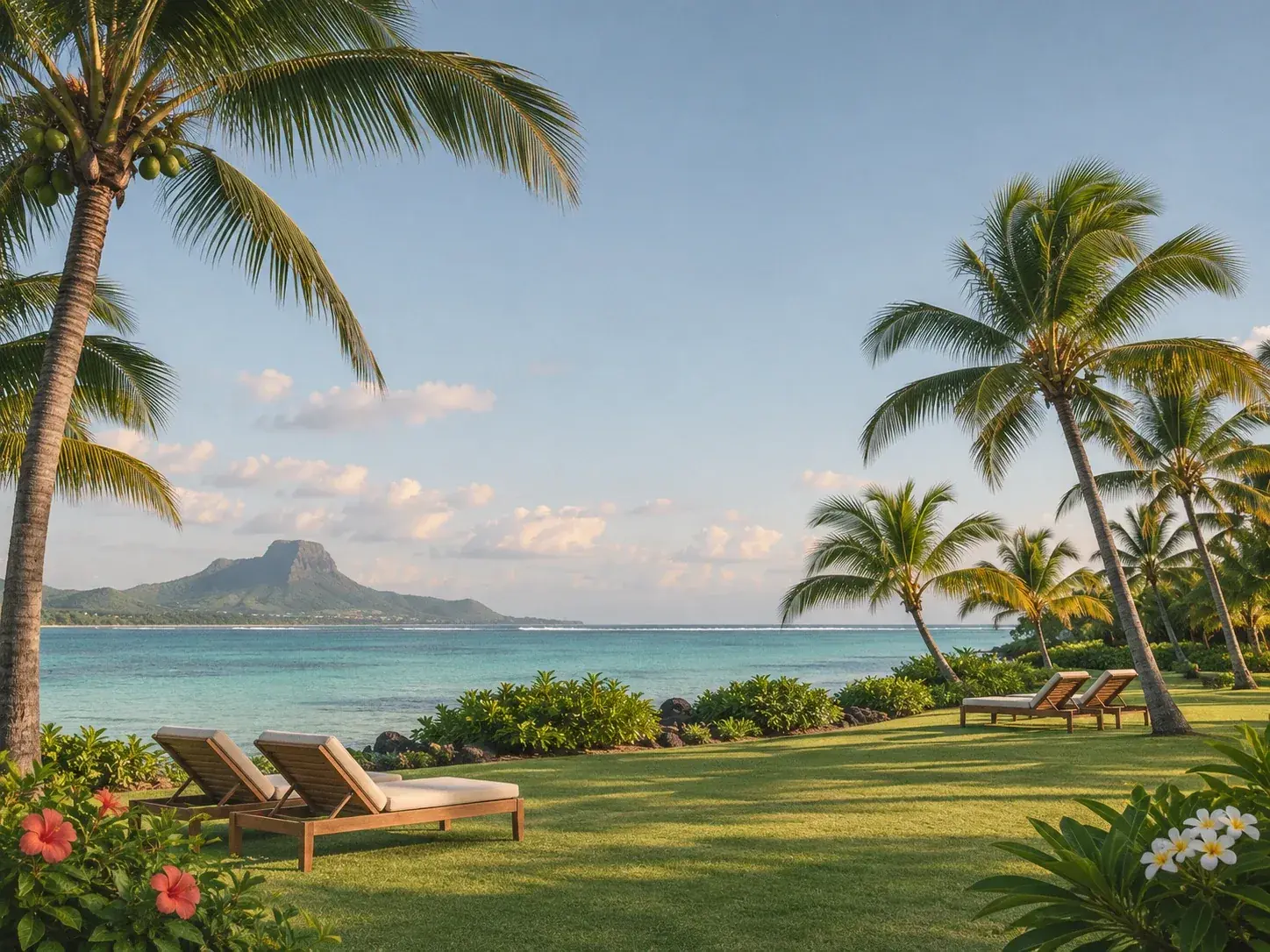
Mauritius is usually chosen for a season, and the hotel for a beach. The two decisions are more closely linked than they seem. The island is small, but its coasts do not live through the same year: in July, it rains on three days in the west while it rains on sixteen in the east. Before choosing a room with a view, it is worth knowing which side the wind comes from and where the rain falls.
The west, the dry coast
The sharpest contrast is between west and east. At Médine, in the west of the island, an average of 15.4 millimetres of rain falls in July and 14.8 in August, averages established over the period 1971 to 2000, and there are only three days with more than one millimetre of rain in each of those two months. At Fuel, in the east, July receives 102.5 millimetres and August 104.9, over sixteen and fifteen days of rain. Over the year, the west receives about 780 millimetres and the east nearly 1,960, two and a half times as much.
Sunshine follows the same gradient. In July, the west averages 7.6 hours of sunshine a day, the east 6.1 and the south, at Plaisance, 5.5. The west is also a little warmer: a mean maximum of 25.8°C in July, against 23.7°C in the east.
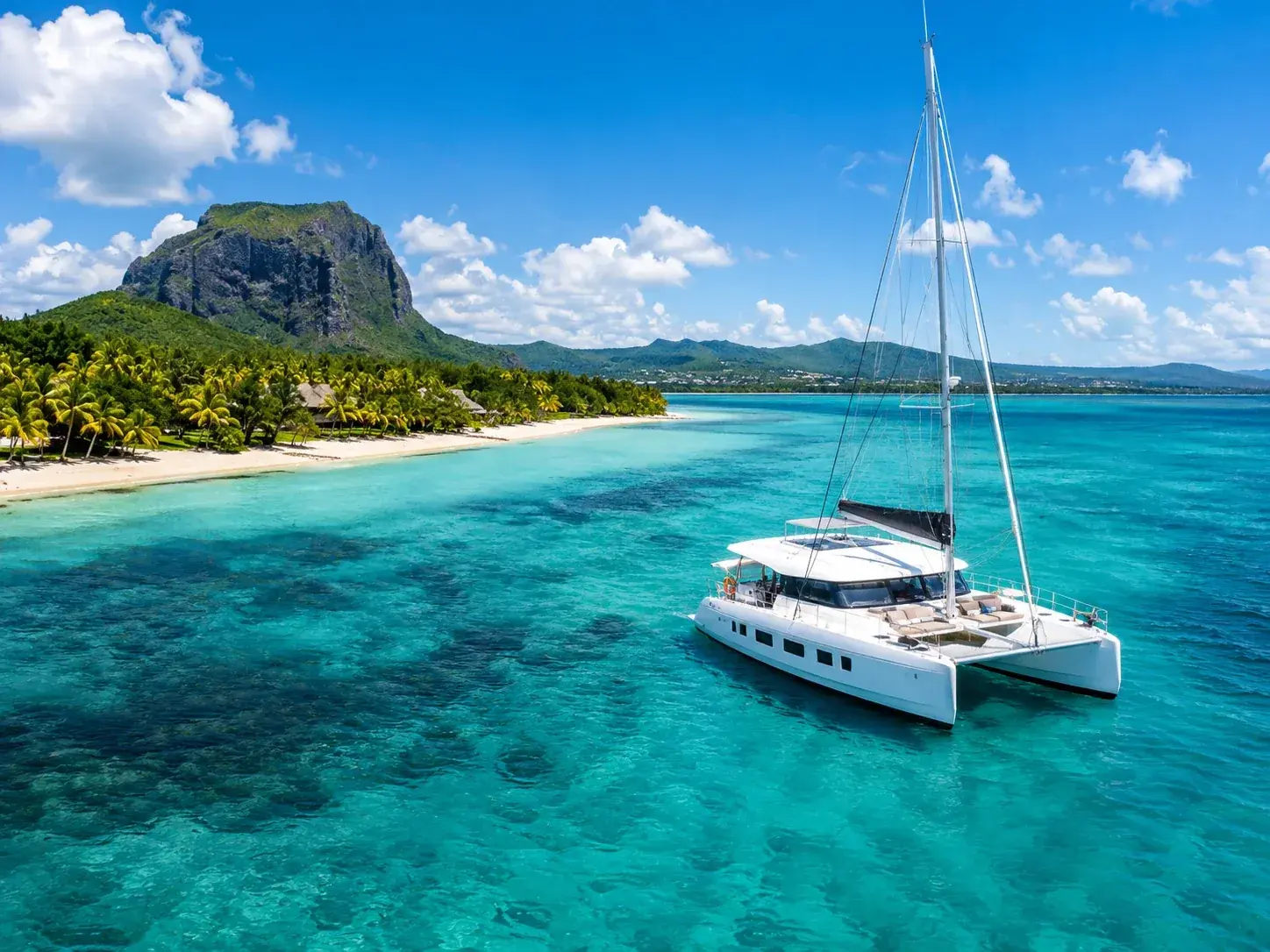
For a stay during the southern winter, from June to September, the west coast, from Flic en Flac to Le Morne by way of Tamarin and Albion, is therefore the one with the most reliable skies. It is also the coast of sunsets, since it faces west, and the one from which boats head out to meet the dolphins.
 AI-generated image
The east, the coast of the breeze
The east has other arguments. Its beaches, from Belle Mare to Trou d’Eau Douce, enjoy a refreshing breeze for most of the year, in front of an immense lagoon of clear water. The coast is windier than the west, which pleases windsurfers more than swimmers who feel the cold. At the Jalsa Beach Hotel, at Poste Lafayette, on the north-east coast, the wind is the draw: kitesurfing is done on site, at the cost of swimming that is sometimes less calm.
In summer, the gap in rainfall narrows without disappearing: in January, the west receives 153 millimetres, the east 261. The east remains the coast of sunrise, where, at Trou d’Eau Douce, the fishermen can be seen at dawn, already at work.
The south, wild and windswept
The south is the most exposed coast. The trade winds blow strong and steady there, mainly from April to November, and the Le Morne peninsula, at the south-western tip, has in One Eye one of the island’s most famous kitesurfing spots. At Bel Ombre, the coast is wilder and windier than the west, and the kitesurfing spots are twenty minutes away. The landscape is rugged: fishing villages, long beaches, waves breaking against cliffs of volcanic rock. Plaisance, in the south, also remains fairly wet in winter: around a hundred millimetres in July, over sixteen days.
 AI-generated image
The north, the shelter
The north sits in between. At Pamplemousses, 72.9 millimetres fall in July, over fourteen days, yet sunshine there matches the west’s, at 7.6 hours a day. November is its brightest month of the year, with an average of 8.7 hours of sunshine a day.
Above all, several bays in the north and north-west are sheltered. Grand Baie curls around a lagoon at the head of a horseshoe bay; the Royal Palm there looks out on a lagoon protected from the wind. The Victoria Beachcomber, at Pointe aux Piments, lines a coast protected from the prevailing winds, and the LUX* Grand Gaube a sheltered bay. Even on the north-east coast, the Constance Prince Maurice occupies an estate sheltered from the prevailing winds: on the scale of a single hotel, shelter sometimes counts as much as the coast.
Matching the coast to the season
The equation then becomes fairly simple. In winter, from June to September, the west offers the driest and clearest skies, the south and east the steadiest wind, to the delight of kitesurfers and windsurfers. The north remains a compromise, sunny and sheltered in its bays, but wetter than the west. In summer, from November to April, the rain reaches the whole island, and the west remains the driest: December brings it 115 millimetres and February 182, against 202 and 334 in the east.
There is, then, no good coast in itself, only a good coast for a given month and a given purpose. The swimmer who comes in July will look to the west or to a sheltered bay in the north. The kitesurfer will go in search of the trade wind in the south and east, where the wind blows strongest.
The addresses
Places mentioned
- LUX* Grand GaubeHotel · Grand Gaube★★★★★Book on Booking.com →
- Constance Prince MauriceHotel · Poste de Flacq★★★★★Book on Booking.com →
Read next
 AI-generated image
Port Louis, Ebene and the centre: staying where the island works
- AI-generated image
Le Morne as a backdrop: where to stay facing the mountain
- AI-generated image
All inclusive with children: six hotels where the family counts
Where to stay
Stay in Mauritius
Places to stay that are still available, with current prices, compared across the main booking platforms.